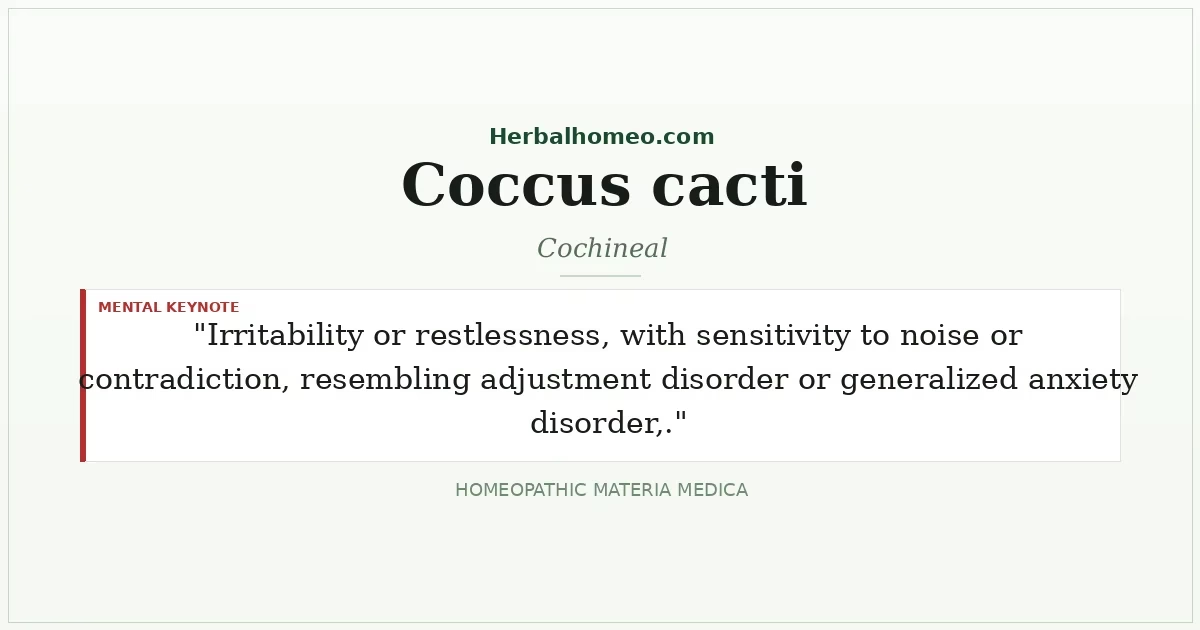
Coccus cacti
Cochineal
Coccus cacti is suited for patients presenting with respiratory, genitourinary, mucous membrane, psychological, gastrointestinal, and systemic conditions, primarily affecting the respiratory tract, urinary system, mucous membranes, emotional state, digestive system, and overall vitality, marked by spasmodic cough, burning urination, ropy mucus, and mucous membrane irritation. Respiratory symptoms include paroxysmal, whooping cough-like cough with thick mucus, resembling pertussis or acute bronchitis, worse with warmth or lying down. Genitourinary symptoms involve burning urination or strangury, resembling cystitis or nephritis, worse with warmth or suppression of urine. Mucous membrane symptoms feature profuse, stringy mucus or throat irritation, resembling laryngitis or chronic rhinitis, worse in the morning or with warmth. Psychological symptoms include irritability, anxiety, or restlessness, resembling adjustment disorder or generalized anxiety disorder, worse with physical discomfort or emotional stress. Gastrointestinal symptoms involve nausea or acid reflux, resembling gastritis or gastroesophageal reflux disease, worse with warmth or dietary indiscretions. Systemic symptoms include fatigue, chills, or cold intolerance, resembling post-viral exhaustion or chronic fatigue syndrome, worse after exertion or warmth. The remedy is highly relevant for acute or chronic catarrhal and irritative conditions with a strong respiratory and genitourinary component, commonly observed in individuals with sensitive, chilly constitutions, particularly those with infections or mucous membrane hypersensitivity.
Clinical Insights
- In Bovista, like in Coccus, the catarrhal discharge is thready.
- Sensitivity of the throat Coccus Cacti 275 is a special symptom of the Coccus ailment.
Keynotes
- Irritability or restlessness, with sensitivity to noise or contradiction, resembling adjustment disorder or generalized anxiety disorder, worse with physical discomfort, warmth, or morning.
- Nausea or acid reflux, with burning or sour sensations, resembling gastritis or gastroesophageal reflux disease, worse with warm drinks, rich foods, or morning.
- Paroxysmal, spasmodic cough, with whooping or choking sensations, resembling pertussis or acute bronchitis, worse with warmth, lying down, or morning.
- Chronic fatigue or weakness, with a sensation of heaviness, resembling chronic fatigue syndrome or post-viral exhaustion, worse after exertion, warmth, or morning.
Modalities
Worse: Warmth (air, rooms, drinks), morning, lying down, suppression of urine or perspiration, emotional stress, sensory stimuli (e.g., noise, light), warm food, night, confinement, talking.
Better: Cold (air, drinks, applications), open air, sitting up, quiet environments, gentle motion, emotional reassurance, solitude, cold washing, expectoration.
Symptoms
Mind
- Irritability or restlessness, with sensitivity to noise or contradiction, resembling adjustment disorder or generalized anxiety disorder, worse with physical discomfort, warmth, or morning.
- Anxiety or nervousness, often linked to respiratory or urinary symptoms, resembling somatic symptom disorder, aggravated by emotional stress, night, or confinement.
- Mental fatigue or dullness, with difficulty concentrating, resembling mild cognitive impairment, worse with exertion or warm environments.
Digestion
- Nausea or acid reflux, with burning or sour sensations, resembling gastritis or gastroesophageal reflux disease, worse with warm drinks, rich foods, or morning.
- Abdominal discomfort or bloating, with cramping or fullness, resembling functional dyspepsia, aggravated by warmth, dietary indiscretions, or emotional stress.
- Vomiting of mucus or sour contents, resembling cyclic vomiting syndrome, worse with warm environments or fasting.
Respiratory
- Paroxysmal, spasmodic cough, with whooping or choking sensations, resembling pertussis or acute bronchitis, worse with warmth, lying down, or morning.
- Thick, ropy mucus expectoration, difficult to expel, resembling chronic bronchitis or bronchiectasis, aggravated by warm rooms, emotional stress, or night.
- Dyspnea or wheezing, with a sensation of suffocation, resembling asthma, worse with warmth or exertion.
Generalities
- Chronic fatigue or weakness, with a sensation of heaviness, resembling chronic fatigue syndrome or post-viral exhaustion, worse after exertion, warmth, or morning.
- Cold intolerance, with aggravation in warm, stuffy conditions and a desire for cold air or drinks, despite a chilly constitution.
- Chills or cold sweats, particularly during respiratory or genitourinary episodes, worse at night or in warm environments.
Potency and Dosage
Mother Tincture or usually 30, 200, 1000 or CM, depending upon the situation and the experience of the homoeopath.
Combinations
- To help get rid of dry and sticky sputum, Hepar Sulph and Coccus are also very important remedies in addition to Bryonia and Ipecac.
- In such a situation, Coccus should also be added to Chelidonium.
- Cocculus 273 Coccus Cacti (Cochineal) Coccus Cacti is commonly used in the treatment of day-to-day superficial and short-lived ailments.
- Mental depression, solitude and silence or excessive talking, are also the symptoms of Coccus (like Lachesis).
Related
Drosera rotundifolia | Cantharis | Kali bichromicum | Homeopathy for Respiratory Health | Treating Severe Cough and Chest Congestion in Winter
This article is for educational purposes only and not a substitute for professional medical advice. Prepared by herbalhomeo.com/ Team
This article is for educational purposes only and not a substitute for professional medical advice.