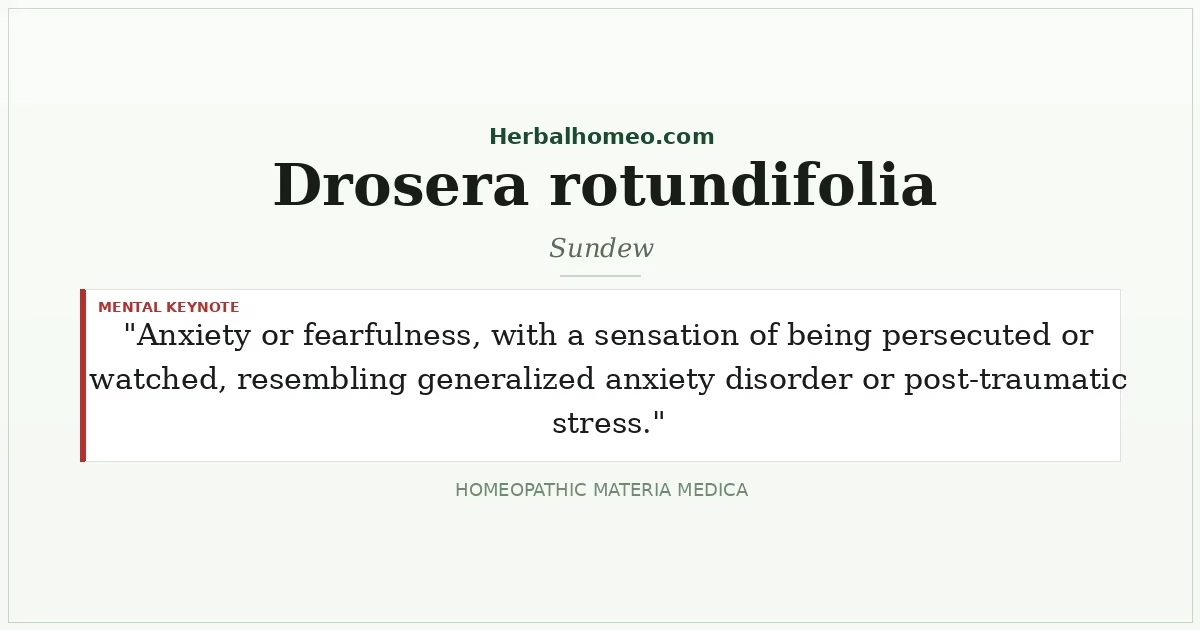
Drosera rotundifolia
Sundew
Drosera rotundifolia is suited for patients presenting with respiratory, musculoskeletal, psychological, neurological, and systemic conditions, primarily affecting the lungs, joints, emotional state, nervous system, and overall vitality, marked by violent cough, joint stiffness, paranoia, and restlessness. Respiratory symptoms include spasmodic, paroxysmal cough or dyspnea, resembling whooping cough or asthma, worse with lying down or night. Musculoskeletal symptoms involve joint pain or stiffness, resembling rheumatoid arthritis or fibromyalgia, worse with rest or warmth. Psychological symptoms include anxiety, paranoia, or irritability, resembling generalized anxiety disorder or post-traumatic stress disorder, worse with emotional stress or night. Neurological symptoms feature restlessness or neuralgia, resembling restless leg syndrome or peripheral neuropathy, worse with lying down or warmth. Systemic symptoms include fatigue or hypersensitivity, resembling chronic fatigue syndrome, worse with exertion or emotional stress. The remedy is highly relevant for spasmodic and inflammatory conditions with a strong respiratory or emotional component, commonly observed in individuals with chilly, sensitive constitutions, particularly those with pertussis, chronic joint pain, or anxiety disorders.
Clinical Insights
- In the 16th century, Drosera became very famous in the treatment of tuberculosis, but it killed more people than it saved from the disease.
- Drosera is not only of use in coughs, but is also used for the treatment of convulsions related to other diseases.
Keynotes
- Anxiety or fearfulness, with a sensation of being persecuted or watched, resembling generalized anxiety disorder or post-traumatic stress disorder, worse with night, warmth, or emotional stress.
- Spasmodic cough, with violent, paroxysmal episodes, often with retching or vomiting, resembling whooping cough (pertussis), worse with lying down, night, or warmth.
- Joint pain or stiffness, with aching or soreness, particularly in the limbs or spine, resembling rheumatoid arthritis or fibromyalgia, worse with rest, warmth, or morning.
- Fatigue or weakness, with a sensation of heaviness or prostration, resembling chronic fatigue syndrome or post-viral exhaustion, worse after exertion, warmth, or emotional stress.
Modalities
Worse: Lying down, night, warmth (weather, environments, drinks), emotional stress, warm stuffy rooms, rest, talking (in respiratory cases), exertion, solitude, morning (in musculoskeletal cases), sensory stimuli (e.g., noise, light).
Better: Open air, motion, talking (in some cases), cool air, gentle pressure, quiet environments, sitting up (in respiratory cases), emotional support, cool drinks, distraction.
Symptoms
Mind
- Anxiety or fearfulness, with a sensation of being persecuted or watched, resembling generalized anxiety disorder or post-traumatic stress disorder, worse with night, warmth, or emotional stress.
- Paranoia or suspicion, with distrust or fear of betrayal, resembling delusional disorder, aggravated by solitude, darkness, or fatigue.
- Irritability or restlessness, with sensitivity to criticism, resembling adjustment disorder, worse with emotional triggers or physical symptoms.
Head
- Restlessness or twitching, with an inability to stay still, resembling restless leg syndrome, worse with lying down, night, or warmth.
- Neuralgia or sharp, shooting pains, particularly in the limbs or face, resembling peripheral neuropathy or trigeminal neuralgia, aggravated by rest, warmth, or emotional stress.
- Headaches or pressure in the head, with a sensation of fullness, resembling tension- type headaches, worse with warmth or exertion.
Respiratory
- Spasmodic cough, with violent, paroxysmal episodes, often with retching or vomiting, resembling whooping cough (pertussis), worse with lying down, night, or warmth.
- Dyspnea or shortness of breath, with a sensation of constriction or tickling in the throat, resembling asthma or laryngospasm, aggravated by talking, warm rooms, or emotional stress.
- Hoarseness or laryngeal irritation, with a dry or scraping sensation, resembling laryngitis, worse with night or exertion.
Extremities
- Joint pain or stiffness, with aching or soreness, particularly in the limbs or spine, resembling rheumatoid arthritis or fibromyalgia, worse with rest, warmth, or morning.
- Muscle cramps or spasms, with sudden, painful contractions, resembling myofascial pain syndrome, aggravated by lying down, cold, or fatigue.
- Back pain or rigidity, with a sensation of heaviness, resembling ankylosing spondylitis, worse with rest or night.
Potency and Dosage
Mother Tincture or usually 30, 200, 1000 or CM, depending upon the situation and the experience of the homoeopath.
Related
Cuprum metallicum | Spongia tosta | Rhus toxicodendron | Homeopathy for Respiratory Health | Treating Severe Cough and Chest Congestion in Winter
This article is for educational purposes only and not a substitute for professional medical advice. Prepared by herbalhomeo.com/ Team
This article is for educational purposes only and not a substitute for professional medical advice.