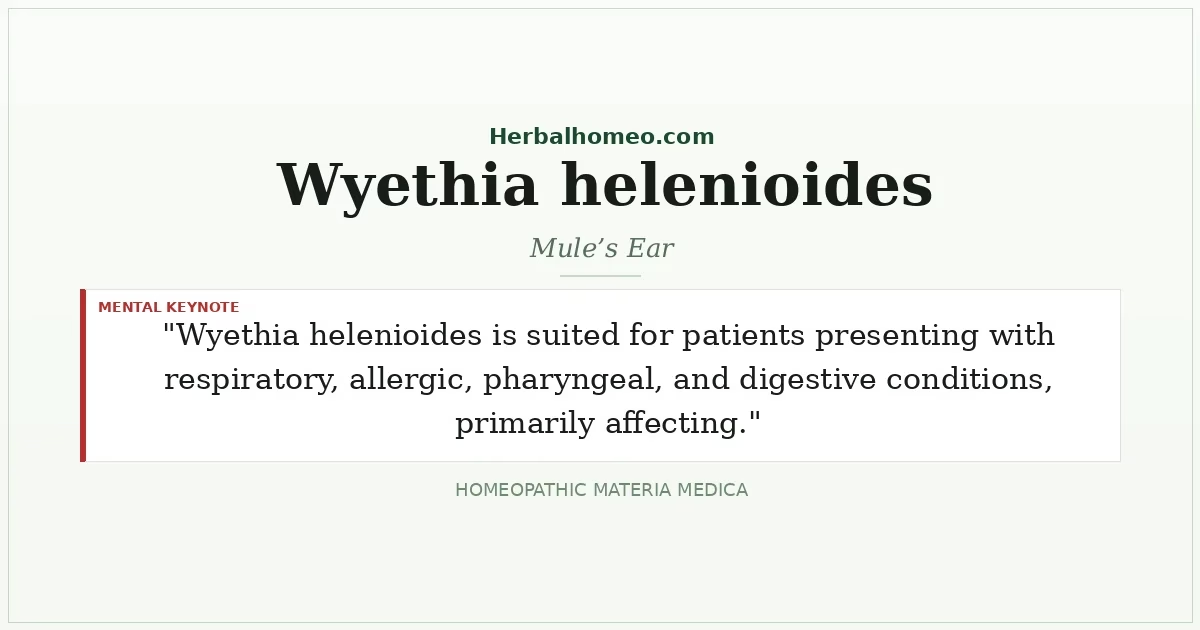
Wyethia helenioides
Mule’s Ear
Wyethia helenioides is suited for patients presenting with respiratory, allergic, pharyngeal, and digestive conditions, primarily affecting the throat, nasal passages, lungs, and gastrointestinal system, marked by throat irritation, nasal congestion, allergic reactions, digestive discomfort, and respiratory distress. Respiratory symptoms include sneezing or wheezing, resembling allergic rhinitis or asthma, worse with dust, pollen, or cold air. Allergic symptoms involve itching or watery eyes, resembling seasonal allergies, worse with dust, pollen, or exertion. Pharyngeal symptoms feature dryness or soreness, resembling chronic pharyngitis or tonsillitis, worse with talking, swallowing, or cold air. Digestive symptoms include bloating or nausea, resembling dyspepsia or irritable bowel syndrome, worse with dust, stress, or eating. The remedy is highly relevant for respiratory and allergic conditions with a strong dust- or pollen-related component, commonly observed in individuals with hypersensitive, allergic constitutions, particularly those with allergic rhinitis, pharyngitis, or asthma associated with dust, pollen, or cold air.
Clinical Insights
- Wyethia causes a similar pain at the palate area instead of itching.
Keynotes
- Nasal congestion or sneezing, with a sensation of stuffiness or irritation, resembling allergic rhinitis, worse with dust, pollen, cold air, or morning, often with watery discharge or postnasal drip.
Modalities
Worse: Dust, pollen, cold air, talking, swallowing, exertion, morning, wind, stress, eating, night, dampness, tight clothing.
Better: Warmth (weather, applications), rest, quiet environments, gentle pressure, hydration, warm drinks, loose clothing, evening, open air (digestive symptoms), avoiding allergens.
Symptoms
Respiratory
- Nasal congestion or sneezing, with a sensation of stuffiness or irritation, resembling allergic rhinitis, worse with dust, pollen, cold air, or morning, often with watery discharge or postnasal drip.
- Wheezing or shortness of breath, with a tendency to tightness or rattling, resembling asthma, aggravated by dust, pollen, exertion, or night, often with cough or chest oppression.
- Dry or productive cough, with a sensation of tickling or burning, resembling bronchitis, worse with dust, cold air, or talking, often with throat soreness or mucus.
Generalities – Children
- Indicated in children with allergic rhinitis, sore throat, or dyspepsia, often linked to dust, pollen, or cold air, worse with talking or morning.
- May present with sneezing, throat irritation, or bloating, particularly in hypersensitive, allergic children, often after dust exposure or stress.
- Children require urgent evaluation for underlying respiratory, allergic, or digestive conditions (e.g., allergic rhinitis, tonsillitis, irritable bowel syndrome).
Potency and Dosage
Mother Tincture or usually 30, 200, 1000 or CM, depending upon the situation and the experience of the homoeopath.
Related
Allium cepa | Arum triphyllum | Sabadilla | Decoction of pine needles to improve eyesight | Comprehensive Homeopathic Solutions for Eye Health: Treating Retinal Hemorrhage, Myopia, and Glaucoma
This article is for educational purposes only and not a substitute for professional medical advice. Prepared by herbalhomeo.com/ Team
This article is for educational purposes only and not a substitute for professional medical advice.