Homeopathic Treatment by Disease & Condition: A Holistic Guide
- Introduction: A Different Approach to the Medicine Cabinet
- Understanding the Homeopathic Perspective: Symptoms as a Guide
- Acute Conditions: Rapid Relief with Precision
- 1. Respiratory & Ear-Nose-Throat
- 2. Digestive Issues
- 3. Injuries & First Aid
- Chronic Conditions: Seeking the Constitutional Remedy
- 1. Skin Conditions (Eczema, Psoriasis)
- 2. Musculoskeletal Pain (Arthritis, Rheumatism)
- 3. Emotional & Mental Health
- 4. Women’s Health
- Important Considerations & Cautions
- Conclusion: Treating the Person, Not the Label
Introduction: A Different Approach to the Medicine Cabinet
Homeopathic Treatment by Disease & Condition, when you have a headache, you might reach for an over-the-counter pain reliever. When you have allergies, you might take an antihistamine. This is the conventional model: one drug for one diagnosed condition.
Homeopathy approaches health from a fundamentally different angle. It operates on the principle of individualization—treating the person with the condition, not just the condition itself. This means two people with the same medical diagnosis (like migraines or arthritis) may receive two completely different homeopathic remedies based on their unique, personal symptom picture.
Understanding the Homeopathic Perspective: Symptoms as a Guide
Before diving into conditions, a key concept must be clear: In homeopathy, symptoms are not the enemy to be suppressed. They are seen as the body’s intelligent language, its attempt to express an internal imbalance and to heal itself.
The goal is to find the remedy whose known “drug picture” most closely matches the patient’s unique expression of illness, including:
- Modalities: What makes the symptoms better or worse? (e.g., headache better from tight pressure, worse from noise).
- Concomitants: What other strange, rare, or peculiar symptoms occur with it? (e.g., a headache that starts with blurred vision and is accompanied by nausea).
- Mental/Emotional State: How does the person feel during the illness? (irritable, weepy, apathetic, fearful).
With that in mind, let’s explore common categories.
Acute Conditions: Rapid Relief with Precision
For sudden, self-limiting illnesses, homeopathy can be remarkably fast-acting. The key is matching the remedy to the specific symptom profile.
1. Respiratory & Ear-Nose-Throat
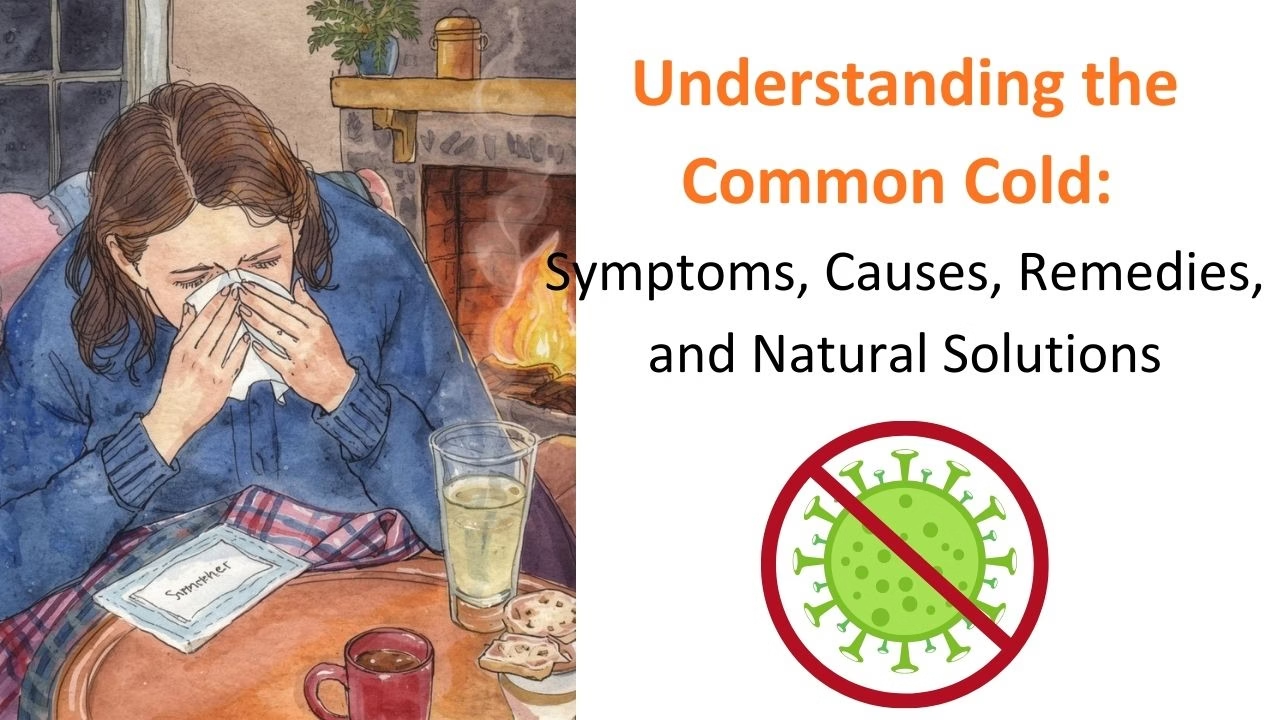
- Common Cold/Flu:
- Aconite: Sudden onset after exposure to cold, dry wind. High fever, anxiety, restlessness. “The midnight remedy.”
- Gelsemium: Flu-like state with heavy weakness, droopy eyelids, aching muscles, chills up the spine. No thirst.
- Bryonia: Everything hurts. Dry, painful cough. Irritable; wants to lie perfectly still. Desires large drinks of cold water.
- Sore Throat:
- Belladonna: Sudden, intense, right-sided. Throat is bright red, swollen, hot. High fever with flushed face.
- Phytolacca: Pain feels like a hot ball, often shoots into ears on swallowing. Dark red or bluish throat.
- Lachesis: Left-sided or starts left and moves right. Extremely sensitive to touch (can’t tolerate tight collars). Worse from warm drinks.
- Allergies (Hay Fever):
- Allium cepa: Profuse, bland watering from eyes; acrid, burning runny nose (like cutting an onion). Better in open air.
- Euphrasia: Opposite profile: burning, acrid tears and mild, bland nasal discharge.
- Sabadilla: Violent, spasmodic sneezing. Itchy palate and nose. Sensitivity to pollen and cold air.
2. Digestive Issues
- Food Poisoning/Indigestion:
- Arsenicum album: Burning pains, vomiting, diarrhea. Accompanied by intense anxiety, restlessness, and prosteration. Feels very cold, seeks warmth.
- Nux vomica: From overindulgence (rich food, alcohol). Nauseous, crampy, constipated feeling. Very irritable and impatient.
- Pulsatilla: From eating rich, fatty foods. Stomach feels heavy, bloated. No thirst. Desires comfort and open air; weepy and clingy.
3. Injuries & First Aid
- Arnica montana: The #1 first-aid remedy. For trauma, bruising, shock, and soreness. “The fall off a horse” remedy.
- Hypericum: For injuries to nerve-rich areas (fingers, toes, spine, tailbone). Shooting, neuralgic pains.
- Ledum: For puncturing wounds (nails, insect bites, deep cuts). The area is cold, swollen, but feels better from cold applications.
- Apis mellifica: For stings, bites, or allergic swelling that is pink, hot, puffy (like a hive), and better from cold applications.
Chronic Conditions: Seeking the Constitutional Remedy
For long-standing issues (arthritis, eczema, anxiety, autoimmune disorders), homeopathy aims for deep, lasting change. This requires a constitutional prescription based on a full-life assessment. The remedies below are common examples of the depth of matching required.
1. Skin Conditions (Eczema, Psoriasis)
The skin is seen as an outlet for a deeper internal imbalance. Suppressing skin symptoms (e.g., with steroid creams) is avoided, as it may drive the disorder deeper.
- Graphites: For thick, oozing, sticky eruptions (like honey). Skin is rough, cracked, and may bleed.
- Sulphur: Intensely itchy, red, burning skin. Worse from heat (bathing, bed). The person may be philosophical, messy, and feel hot.
- Psorinum: Severe, offensive-smelling eczema. Person feels profoundly hopeless and chilly, wearing layers of clothing even in summer. (A key miasmatic remedy).
2. Musculoskeletal Pain (Arthritis, Rheumatism)
- Rhus toxicodendron: For stiffness and pain that is worse on first movement, but better from continued motion and warm applications. Restless.
- Bryonia: Opposite modality: Pain is worse from the slightest movement, better from absolute rest and pressure. Irritable.
- Ruta graveolens: For pain in tendons, ligaments, and joints that feel bruised and stiff. “The RSI (Repetitive Strain Injury) remedy.”
3. Emotional & Mental Health
Homeopathy has a profoundly deep and detailed materia medica of mental states.
- Anxiety:
- Argentum nitricum: Anticipatory anxiety (before exams, events). Diarrhea from anxiety. Impulsive, claustrophobic.
- Gelsemium: Anxiety from anticipation with weakness, trembling, and diarrhea.
- Kali phosphoricum: Nervous exhaustion from overwork or stress. Anxiety with easy fatigue.
- Grief/Depression:
- Ignatia amara: For acute grief, loss, or disappointment. Contradictory symptoms (sighing, lump in throat, changeable moods). Suppressed emotions.
- Natrum muriaticum: For chronic grief, especially from a broken relationship. Wants to be alone to cry. Dwells on the past. May develop headaches or herpes.
4. Women’s Health
- PMS/Menstrual Issues:
- Sepia: Irritable, indifferent (“mother lioness” syndrome). Dragging pelvic pain, feels better from vigorous exercise. Weeps easily.
- Lachesis: Intense, left-sided ovarian pain. PMS with extreme jealousy, talkativeness, and intolerance of tight clothing. Hot.
- Pulsatilla: Weepy, changeable moods, desires comfort. Periods are irregular; symptoms are changeable. Feels better from fresh air and gentle motion.
Important Considerations & Cautions
- Not a Substitute for Emergency Care: Homeopathy does not replace urgent conventional care for heart attacks, strokes, severe infections, or major trauma.
- The Healing Process: In chronic treatment, a well-chosen remedy may trigger a “healing aggravation”—a temporary, mild return of old symptoms. This is often a positive sign that the vital force is responding.
- The “Direction of Cure”: True healing is seen to move from deeper to more superficial levels (e.g., emotional relief before skin clears), and from more vital to less vital organs.
- Consultation is Key: Success in chronic cases depends entirely on the skill of the homeopath in finding your unique constitutional remedy. This requires a detailed, 1-2 hour consultation.
Conclusion: Treating the Person, Not the Label
This guide illustrates that homeopathy does not offer a one-size-fits-all “pill for arthritis.” Instead, it offers a detailed, personalized system of medicine that respects the body’s intelligence.
By looking beyond the disease label to the intricate, personal way you experience your illness, homeopathy seeks to stimulate a lasting restoration of health from the inside out. Whether for an acute sprain or a lifelong struggle with anxiety, its goal is the same: to find the single, precise remedy that resonates with your entire being and sets you on a path toward genuine, holistic cure.
Disclaimer: This article is for educational purposes only. It is not medical advice. Always consult with a qualified healthcare professional, such as a licensed homeopath and your primary care physician, for the diagnosis and treatment of any health condition.
Suggested FAQ Schema:
Q: Can homeopathy treat chronic diseases like arthritis?
A: Yes, homeopathy aims to treat chronic conditions constitutionally. Instead of targeting “arthritis” generically, a homeopath prescribes a remedy matching the patient’s unique pain pattern, modalities, and emotional state for deep, lasting relief.
Q: Is homeopathy effective for acute illnesses like colds or flu?
A: Absolutely. When the correct remedy (like Gelsemium for flu with weakness or Belladonna for sudden high fever) is matched to the specific symptom set, homeopathy can act very quickly in acute situations.
Q: How do I find the right homeopathic remedy for my condition?
A: For acute issues, match your precise symptoms to remedy pictures. For chronic conditions, it is essential to consult a professional homeopath who can conduct a full constitutional analysis to find your individually-matched remedy.
- Modalities: What makes the symptoms better or worse?
- Concomitants: What other strange, rare, or peculiar symptoms occur with it?
- Mental/Emotional State: How does the person feel during the illness?
- Suggested FAQ Schema:Q: Can homeopathy treat chronic diseases like arthritis?
- Q: Is homeopathy effective for acute illnesses like colds or flu?
This article is for educational purposes only and not a substitute for professional medical advice.