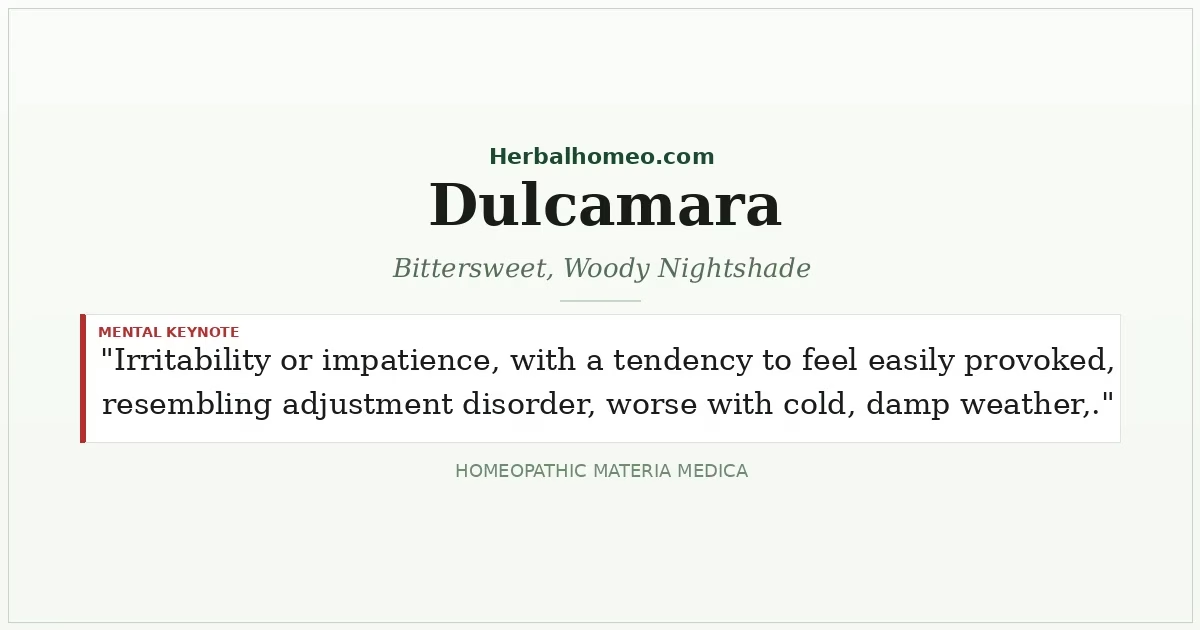
Dulcamara
Bittersweet, Woody Nightshade
Source: Derived from the fresh green stems and leaves of Solanum dulcamara, a perennial shrub in the Solanaceae family, native to Europe and Asia, prepared for homeopathic use through maceration, serial dilution, and succussion to eliminate toxicity and enhance therapeutic action.
Clinical Insights
- For this kind of condition, Dulcamara would probably be the most appropriate treatment.
- If during summer a person contracts cold while visiting hill stations or coming back from the hill stations, Dulcamara would certainly be the indicated treatment.
Keynotes
- Irritability or impatience, with a tendency to feel easily provoked, resembling adjustment disorder, worse with cold, damp weather, fatigue, or environmental changes.
- Nasal congestion or catarrh, with thick, yellowish discharge, resembling allergic rhinitis or sinusitis, worse with cold, damp weather, night, or sudden chilling.
- Joint pain or stiffness, with aching or soreness, particularly in the back, neck, or limbs, resembling rheumatoid arthritis or osteoarthritis, worse with cold, damp weather, rest, or morning.
- Fatigue or weakness, with a sensation of heaviness or prostration, resembling chronic fatigue syndrome or post-viral exhaustion, worse after exertion, cold, damp weather, or emotional stress.
- Eczema or urticaria, with red, itchy, or scaly eruptions, resembling atopic dermatitis or allergic contact dermatitis, worse with cold, damp weather, or scratching.
Modalities
Worse: Cold (weather, air, drinks), dampness (rain, fog, wet environments), sudden temperature changes, night, rest, lying down, evening, exertion, emotional stress, allergens (e.g., pollen, mold), scratching (in dermatological cases), cold drafts.
Better: Warmth (weather, environments, applications), dry weather, motion, gentle pressure, open air (in respiratory cases), warm drinks, emotional support, lying with head elevated (in respiratory cases), avoiding damp environments.
Symptoms
Mind
- Irritability or impatience, with a tendency to feel easily provoked, resembling adjustment disorder, worse with cold, damp weather, fatigue, or environmental changes.
- Anxiety or restlessness, with a sensation of unease or nervous tension, resembling generalized anxiety disorder, aggravated by damp conditions, night, or emotional stress.
- Mood swings or emotional sensitivity, with a tendency to feel overwhelmed, resembling premenstrual syndrome, worse with physical or environmental flare-ups.
Respiratory
- Nasal congestion or catarrh, with thick, yellowish discharge, resembling allergic rhinitis or sinusitis, worse with cold, damp weather, night, or sudden chilling.
- Cough, dry or productive, with a sensation of tickling or tightness, resembling asthma or bronchitis, aggravated by lying down, damp environments, or emotional stress.
- Dyspnea or wheezing, with chest constriction, resembling allergic asthma, worse with cold air, moisture, or exertion.
Extremities
- Joint pain or stiffness, with aching or soreness, particularly in the back, neck, or limbs, resembling rheumatoid arthritis or osteoarthritis, worse with cold, damp weather, rest, or morning.
- Muscle aches or cramps, with a sensation of heaviness, resembling fibromyalgia or myofascial pain syndrome, aggravated by chilling, dampness, or fatigue.
- Back pain or rigidity, with a tendency to aggravation after exposure to cold, resembling ankylosing spondylitis, worse with rest or night.
Skin
- Eczema or urticaria, with red, itchy, or scaly eruptions, resembling atopic dermatitis or allergic contact dermatitis, worse with cold, damp weather, or scratching.
- Warts or verrucae, with rough, horny growths, resembling viral warts, aggravated by moisture or chilling.
- Pruritus or burning skin, with a tendency to flare-ups in damp conditions, resembling chronic urticaria, worse with cold or emotional stress.
Potency and Dosage
Mother Tincture or usually 30, 200, 1000 or CM, depending upon the situation and the experience of the homoeopath.
Combinations
- Psoric symptoms of Manganum are also found in Phosphorus and Dulcamara.
Related
Rhus toxicodendron | Bryonia alba | Kali sulphuricum | Homeopathy for Respiratory Health | Treating Severe Cough and Chest Congestion in Winter
This article is for educational purposes only and not a substitute for professional medical advice. Prepared by herbalhomeo.com/ Team