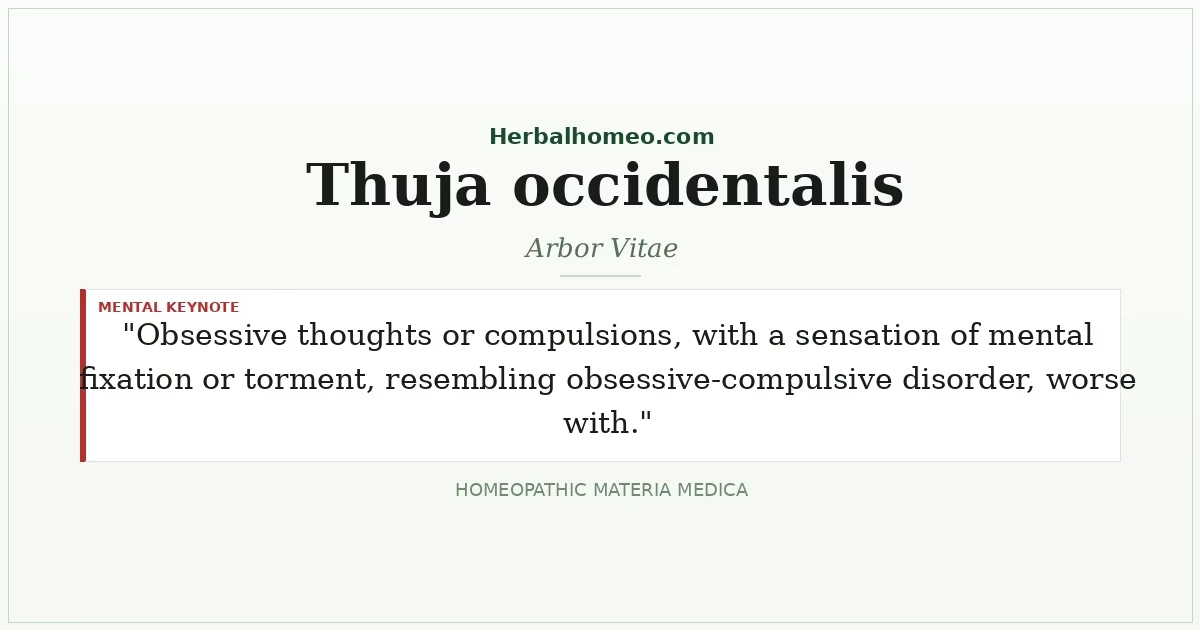
Thuja occidentalis
Arbor Vitae
Source: Derived from the fresh leaves and twigs of Thuja occidentalis, commonly known as the Northern White Cedar or Arbor Vitae, a coniferous tree in the Cupressaceae family, prepared for homeopathic use through trituration and serial dilution to enhance therapeutic action while eliminating material toxicity, in accordance with homeopathic pharmacopeia standards.
Keynotes
- Obsessive thoughts or compulsions, with a sensation of mental fixation or torment, resembling obsessive-compulsive disorder, worse with dampness, stress, isolation, or night, often with rituals or anxiety.
- Warty growths or excrescences, with a sensation of hardness or itching, resembling warts, worse with dampness, cold, scratching, or night, often with cauliflower-like appearance or bleeding.
Modalities
Worse: Dampness (weather, environments), cold (air, drinks), vaccination, stress, night, rest, scratching, touch, confinement, fasting, tight clothing, morning.
Better: Warmth (weather, applications), dry weather, motion, fresh air, gentle pressure, quiet environments, emotional support, open air, hydration, loose clothing, evening.
Symptoms
Mind
- Obsessive thoughts or compulsions, with a sensation of mental fixation or torment, resembling obsessive-compulsive disorder, worse with dampness, stress, isolation, or night, often with rituals or anxiety.
- Depression or despair, with a tendency to hopelessness or self-loathing, resembling major depressive disorder, aggravated by dampness, cold, or stress, often with insomnia or suicidal ideation.
- Delusions or paranoia, with a sensation of unreality or suspicion, resembling adjustment disorder, worse with dampness, stress, or confinement, often with mood swings or detachment.
Skin
- Warty growths or excrescences, with a sensation of hardness or itching, resembling warts, worse with dampness, cold, scratching, or night, often with cauliflower-like appearance or bleeding.
- Scaly or oily eruptions, with a tendency to crusting or fissuring, resembling seborrheic keratosis, aggravated by dampness, cold, or stress, often with offensive odor or sensitivity to touch.
- Hair loss or scalp sensitivity, with a sensation of soreness or dryness, resembling alopecia areata, worse with dampness, cold, or emotional stress, often with flaking or tenderness.
Generalities
- Recurrent infections or fevers, with a sensation of weakness or susceptibility, resembling recurrent infections, worse with dampness, cold, vaccination, or stress, often with sore throat or sinusitis.
- Post-vaccination syndromes or sensitivity, with a tendency to fatigue or inflammation, resembling post-vaccination syndromes, aggravated by dampness, cold, or immune stressors, often with joint pains or rashes.
- Allergic reactions or hypersensitivity, with a sensation of irritation or swelling, resembling allergic rhinitis, worse with dampness, cold, or allergens, often with sneezing or itching.
Generalities – Children
- Indicated in children with warts, recurrent infections, or obsessive behaviors, often linked to dampness, cold, or vaccination, worse with stress or night.
- May present with warty growths, frequent colds, or anxiety, particularly in sensitive, introspective children, often after vaccinations or damp exposure.
- Children require urgent evaluation for underlying dermatological, immunological, or psychological conditions (e.g., warts, recurrent infections, obsessive-compulsive disorder).
Potency and Dosage
Mother Tincture or usually 30, 200, 1000 or CM, depending upon the situation and the experience of the homoeopath.
Combinations
- Thuja and Medorrhinum are both useful in the treatment of fine, soft warts but when the warts are large and in abundance, Causticum and Nitricum Acid are more useful.
- Also, Belladonna, Arsenic and Thuja in high potency have also proved to be useful.
- The warts of any kind and form not amenable to Thuja may respond to Medorrhinum.
Related
Medorrhinum | Silicea | Kali sulphuricum | The Role of Diet and Homeopathy in Managing Eczema and Psoriasis | Depression, Hopelessness, Despair and Sadness
This article is for educational purposes only and not a substitute for professional medical advice. Prepared by herbalhomeo.com/ Team