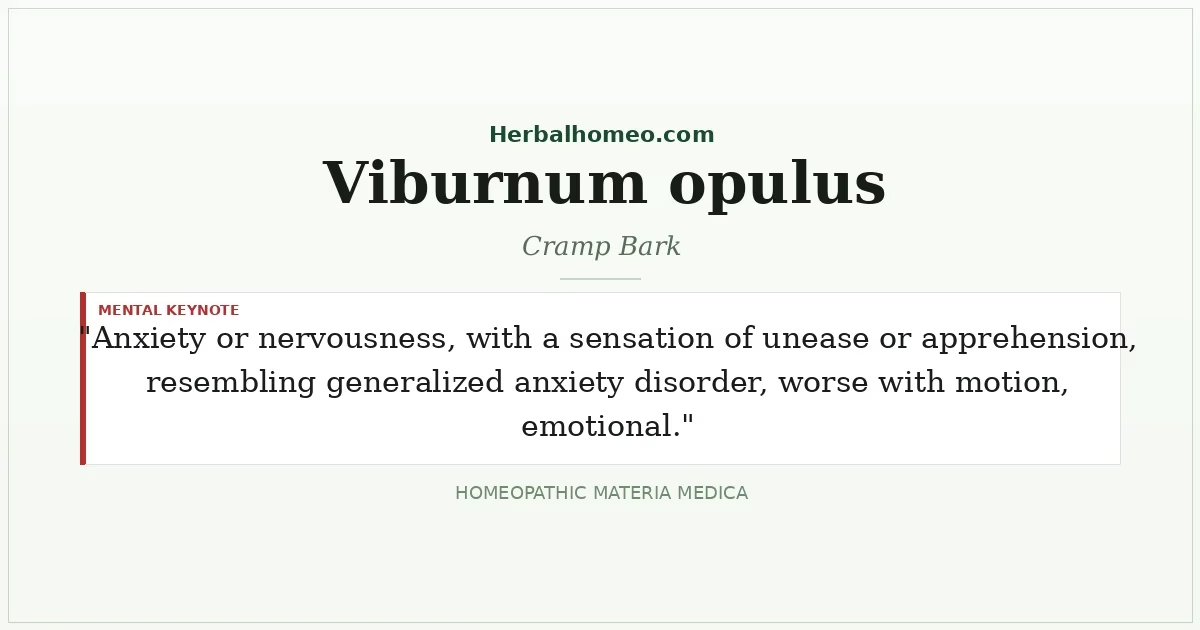
Viburnum opulus
Cramp Bark
Source: Derived from the fresh bark of Viburnum opulus, commonly known as Cramp Bark, Highbush Cranberry, or Guelder Rose, a deciduous shrub in the Adoxaceae family, prepared for homeopathic use through trituration and serial dilution to enhance therapeutic action while eliminating material properties, in accordance with homeopathic pharmacopeia standards.
Keynotes
- Anxiety or nervousness, with a sensation of unease or apprehension, resembling generalized anxiety disorder, worse with motion, emotional stress, confinement, or menstruation, often with palpitations or trembling.
- Muscle cramps or spasms, with a sensation of tightness or jerking, resembling muscle spasms, worse with motion, cold, exertion, or night, often with soreness or twitching.
Modalities
Worse: Motion, cold (weather, air, drinks), emotional stress, menstruation, exertion, night, dampness, lying on the painful side, fasting, tight clothing, morning.
Better: Rest, warmth (weather, applications), pressure, quiet environments, lying down, gentle stretching, emotional support, hydration, loose clothing, evening, open air (psychological symptoms).
Symptoms
Mind
- Anxiety or nervousness, with a sensation of unease or apprehension, resembling generalized anxiety disorder, worse with motion, emotional stress, confinement, or menstruation, often with palpitations or trembling.
- Irritability or mood swings, with a tendency to emotional outbursts or sensitivity, resembling adjustment disorder, aggravated by motion, cold, or stress, often with tearfulness or impatience.
- Emotional fragility or overwhelm, with a sensation of vulnerability or agitation, resembling somatic symptom disorder, worse with motion, cold, or social pressure, often with insomnia or fatigue.
Head
- Neuralgic pains or shooting pains, with a sensation of sharpness or burning, resembling neuralgia, worse with motion, cold, night, or stress, often with numbness or sensitivity.
- Limb twitching or restlessness, with a tendency to involuntary movements or discomfort, resembling restless legs syndrome, aggravated by motion, cold, or evening, often with crawling sensations or urge to move.
- Headaches or migraines, with a sensation of tension or spasms, resembling tension- type headache, worse with motion, cold, or emotional stress, often with neck stiffness or irritability.
Extremities
- Muscle cramps or spasms, with a sensation of tightness or jerking, resembling muscle spasms, worse with motion, cold, exertion, or night, often with soreness or twitching.
- Generalized aching or soreness, with a tendency to stiffness or fatigue, resembling fibromyalgia, aggravated by motion, cold, or stress, often with trigger points or weakness.
- Joint pains or stiffness, with a sensation of pulling or cramping, resembling myofascial pain syndrome, worse with motion, cold, or dampness, often with reduced mobility or tenderness.
Generalities – Children
- Indicated in adolescents with dysmenorrhea, muscle cramps, or anxiety, often linked to motion, cold, or emotional stress, worse with menstruation or night.
- May present with severe menstrual pain, restlessness, or irritability, particularly in sensitive, spasmodic children, often after cold exposure or stress.
- Children require urgent evaluation for underlying gynecological, musculoskeletal, or psychological conditions (e.g., dysmenorrhea, fibromyalgia, generalized anxiety disorder).
Potency and Dosage
Mother Tincture or usually 30, 200, 1000 or CM, depending upon the situation and the experience of the homoeopath.
Related
Colocynthis | Pulsatilla nigricans | Nux vomica | Depression, Hopelessness, Despair and Sadness | Homeopathic Treatment for Mental, Moral, and Spiritual Illnesses
This article is for educational purposes only and not a substitute for professional medical advice. Prepared by herbalhomeo.com/ Team