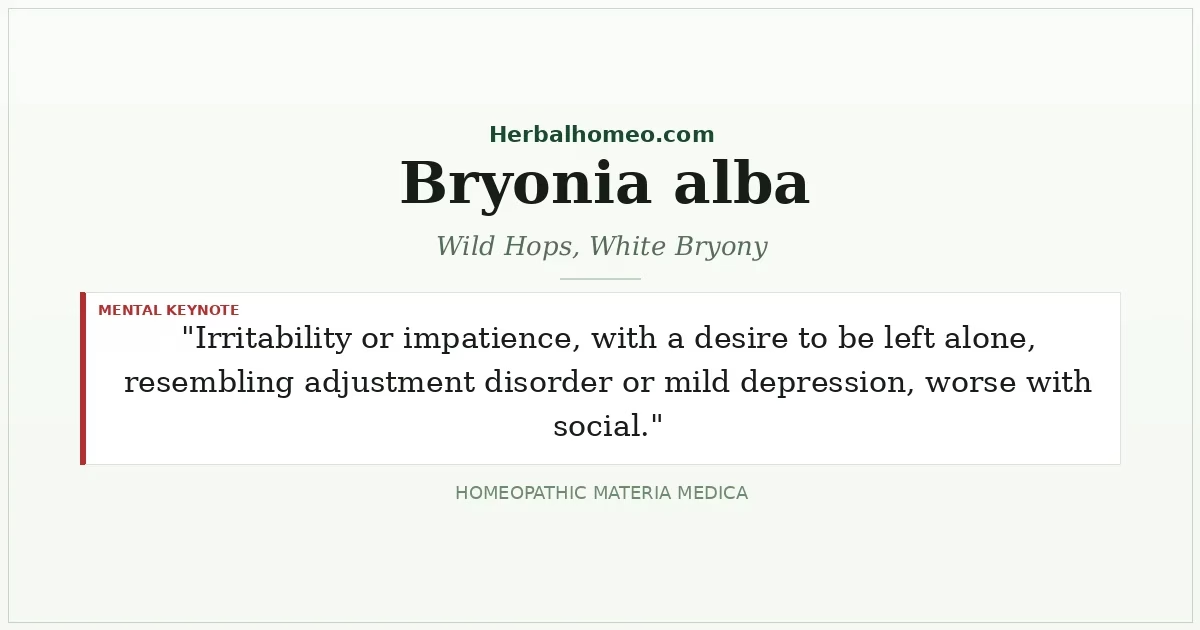
Bryonia alba
Wild Hops, White Bryony
Bryonia alba is suited for patients presenting with inflammatory, respiratory, musculoskeletal, and psychological conditions, primarily affecting the serous membranes, respiratory tract, joints, and emotional state, marked by stitching or bursting pains, dryness, joint stiffness, and irritability. Inflammatory symptoms include sharp, stitching pains in the chest, abdomen, or joints, resembling pleurisy, peritonitis, or arthritis, worse with motion or touch. Respiratory symptoms involve dry, hacking cough or chest pain, resembling pneumonia or bronchitis, worse with deep breathing or heat. Musculoskeletal symptoms include stiffness, soreness, or radiating pains, resembling fibromyalgia, sciatica, or osteoarthritis, worse with motion or warmth. Psychological symptoms feature irritability, impatience, or desire for solitude, resembling adjustment disorder or mild depression, worse with social interaction or stress. Systemic symptoms include fatigue, thirst for large quantities, and heat intolerance, resembling post-inflammatory exhaustion, worse after exertion or heat exposure. The remedy is highly relevant for acute or chronic conditions with a strong inflammatory and musculoskeletal component, commonly observed in individuals with infections, chronic pain, or stress-induced irritability.
Clinical Insights
- Regarding pleurisy, the symptoms of Borax resemble those of Bryonia.
- For the proper functioning of Bryonia, the weakness of the muscle fibres is not a precondition.
Keynotes
- Irritability or impatience, with a desire to be left alone, resembling adjustment disorder or mild depression, worse with social interaction, stress, or physical discomfort.
- Nausea, vomiting, or constipation, with a sensation of heaviness or fullness, resembling functional dyspepsia or irritable bowel syndrome, worse with motion, rich foods, or heat.
- Dry, hacking, or painful cough, with a sensation of soreness or stitching in the chest, resembling pneumonia, bronchitis, or pleurisy, worse with deep breathing, talking, or heat.
- Stiffness, soreness, or sharp pains in joints, muscles, or tendons, resembling osteoarthritis, fibromyalgia, or sciatica, worse with motion, warmth, or jarring.
- Chronic fatigue or weakness, with a sensation of heaviness or prostration, resembling chronic fatigue syndrome or post-inflammatory exhaustion, worse after exertion, heat, or inflammatory episodes.
Modalities
Worse: Motion (even slight), heat (air, weather, rooms), touch, deep breathing, jarring, warm rooms, exertion, rich foods, morning, emotional stress, coughing, standing.
Better: Rest, firm pressure, lying on the painful side, cold (air, applications, drinks), quiet environments, solitude, hydration, immobilization, cool air.
Symptoms
Mind
- Irritability or impatience, with a desire to be left alone, resembling adjustment disorder or mild depression, worse with social interaction, stress, or physical discomfort.
- Anxiety or restlessness about health, work, or finances, resembling generalized anxiety disorder, aggravated by pain or heat.
- Mental dullness or difficulty concentrating, often linked to physical suffering, worse during inflammatory or musculoskeletal symptom flares.
Digestion
- Nausea, vomiting, or constipation, with a sensation of heaviness or fullness, resembling functional dyspepsia or irritable bowel syndrome, worse with motion, rich foods, or heat.
- Bitter taste or coated tongue, with aversion to food despite hunger, worse in the morning or during fever.
- Abdominal pain, often stitching or cramping, resembling appendicitis or gastroenteritis, aggravated by touch or motion.
Respiratory
- Dry, hacking, or painful cough, with a sensation of soreness or stitching in the chest, resembling pneumonia, bronchitis, or pleurisy, worse with deep breathing, talking, or heat.
- Difficulty breathing or shortness of breath, with a feeling of tightness or heaviness, resembling acute respiratory distress or pulmonary consolidation, aggravated by motion or warm rooms.
- Dryness of mucous membranes, with scanty or absent expectoration, worse at night or in warm, humid conditions.
Extremities
- Stiffness, soreness, or sharp pains in joints, muscles, or tendons, resembling osteoarthritis, fibromyalgia, or sciatica, worse with motion, warmth, or jarring.
- Radiating or stitching pains, particularly in the back, limbs, or neck, resembling radiculopathy or myofascial pain syndrome, aggravated by sudden movement or heat.
- Tendency to joint swelling or effusion, with a bruised or heavy sensation, resembling rheumatoid arthritis or gout, worse with touch or exertion.
Potency and Dosage
Mother Tincture or usually 30, 200, 1000 or CM, depending upon the situation and the experience of the homoeopath.
Combinations
- He was given Aconite 200 combined with Rhus Tox 200 and Arnica 200 combined with Bryonia 200 alternatively, every half hour.
- However, after getting wet in the rain in cold weather, one should not rely only on Aconite and Rhus Tox, but Arnica combined with Bryonia should also be given alternatively.
- In some aspects, it is like Bryonia, and in another aspect, like Rhus Tox.
- In Bryonia, it is movement, and in Rhus Tox, it is rest which aggravates the discomfort.
Related
Rhus toxicodendron | Belladonna | Nux vomica | Homeopathy for Respiratory Health | Treating Severe Cough and Chest Congestion in Winter
This article is for educational purposes only and not a substitute for professional medical advice. Prepared by herbalhomeo.com/ Team
This article is for educational purposes only and not a substitute for professional medical advice.