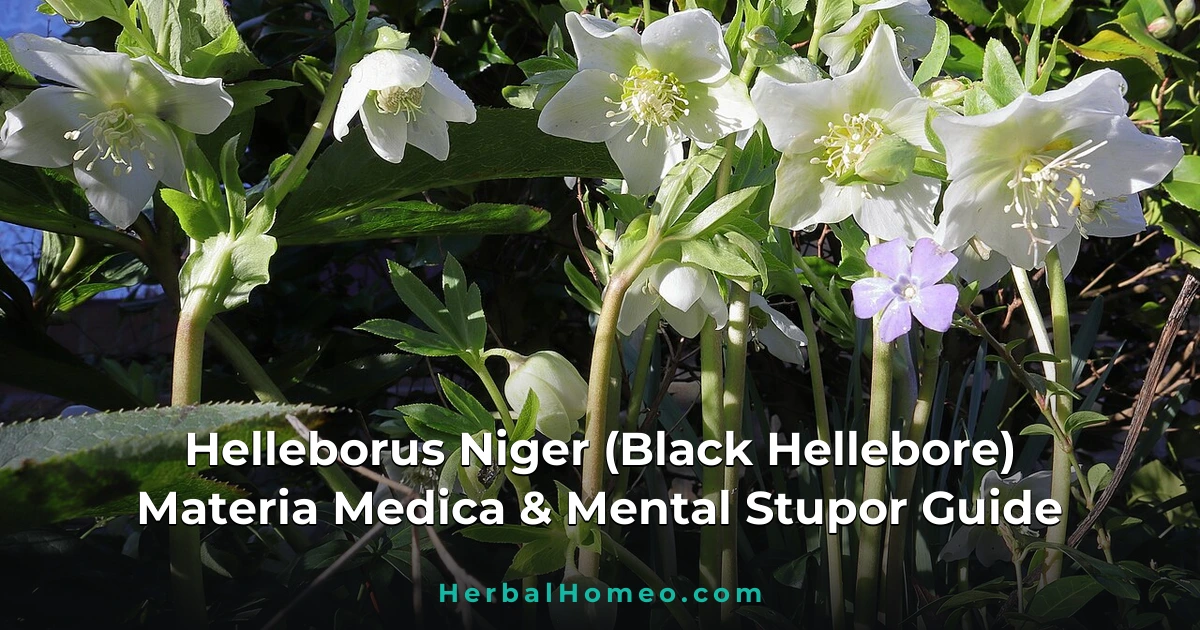
Helleborus Niger
Helleborus niger (Christmas rose) is a homeopathic remedy mainly associated with mental dullness, slowed responses and neurological complaints. Its key features are summarised below.
Key Characteristics
- Primarily indicated for neurological complaints, especially those affecting the brain and cognitive functions
- Associated with stupefaction, confusion, and dullness
- Useful in affections of the brain, spinal cord, nervous system, and mind
Physical Symptoms
- Mental dullness and decreased consciousness
- Stupor and confusion, particularly after head injuries or in cases of encephalitis🩺 EncephalitisClinical Disease Treatment Profile: Read homeopathic remedies, dietary recommendations, and natural therapeutic options.
- Sharp, sudden brain cry in children with hydrocephalus
- Automatic or involuntary motions
- Convulsive movements
Mental and Emotional Aspects
- Emotional apathy and indifference
- Lack of response to surroundings
- Difficulty concentrating
- Sadness and melancholy
- AggravationWorsening of symptomsAn increase in severity or intensity of symptoms, often caused by environmental factors or after taking a remedy. from consolation
Modalities
- Worse: Cold air, damp weather
- Better: Warmth, quiet and peaceful environment
Key Indications
- Neurological disorders affecting cognitive functions
- Brain inflammation and meningitis🩺 MeningitisClinical Disease Treatment Profile: Read homeopathic remedies, dietary recommendations, and natural therapeutic options.
- Hydrocephalus in children
- Head injuries with mental dullness
- Depression and melancholy states
Notable Features
- Often indicated for children between 2-10 years old
- Characteristic staring with half-closed eyes
- Face may have a sooty appearance, especially around nostrils and eyes
- Wrinkled forehead, often bathed in cold sweat
- Dilated, sooty nostrils
Complementary Treatments
- Rest and recovery
- Cold packs for swelling
- Proper nutrition and hydration
- Gentle exercise (when appropriate)
- Emotional support
Remember to consult a qualified homeopathic practitioner for proper diagnosis and treatment, as individual cases may vary. Meningitis, brain inflammation, hydrocephalus and head injuries are medical emergencies: seek hospital care immediately, and use homeopathy only alongside conventional treatment.
Sources:
https://www.homeopathyschool.com/the-clinic/self-help-remedies/helleborus-niger/
https://www.collaborativemedicalarts.net/articles/2019/7/16/introduction-to-helleborus
http://www.homeoint.org/books3/kentmm/hell-n.htm
https://www.homeopathyschool.com/the-clinic/self-help-conditions/head-injuries/
https://www.linkedin.com/pulse/health-benefits-uses-helleborus-niger-homeopathy-biogetica
https://www.vithoulkas.com/learning-tools/materia-medica-kent/helleborus-niger-kent/
https://www.homeopathyschool.org/plant-sources-for-homepathic-remedies/
https://www.sciencedirect.com/science/article/abs/pii/S0378874197001141
What are the primary indications for Helleborus Niger in homeopathy?
What specific mental and emotional states characterize a need for Helleborus Niger?
Are there any distinctive physical symptoms associated with Helleborus Niger?
What specific mental and emotional states characterize a need for Helleborus Niger?
Are there any distinctive physical symptoms associated with Helleborus Niger?
Helleborus niger (Christmas rose) is a homeopathic remedy mainly associated with mental dullness, slowed responses and neurological complaints.
What specific mental and emotional states characterize a need for Helleborus Niger?
This article is for educational purposes only and not a substitute for professional medical advice, diagnosis, or treatment. Always seek the advice of your physician or other qualified health provider with any questions you may have regarding a medical condition.

Dr. Luqman Naseer
This article is for informational purposes and has been reviewed for medical accuracy according to classical homeopathic principles. Editorial Policy.