Lipoma: A Complete Medical Overview and Homeopathic Treatment
What is a Lipoma?
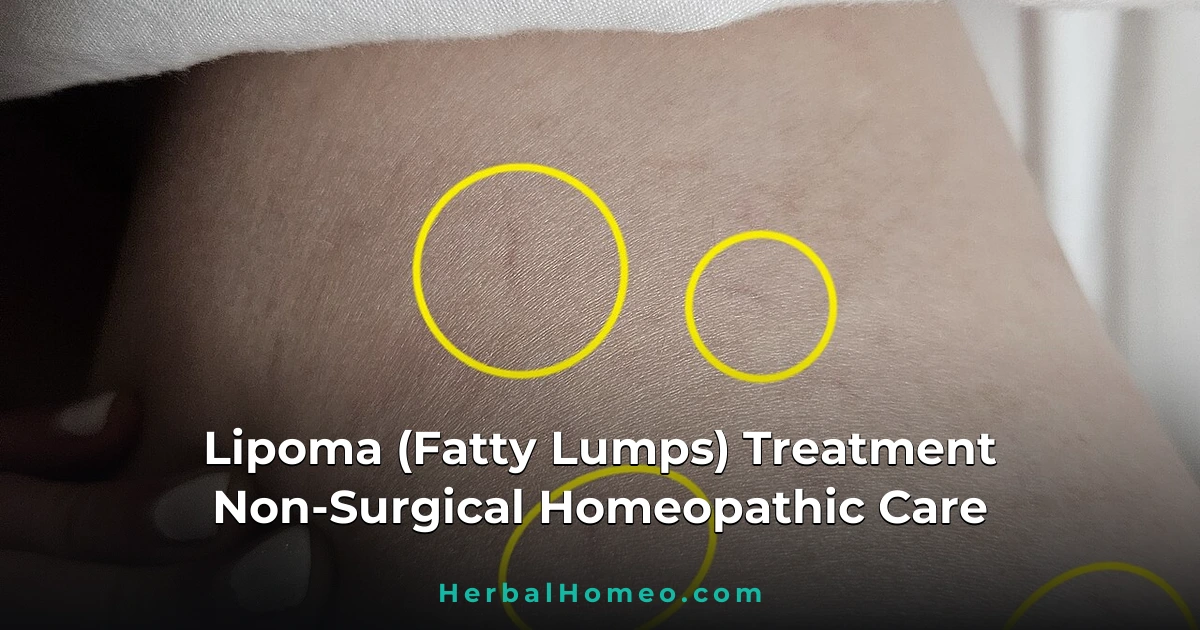
A lipoma is a benign (non-cancerous) growth of fatty tissue that develops just beneath the skin. These lumps are typically soft, movable, and painless. While generally harmless, their size and location may sometimes require medical attention. Lipomas can appear anywhere on the body but are most common on the neck, shoulders, back, arms, and thighs.
Miasm and Lipomas
Lipomas are closely linked to the SYCOSIS MIASM, a concept in homeopathy that refers to the accumulation of unnecessary substances in the body. This accumulation may manifest as fatty deposits, which contribute to the formation of lipomas.
Historical Significance of Lipomas
The medical community first identified lipomas in the 1700s. Since then, research has expanded significantly, improving our understanding of their nature, classification, and treatment options.
Types of Lipomas
Conventional Lipoma
This is the most common type, consisting entirely of fatty tissue. It is soft, movable, and typically painless.
Epidermal Lipoma
Located just beneath the skin’s fatty layer, this type appears slightly raised and feels soft to the touch.
Angiolipoma
Containing both fat and blood vessels, angiolipomas are more common in younger individuals and can be painful.
Fibrolipoma
Made of both fatty and fibrous tissue, these lipomas feel firmer and are less mobile compared to other types.
Myxoid Lipoma
This type includes fatty tissue mixed with a gel-like substance and grows slowly over time.
Spindle Cell Lipoma
Typically found in the neck and back, this type is more common in middle-aged men.
Intramuscular Lipoma
These lipomas develop deep within the muscles, making them harder to detect and potentially affecting movement.
Lipomatosis
This condition involves the presence of multiple lipomas across the body and may sometimes be hereditary.
Malignant Liposarcoma
Though rare, malignant liposarcomas are aggressive tumors that can invade surrounding tissues, posing significant health risks.
Diagnostic Tests for Lipomas
Ultrasound
- Helps determine the structure and location of the lipoma.
- Confirms whether the lump is a fatty deposit or a solid tumor.
MRI (Magnetic Resonance Imaging)
- Useful for larger or deeper lipomas.
- Identifies the lipoma’s effect on nearby nerves or blood vessels.
CT Scan (Computed Tomography)
- Evaluates the depth and complexity of lipomas, particularly those in unusual locations.
Common Sizes and Locations of Lipomas
- Sizes: Most lipomas are small (around 2 cm) but can grow as large as 10 cm or more.
- Locations: Lipomas are most frequently found on the neck, shoulders, back, arms, and thighs.
Potential Risks of Lipomas
Angiolipoma and Pain
These can cause severe discomfort, impacting daily activities.
Muscle Weakness from Intramuscular Lipomas
Intramuscular lipomas may restrict movement and reduce muscle strength.
Nerve Compression by Spindle Cell Lipomas
These can press on nerves, causing pain, tingling, or numbness.
Malignant Liposarcoma Dangers
Although rare, these tumors grow rapidly and can damage surrounding tissues, requiring urgent medical attention.
Homeopathic Treatment for Lipomas
Calcarea🌿 CalcareaMateria Medica Clinical Profile: Click to explore Boericke keynotes, symptoms, modalities, and dosage guidelines. Carbonica
This remedy is effective in reducing abnormal fat growth.
Thuja🌿 ThujaMateria Medica Clinical Profile: Click to explore Boericke keynotes, symptoms, modalities, and dosage guidelines. Occidentalis
It addresses lipomas associated with SYCOTIC MIASM, aiding in fat metabolism.
Bellis🌿 BellisMateria Medica Clinical Profile: Click to explore Boericke keynotes, symptoms, modalities, and dosage guidelines. Perennis
Recommended for lipomas caused by trauma or injury.
Phosphorus
Beneficial for individuals with tissue weakness or thinness.
Conium
Ideal for treating harder or firmer lipomas.
Conclusion
Lipomas are generally harmless, but their diagnosis and treatment depend on their type, size, and location. Homeopathy offers a safe and effective approach to managing lipomas without side effects. Always consult a qualified homeopathic practitioner to tailor treatment to your individual needs.
FAQs
1. Can a lipoma become cancerous?
Lipomas are typically benign, but in rare cases, they may develop into malignant liposarcomas.
2. Are homeopathic treatments effective for lipomas?
Yes, homeopathy provides personalized remedies that can manage lipomas effectively and naturally.
3. What dietary changes can help with lipomas?
A balanced diet with reduced fats and processed foods can help prevent or manage lipomas.
4. How can I differentiate between a lipoma and other lumps?
Lipomas are soft, movable, and painless, unlike malignant lumps which may be hard, fixed, and painful.
5. Are lipomas preventable?
While genetic factors may play a role, maintaining a healthy lifestyle can reduce the risk of developing lipomas.
What exactly is a lipoma, and can homeopathy offer a solution?
How does a homeopathic expert determine the best treatment for a lipoma, and how long does it take?
Are homeopathic remedies for lipomas safe, and can they prevent recurrence?
Liposarcoma DangersHomeopathic Treatment for LipomasCalcarea CarbonicaThuja OccidentalisBellis PerennisPhosphorusConiumConclusionFAQsWhat exactly is a lipoma, and can homeopathy offer a solution?
How does a homeopathic expert determine the best treatment for a lipoma, and how long does it take?
Are homeopathic remedies for lipomas safe, and can they prevent recurrence?
Yes, homeopathic remedies are extremely safe, highly diluted, and generally have no side effects or drug interactions.
A lipoma is a benign (non-cancerous) growth of fatty tissue that develops just beneath the skin.
This article is for educational purposes only and not a substitute for professional medical advice, diagnosis, or treatment. Always seek the advice of your physician or other qualified health provider with any questions you may have regarding a medical condition.

Dr. Luqman Naseer
This article is for informational purposes and has been reviewed for medical accuracy according to classical homeopathic principles. Editorial Policy.