Camphora
Camphor
Camphora is suited for patients presenting with acute infectious, cardiovascular, neurological, respiratory, and psychological conditions, primarily affecting the cardiovascular system, nervous system, respiratory tract, and emotional state, marked by extreme coldness, collapse, profuse discharges, and mental confusion. Infectious symptoms include high fever, chills, or profuse diarrhea, resembling influenza, cholera, or gastroenteritis, worse with cold exposure or dehydration. Cardiovascular symptoms involve collapse, weak pulse, or syncope, resembling hypovolemic or septic shock, worse with cold drafts or exertion. Neurological symptoms feature convulsions, delirium, or vertigo, resembling epileptic seizures or acute confusional states, worse with cold or sensory overload. Respiratory symptoms include dyspnea, cough, or chest oppression, resembling pneumonia or acute bronchitis, worse with cold air or lying down. Psychological symptoms involve acute anxiety, fear of death, or disorientation, resembling acute stress reaction or delirium, worse with cold, stress, or night. Systemic symptoms include icy coldness, profuse sweating, and exhaustion, resembling systemic inflammatory response syndrome (SIRS), worse after exertion or cold exposure. The remedy is highly relevant for acute, life-threatening conditions with a strong collapse and coldness component, commonly observed in individuals with severe infections or critical states.
Clinical Insights
- Camphora 196 The headache of a patient of Camphor does not involve the entire head.
- Whenever such Camphora 197 contrasting symptoms are noticed, Camphor should be kept in mind so that it may be used as needed.
Keynotes
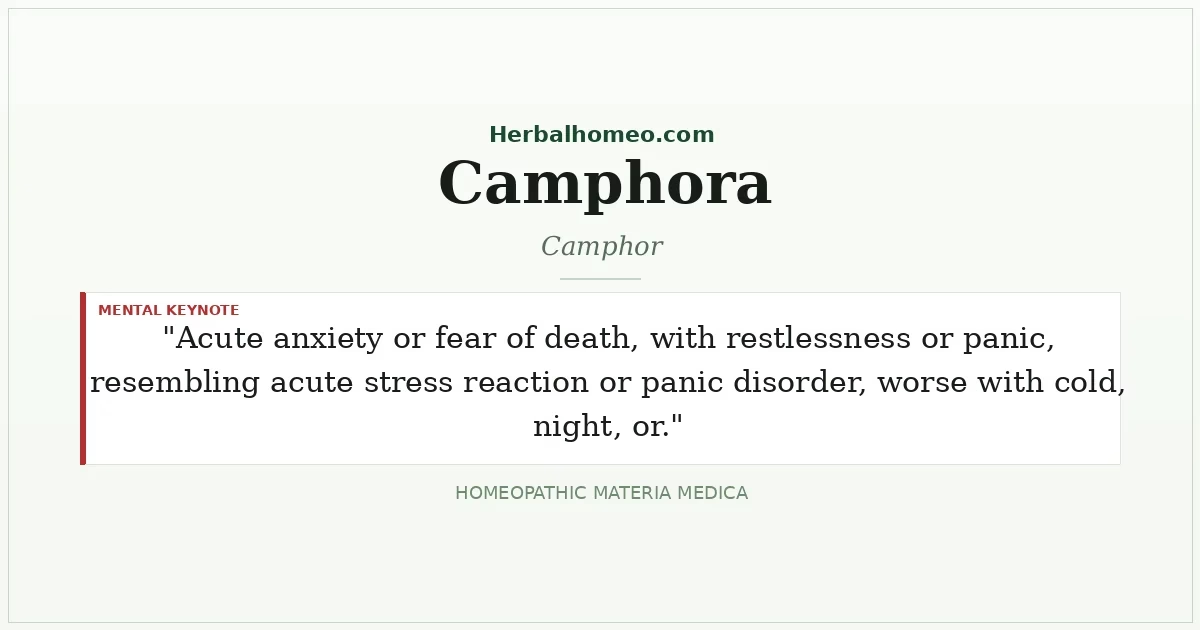
- Acute anxiety or fear of death, with restlessness or panic, resembling acute stress reaction or panic disorder, worse with cold, night, or isolation.
- Dyspnea or shortness of breath, with a sensation of chest oppression, resembling pneumonia or acute bronchitis, worse with cold air, lying down, or exertion.
- Extreme coldness, with icy skin and cold sweats, resembling systemic inflammatory response syndrome (SIRS) or shock, worse with cold exposure, drafts, or exertion.
- Collapse or shock, with weak, thready pulse and cold extremities, resembling hypovolemic, septic, or cardiogenic shock, worse with cold drafts, exertion, or dehydration.
Modalities
Worse: Cold (air, drafts, drinks), damp weather, night, exertion, dehydration, suppression of discharges (e.g., sweat, diarrhea), sensory overload, stress, lying down, sudden movement.
Better: Warmth (dry, moderate), covering, gentle motion, rest, quiet environments, emotional support, hydration, warm drinks.
Symptoms
Mind
- Acute anxiety or fear of death, with restlessness or panic, resembling acute stress reaction or panic disorder, worse with cold, night, or isolation.
- Mental confusion or disorientation, with difficulty focusing, resembling delirium or acute confusional states, aggravated by cold, stress, or dehydration.
- Irritability or agitation, often linked to physical collapse, resembling adjustment disorder, worse in cold or chaotic environments.
Head
- Convulsions or seizures, with twitching or rigidity, resembling epilepsy or febrile seizures, worse with cold, sensory overload, or fever.
- Delirium or acute confusion, with disorientation or hallucinations, resembling acute confusional states or delirium, aggravated by cold, night, or dehydration.
- Vertigo or dizziness, with a sensation of falling, resembling vestibular disturbance, worse with cold or sudden movement.
Respiratory
- Dyspnea or shortness of breath, with a sensation of chest oppression, resembling pneumonia or acute bronchitis, worse with cold air, lying down, or exertion.
- Dry, hacking cough or wheezing, resembling asthma or viral bronchitis, aggravated by cold, drafts, or night.
- Nasal congestion or coryza, with watery or acrid discharge, resembling acute rhinitis, worse with cold or allergens.
Heart
- Collapse or shock, with weak, thready pulse and cold extremities, resembling hypovolemic, septic, or cardiogenic shock, worse with cold drafts, exertion, or dehydration.
- Syncope or fainting, with sudden weakness or vertigo, resembling vasovagal syncope, aggravated by cold, standing, or emotional stress.
- Palpitations or irregular heartbeat, with a sensation of oppression, resembling arrhythmias, worse with cold or anxiety.
Potency and Dosage
Mother Tincture or usually 30, 200, 1000 or CM, depending upon the situation and the experience of the homoeopath.
Related
Arsenicum album | Veratrum album | Belladonna | Lower Your Blood Pressure Naturally with These 30 Herbs | Blood Clots Cholesterol and Blood Thickness
This article is for educational purposes only and not a substitute for professional medical advice. Prepared by herbalhomeo.com/ Team
This article is for educational purposes only and not a substitute for professional medical advice.