Enlarged Prostate (BPH): A Complete Natural and Homeopathic Cure
🌟 Key Takeaways
- Benign Prostatic Hyperplasia🩺 Benign Prostatic HyperplasiaClinical Disease Treatment Profile: Read homeopathic remedies, dietary recommendations, and natural therapeutic options. (BPH) is the non-cancerous enlargement of the prostate gland, affecting over 50% of men above the age of 50.
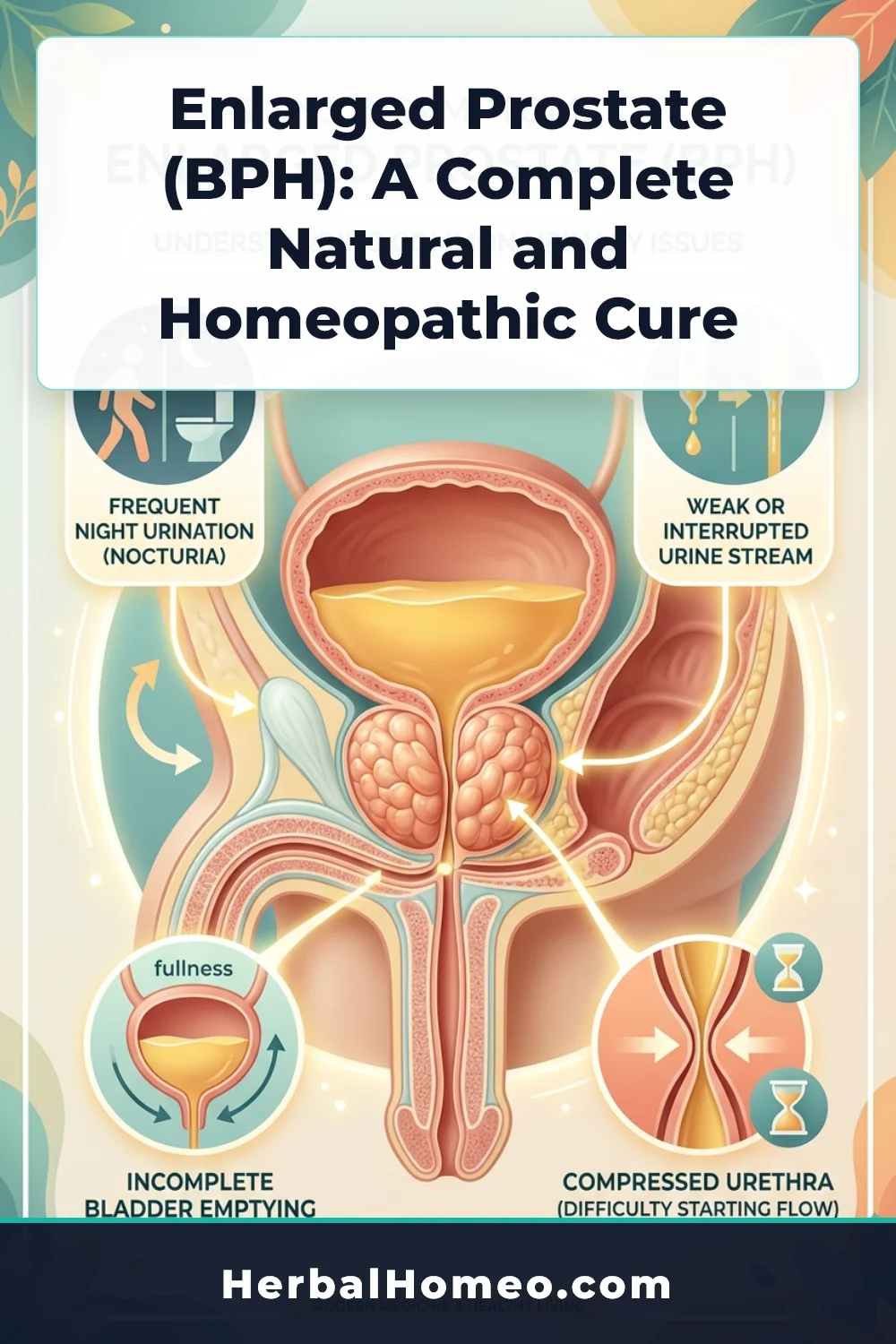
- An enlarged prostate physically squeezes the urethra, leading to frequent urination, weak urine stream, and waking up multiple times at night.
- Conventional treatments often involve daily medications that can cause severe side effects like sexual dysfunction, or invasive surgeries like TURP.
- Homeopathy offers a safe, side-effect-free alternative. Remedies like Sabal Serrulata and Conium🌿 ConiumMateria Medica Clinical Profile: Click to explore Boericke keynotes, symptoms, modalities, and dosage guidelines. Maculatum can significantly reduce prostate size and relieve urinary symptoms naturally.
What is an Enlarged Prostate (BPH)?
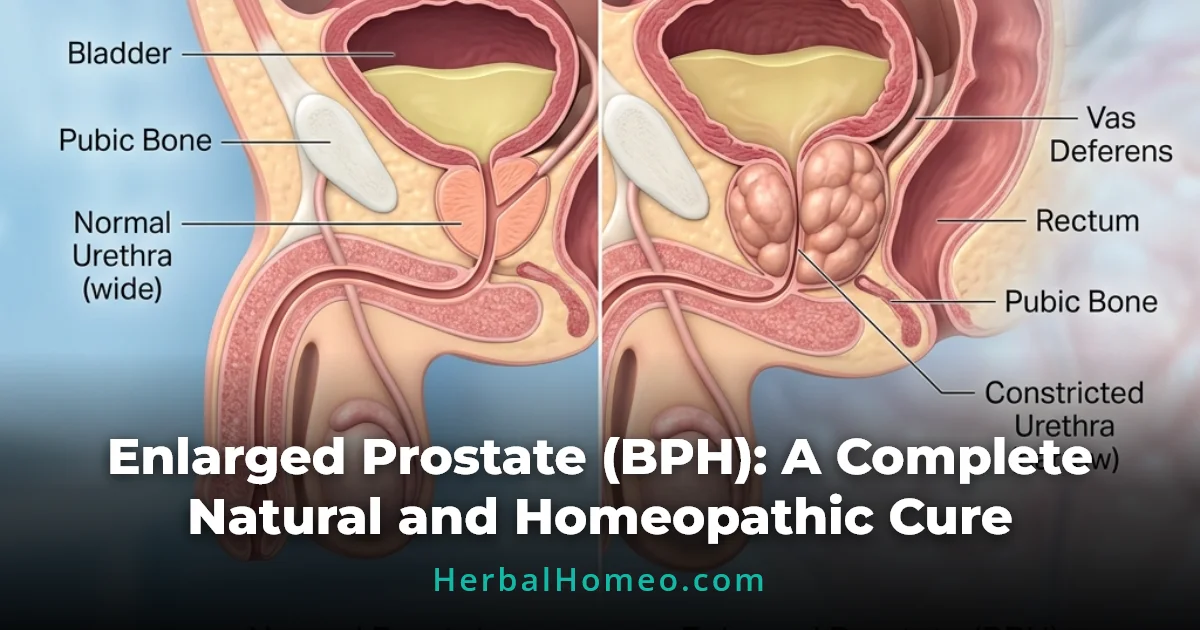
The prostate is a small, walnut🌿 WalnutMateria Medica Clinical Profile: Click to explore Boericke keynotes, symptoms, modalities, and dosage guidelines.-shaped gland that sits just below a man’s bladder. The urethra—the tube that carries urine from the bladder out of the penis—runs directly through the center of the prostate gland. As men age, the prostate goes through a natural, non-cancerous growth phase known as Benign Prostatic Hyperplasia (BPH).
Because the prostate wraps around the urethra, any swelling or enlargement acts like a clamp on a garden🌿 GardenMateria Medica Clinical Profile: Click to explore Boericke keynotes, symptoms, modalities, and dosage guidelines. hose. As the gland grows, it squeezes the urethra tighter and tighter, restricting the flow of urine and preventing the bladder from emptying completely.
Signs and Symptoms of BPH
The symptoms of an enlarged prostate develop gradually over time. If you are a man over 50, look out for these classic signs:
- Frequent Night Urination (Nocturia): Waking up two, three, or even more times during the night to urinate. This is often the first and most frustrating symptom.
- Difficulty Starting the Stream: Having to stand at the toilet and push or strain to get the urine flowing.
- Weak or Interrupted Stream: The urine stream is weak, dribbles, or stops and starts multiple times.
- Feeling of Incomplete Emptying: Even after urinating, you still feel like your bladder is full.
- Sudden Urgency: A sudden, uncontrollable urge to urinate that you cannot ignore.
The Risks of Conventional Treatments
Modern medicine usually treats BPH with drugs called alpha-blockers or 5-alpha reductase inhibitors. While these can help shrink the prostate or relax the muscles, they come with a heavy cost. The most common side effects include loss of libido, erectile dysfunction, and retrograde ejaculation. If medications fail, surgery (like TURP) is performed to physically cut away parts of the prostate, which carries its own risks of incontinence and permanent sexual side effects.
How Homeopathy Cures Enlarged Prostate Naturally
Homeopathic medicine approaches BPH fundamentally differently. Instead of artificially altering hormones with harsh chemicals, homeopathic remedies work with the body’s immune and lymphatic systems to naturally reduce glandular swelling, ease inflammation, and relax the urethral strictures. The result is a smooth, painless urine flow without any sexual side effects.
Top Homeopathic Remedies for BPH (Enlarged Prostate)
(Note: Always consult a professional homeopathic physician for constitutional treatment, as remedies are prescribed based on individual symptoms.)
1. Sabal Serrulata (Saw Palmetto) Q or 30C
Sabal Serrulata is undoubtedly the king of all homeopathic remedies for the prostate. It is specifically indicated when there is constant, frequent urination at night, accompanied by a coldness in the sexual organs. It has a proven ability to shrink the hypertrophied prostate gland and restore a strong, healthy urine stream.
2. Conium Maculatum (200C)
Conium is highly recommended for older men whose prostate enlargement is accompanied by extreme difficulty in emptying the bladder. The characteristic symptom is an interrupted urine flow—the urine starts, stops, starts again, and stops. It is also excellent for prostate glands that feel very hard to the touch.
3. Chimaphila🌿 ChimaphilaMateria Medica Clinical Profile: Click to explore Boericke keynotes, symptoms, modalities, and dosage guidelines. Umbellata (30C)
When the prostate enlargement causes such severe retention of urine that the patient must stand with their legs wide apart and lean forward just to pass a few drops, Chimaphila is the lifesaver. It also helps if there is a thick, ropy mucus or sediment in the urine.
4. Clematis🌿 ClematisMateria Medica Clinical Profile: Click to explore Boericke keynotes, symptoms, modalities, and dosage guidelines. Erecta (30C)
Clematis is brilliant for cases where the urethra feels incredibly tight and constricted. The patient may feel a tingling or burning sensation in the urethra lasting long after urinating. The stream is very slow, thin, and feeble.
5. Baryta🌿 BarytaMateria Medica Clinical Profile: Click to explore Boericke keynotes, symptoms, modalities, and dosage guidelines. Carb (200C)
This remedy is often given to elderly men who suffer from BPH along with memory loss or general age-related decline. It helps reduce the size of the gland in advanced age where the prostate has become hardened.
Diet and Lifestyle Changes for a Healthy Prostate
- Avoid Fluids Before Bed: Stop drinking liquids at least two hours before going to sleep to reduce nighttime bathroom trips.
- Limit Caffeine🌿 CaffeineMateria Medica Clinical Profile: Click to explore Boericke keynotes, symptoms, modalities, and dosage guidelines. and Alcohol: Both act as diuretics, irritating the bladder and increasing urine production rapidly.
- Eat Zinc🌿 ZincMateria Medica Clinical Profile: Click to explore Boericke keynotes, symptoms, modalities, and dosage guidelines.-Rich Foods: Pumpkin🌿 PumpkinMateria Medica Clinical Profile: Click to explore Boericke keynotes, symptoms, modalities, and dosage guidelines. seeds, spinach, and nuts are high in zinc, a mineral crucial for prostate health.
- Stay Active: Sedentary lifestyles and obesity significantly increase the risk and severity of BPH. Regular walking helps reduce pelvic congestion.
Frequently Asked Questions (FAQs)
Is BPH linked to prostate cancer?
No. BPH (Benign Prostatic Hyperplasia) is strictly non-cancerous. Having an enlarged prostate does not increase your risk of developing prostate cancer, although both conditions can exist at the same time.
Can Sabal Serrulata completely cure BPH?
In mild to moderate cases, Sabal Serrulata has shown remarkable success in reversing the enlargement and completely eliminating symptoms. In severe cases, it acts as a powerful management tool to avoid surgery.
How effective is homeopathy in managing and reversing symptoms of an enlarged prostate (BPH)?
What is the typical duration of homeopathic treatment for BPH, and when can one expect to see results?
Are there any side effects or risks associated with using homeopathic remedies for BPH, especially with other medications?
Signs and Symptoms of BPHThe Risks of Conventional TreatmentsHow Homeopathy Cures Enlarged Prostate NaturallyTop Homeopathic Remedies for BPH (Enlarged Prostate)1.
Signs and Symptoms of BPHThe Risks of Conventional TreatmentsHow Homeopathy Cures Enlarged Prostate NaturallyTop Homeopathic Remedies for BPH (Enlarged Prostate)1.
How effective is homeopathy in managing and reversing symptoms of an enlarged prostate (BPH)?
What is the typical duration of homeopathic treatment for BPH, and when can one expect to see results?
Are there any side effects or risks associated with using homeopathic remedies for BPH, especially with other medications?
This article is for educational purposes only and not a substitute for professional medical advice, diagnosis, or treatment. Always seek the advice of your physician or other qualified health provider with any questions you may have regarding a medical condition.

Dr. Luqman Naseer
This article is for informational purposes and has been reviewed for medical accuracy according to classical homeopathic principles. Editorial Policy.