Fatty Liver: Homeopathic Treatment & Natural Relief: Clinical Guide
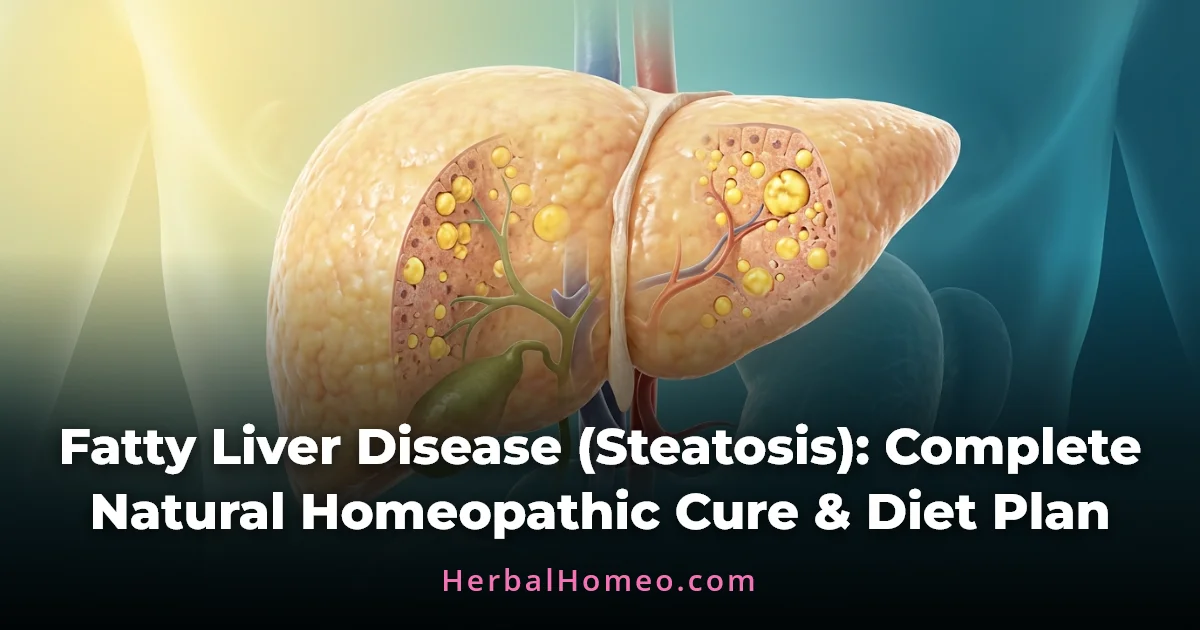
Non-Alcoholic Fatty Liver Disease🩺 Non-Alcoholic Fatty Liver DiseaseClinical Disease Treatment Profile: Read homeopathic remedies, dietary recommendations, and natural therapeutic options. (NAFLD), increasingly categorized under the broader diagnostic term Metabolic Dysfunction-Associated Steatotic Liver Disease (MASLD), represents one of the most widespread chronic metabolic conditions across the globe🌿 GlobeMateria Medica Clinical Profile: Click to explore Boericke keynotes, symptoms, modalities, and dosage guidelines.. Characterized by excessive triglyceride accumulation within hepatocytes exceeding five percent of total organ weight, fatty liver develops silently over years without initial distress. Left unchecked, simple steatosis can advance into non-alcoholic steatohepatitis (NASH), progressive portal fibrosis, and structural hepatic alteration.
While modern medicine emphasizes caloric reduction and cardiovascular risk reduction, clinical homeopathy and functional nutrition offer a deeply nuanced, systemic framework. Rather than isolating hepatic tissue from the organism as a whole, individualized homeopathic practice approaches hepatic fat deposition as an outward manifestation of deeper metabolic dysregulation, systemic inflammation, impaired biliary clearance, and neuroendocrine imbalance. By strengthening vitality and stimulating inherent physiological auto-regulation, constitutional homeopathy supports sustainable tissue resilience and digestive equilibrium.
Understanding NAFLD: Pathophysiology and Metabolic Underpinnings
The progression of fatty liver is driven primarily by insulin🌿 InsulinMateria Medica Clinical Profile: Click to explore Boericke keynotes, symptoms, modalities, and dosage guidelines. resistance, chronic hyperinsulinemia, and subsequent alterations in lipid kinetics. When peripheral adipocytes become resistant to insulin, uncontrolled lipolysis releases an unmanageable cascade of free fatty acids (FFAs) directly into the portal circulation. The liver absorbs these lipids, attempting to process them via mitochondrial beta-oxidation or pack them as very low-density lipoproteins (VLDL). Once the hepatic influx exceeds cellular processing capacity, excess triglycerides are stored as lipid droplets within the cytoplasm of hepatocytes.
This steatotic accumulation triggers a destructive chain of pathophysiological events:
- Mitochondrial Dysfunction: Overworked electron transport chains generate massive quantities of reactive oxygen species (ROS), causing lipid peroxidation and cellular stress.
- Kupffer Cell Activation: Resident hepatic macrophages initiate inflammatory cytokine production (TNF-alpha, IL-6), promoting chronic local and systemic inflammation.
- Hepatic Stellate Cell Stimulation: Sustained inflammatory insult activates stellate cells, which shift from vitamin A🌿 Vitamin AMateria Medica Clinical Profile: Click to explore Boericke keynotes, symptoms, modalities, and dosage guidelines.-storing structures into collagen-producing myofibroblasts, laying down early scar tissue.
- Biliary Congestion: Sluggish bile composition further impairs hepatic clearance of toxins and fat-soluble metabolites, perpetuating metabolic stasis.
The Homeopathic Approach to Hepatic Steatosis
In classical and clinical homeopathy, liver pathology is rarely evaluated in clinical isolation. Hahnemannian methodology recognizes the liver as a central organ of biological synthesis and elimination, deeply tied to the patient’s constitutional state, miasmatic predispositions (predominantly sycotic and psoric traits in metabolic conditions), and environmental exposures. Homeopathic treatment aims to recalibrate metabolic reactivity, assist liver drainage, reduce portal congestion, and support whole-body self-regulation.
Rather than relying on chemical suppression or unverified quick fixes, homeopathic therapeutics require matching the complete symptom totality—including emotional states, diurnal symptom fluctuations, thermal preferences, and localized physical sensations—with an aligned, precisely indicated single remedy. Below are five principal remedies most frequently considered in clinical practice for managing hepatic steatosis and digestive disharmony.
Top 5 Homeopathic Remedies for Fatty Liver Disease
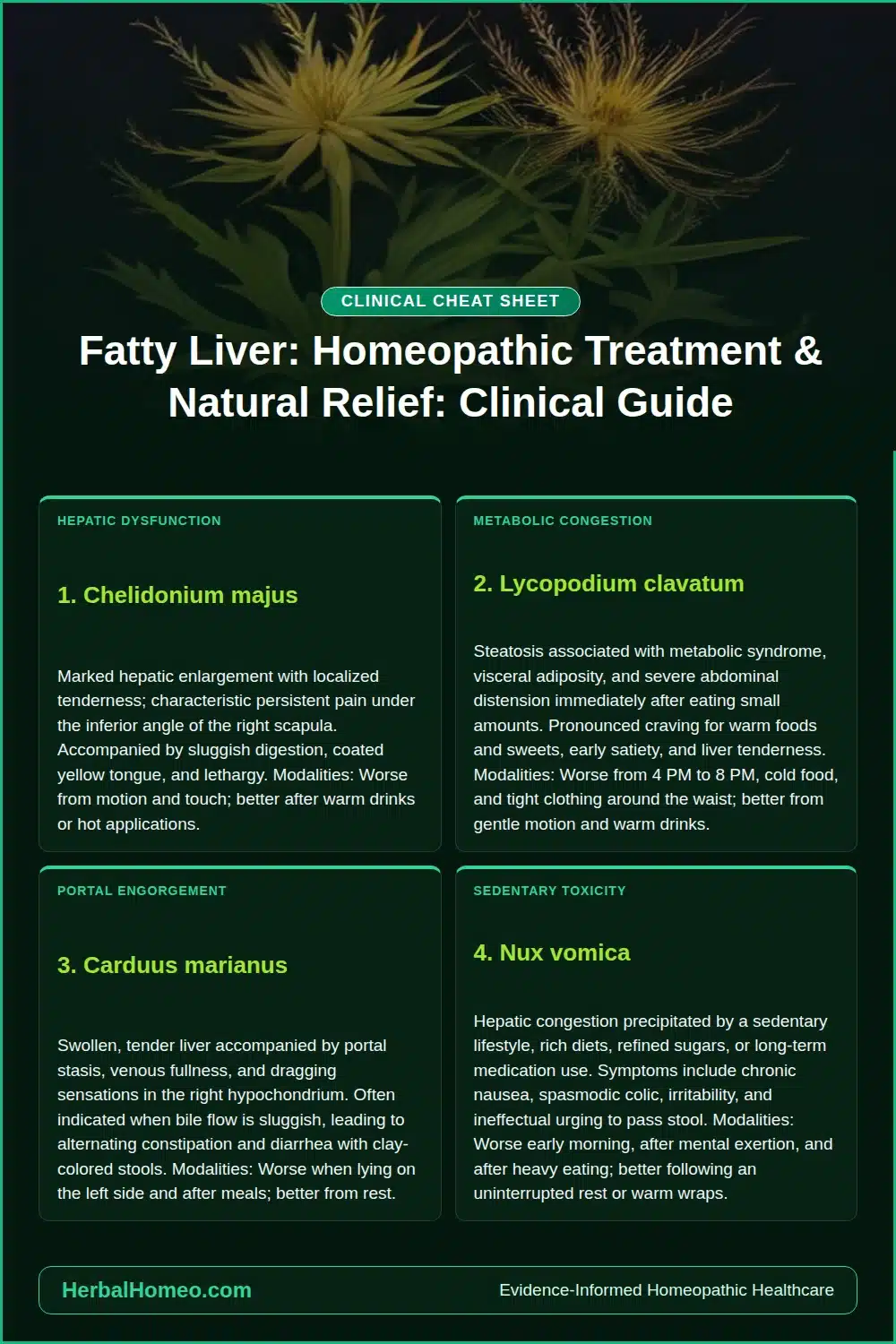
1. Chelidonium🌿 ChelidoniumMateria Medica Clinical Profile: Click to explore Boericke keynotes, symptoms, modalities, and dosage guidelines. Majus: The Primary Hepatic Regulator
Chelidonium majus is widely regarded as one of the most prominent liver remedies in homeopathic materia medicaEncyclopedia of homeopathic remediesA comprehensive body of collected knowledge describing the origin, preparation, and detailed symptom profiles of healing substances.. Its action focuses directly on the hepatic parenchyma, bile ducts, and right-sided abdominal organs. Patients requiring Chelidonium commonly report a dull, heavy, or pressing ache in the right upper quadrant, often radiating sharply to the inferior angle of the right scapula or back.
Clinical signs include a sallow or sub-icteric tint to the skin and conjunctiva, a thick yellow🌿 YellowMateria Medica Clinical Profile: Click to explore Boericke keynotes, symptoms, modalities, and dosage guidelines. coating on the tongue with imprinted teeth marks, nausea, and persistent fatigue. Digestion is sluggish, with an aversion to rich or greasy meals, yet symptoms often improve noticeably after ingesting very hot drinks. AggravationWorsening of symptomsAn increase in severity or intensity of symptoms, often caused by environmental factors or after taking a remedy. typically occurs from motion, right-sided pressure, and mid-morning hours.
2. Lycopodium🌿 LycopodiumMateria Medica Clinical Profile: Click to explore Boericke keynotes, symptoms, modalities, and dosage guidelines. Clavatum: For Metabolic Syndrome and Portal Distension
Lycopodium is deeply suited to individuals whose fatty liver is embedded within metabolic syndrome, characterized by abdominal adiposity, hypercholesterolemia, and glucose dysregulation. The hallmark of Lycopodium is extreme flatulenceGas accumulation in stomach or intestinesThe presence of excessive air or gas in the digestive tract, causing bloating and wind. and uncomfortable abdominal bloating developing almost immediately after eating, even after taking just a few small bites of food.
Patients display intense cravings for sweets and warm foods, suffer from sluggish intestinal peristalsis, and complain of right hypochondriac tenderness that feels worse from constricting waistbands. The emotional sphere frequently displays intellectual vigor alongside physical exhaustion and underlying performance anxiety. Symptom intensity visibly peaks during the late afternoon and early evening🌿 EveningMateria Medica Clinical Profile: Click to explore Boericke keynotes, symptoms, modalities, and dosage guidelines., notably between 4:00 PM and 8:00 PM.
3. Carduus🌿 CarduusMateria Medica Clinical Profile: Click to explore Boericke keynotes, symptoms, modalities, and dosage guidelines. Marianus: Relieving Portal Stasis and Venous Congestion
Carduus marianus (derived from Milk Thistle🌿 Milk thistleMateria Medica Clinical Profile: Click to explore Boericke keynotes, symptoms, modalities, and dosage guidelines.) possesses a long clinical history in botanical and homeopathic medicine for targeting the vascular and parenchymal infrastructure of the liver. In homeopathic preparation, Carduus addresses portal congestion, organ enlargement, and pelvic venous pooling such as hemorrhoids🩺 HemorrhoidsClinical Disease Treatment Profile: Read homeopathic remedies, dietary recommendations, and natural therapeutic options. accompanying chronic liver distress.
The patient experiences an intense, bruised soreness over the hepatic region, accompanied by fullness and uncomfortable stitching sensations. A unique modality is marked aggravation when lying on the left side, as the weight of the congested liver pulls toward the midline. Bowel habits often oscillate between sluggish constipationInfrequent or difficult bowel movementsA condition where stool is dry, hard, and difficult or painful to pass. with dry, hard, knotty stools and bouts of bilious diarrheaFrequent, loose, and watery stoolsA state of having three or more loose or liquid bowel movements per day..
4. Nux Vomica: Counteracting Sedentary Strain and Toxin Exposure
Nux vomica is indicated for individuals experiencing hepatic congestion secondary to modern lifestyle pressures—sedentary routines, high-stress occupations, excess refined food, heavy coffee consumption, alcohol, or polypharmacy. This lifestyle pattern causes systemic gastrointestinal irritability, spasm, and sluggish clearance.
The physical picture presents with bitter🌿 BitterMateria Medica Clinical Profile: Click to explore Boericke keynotes, symptoms, modalities, and dosage guidelines. taste upon waking, morning nausea, heartburn, and persistent ineffectual urging for bowel movements. Patients feel tense, irritable, and hypersensitive to sensory stimuli like light, noise, and odor. Symptoms are universally exacerbated in the early morning, following mental strain, or after overindulgence, while warmth and brief daytime naps offer temporary comfort.
5. Phosphorus: Supporting Deep Parenchymal and Lipid Metamorphosis
Phosphorus holds a crucial position in cases where fatty infiltration is extensive and paired with marked constitutional weakness, oxidative exhaustion, and cellular degeneration. Patients often present with acute weakness, trembling, a sensation of persistent emptiness in the epigastrium, and burning sensations throughout the gastrointestinal tract.
They exhibit strong physical cravings for ice-cold beverages, refreshing foods, and savory or salty snacks, though cold liquids may provoke discomfort once warmed within the stomach. Hepatic palpation reveals noticeable tenderness. Individuals matching Phosphorus are typically perceptive and impressionable, yet easily depleted physically and mentally. ModalitiesFactors that make symptoms better or worseEnvironmental influences (like temperature, weather, rest, motion, or time of day) that modify symptoms. include worsening when lying on the left side and improvement following rest in a quiet, dark environment.
Integrative Functional Protocol: Nutrition and Lifestyle Pillars
Because non-alcoholic fatty liver is fundamentally driven by lifestyle and metabolic load, constitutional homeopathic care should always be integrated with evidence-informed functional lifestyle protocols. Addressing the metabolic inputs directly relieves hepatic workload and accelerates the body’s natural regenerative cycles.
- Eliminate High-Fructose Corn🌿 CornMateria Medica Clinical Profile: Click to explore Boericke keynotes, symptoms, modalities, and dosage guidelines. Syrup and Refined Carbohydrates: Dietary fructose is metabolized exclusively by hepatocytes, rapidly generating de novo lipogenesis and intracellular uric acid. Eliminating sugar-sweetened beverages, commercial baked goods, and refined grains is critical for unloading hepatic fat stores.
- Adopt a Mediterranean-Style Anti-Inflammatory Diet: Emphasize high-polyphenol extra virgin olive oil🌿 Olive OilMateria Medica Clinical Profile: Click to explore Boericke keynotes, symptoms, modalities, and dosage guidelines., cruciferous vegetables (rich in sulforaphane to upregulate phase II detoxification), leafy greens, wild🌿 WildMateria Medica Clinical Profile: Click to explore Boericke keynotes, symptoms, modalities, and dosage guidelines.-caught omega-3-rich fish, and sulfur-bearing alliums like garlic🌿 GarlicMateria Medica Clinical Profile: Click to explore Boericke keynotes, symptoms, modalities, and dosage guidelines. and onions.
- Implement Time-Restricted Eating: Consolidating food intake into a consistent 8- to 10-hour daytime window promotes metabolic flexibility, activates cellular autophagy, and encourages hepatocytes to mobilize and burn stored intracellular lipid droplets during fasting intervals.
- Incorporate Regular Mixed-Modality Physical Exercise: Combining moderate-intensity aerobic exercise with structured resistance training significantly improves insulin sensitivity in skeletal muscle, lowering the excess glucose and free fatty acid overflow that burdens the liver.
- Support Endogenous Choline Levels: Choline is essential for synthesizing phosphatidylcholine, which forms the outer shell of VLDL particles. Adequate intake from whole eggs, legumes, and brassica vegetables helps prevent trapped triglycerides inside hepatic cells.
Clinical Monitoring and Progress Assessment
Managing fatty liver disease requires objective, ongoing clinical surveillance. Working closely with healthcare providers ensures that progress is consistently validated through standard diagnostics. Routine evaluation should incorporate serial serum🌿 SerumMateria Medica Clinical Profile: Click to explore Boericke keynotes, symptoms, modalities, and dosage guidelines. biomarker panels, including alanine aminotransferase (ALT), aspartate aminotransferase (AST), and gamma-glutamyl transferase (GGT), alongside comprehensive metabolic markers such as fasting glucose, fasting insulin (calculating HOMA-IR), and high-sensitivity C-reactive protein (hs-CRP).
Non-invasive structural imaging, including abdominal ultrasound and transient elastography (FibroScan), provides valuable quantitative benchmarks regarding hepatic steatosis and liver stiffness over 6- to 12-month periods. As systemic metabolism improves, clinical observations typically demonstrate reduced digestive distension, normalized stool quality, improved morning energy, and sustained reductions in abdominal circumference.
This article is for education and does not replace diagnosis or treatment by your doctor. Do not stop prescribed medication without medical advice.
Every individual’s metabolic constitution and toxic burden are unique. If you are navigating non-alcoholic fatty liver disease and seeking an integrative, carefully customized homeopathic protocol, schedule an evaluation with an experienced practitioner today. Book your personalized clinical consultation here to begin your structured path toward vital liver wellness.
What is fatty liver and how does homeopathy address its underlying causes?
Can you name some frequently used homeopathic remedies for fatty liver, and how is the best one selected?
What natural relief measures can complement homeopathic treatment for fatty liver, and what is the typical timeframe for improvement?
Can you name some frequently used homeopathic remedies for fatty liver, and how is the best one selected?
What natural relief measures can complement homeopathic treatment for fatty liver, and what is the typical timeframe for improvement?
Complementary measures include a balanced, low-fat, high-fiber diet, regular exercise, adequate hydration, and avoidance of alcohol.
Can you name some frequently used homeopathic remedies for fatty liver, and how is the best one selected?
This article is for educational purposes only and not a substitute for professional medical advice, diagnosis, or treatment. Always seek the advice of your physician or other qualified health provider with any questions you may have regarding a medical condition.

Dr. Luqman Naseer
This article is for informational purposes and has been reviewed for medical accuracy according to classical homeopathic principles. Editorial Policy.