GERD: Homeopathic Care & Natural Relief: Clinical Guide
Gastroesophageal Reflux Disease🩺 Gastroesophageal Reflux DiseaseClinical Disease Treatment Profile: Read homeopathic remedies, dietary recommendations, and natural therapeutic options. (GERD), traditional acid reflux, and Laryngopharyngeal Reflux (commonly termed “silent reflux” or LPR) represent progressive expressions of disrupted gastrointestinal balance. While conventional modalitiesFactors that make symptoms better or worseEnvironmental influences (like temperature, weather, rest, motion, or time of day) that modify symptoms. frequently default to the suppression of stomach acid through proton pump inhibitors and H2 receptor antagonists, clinical homeopathy approaches these disturbances through the lens of individualized regulatory restoration. Rather than merely masking biochemical signaling, the goal is to optimize motility, support Lower Esophageal Sphincter (LES) competence, soothe the mucosal lining, and recalibrate autonomic nervous system balance.
Understanding GERD, Acid Reflux, and Silent Reflux
Acid reflux occurs when gastric acid, bile salts, and digestive enzymes periodically flow backward past the lower esophageal sphincter, irritating the squamous epithelial lining of the esophagus. When this retrograde flow manifests chronicity—occurring multiple times weekly or damaging tissue—it meets the criteria for GERD. Typical presentations include retrosternal pyrosis (heartburn), waterbrash (the rapid appearance of sour, salivatory liquid in the mouth), painful swallowing (odynophagia), and chest discomfort that can mimic cardiac distress.
Conversely, Laryngopharyngeal Reflux presents an insidious pathology. In LPR, the upper esophageal sphincter fails to keep gastric aerosols from ascending into the posterior pharynx, larynx, and nasopharynx. Because these delicate tissues lack the carbonic anhydrase-producing protective barriers found in the lower esophagus, even minuscule amounts of aerosolized pepsin and acid elicit pronounced inflammation. Patients rarely experience overt heartburn; instead, silent reflux presents with persistent throat clearing, globus sensation (a feeling of a lump in the throat), chronic hoarseness, nocturnal post-nasal drip, coughing fits, and mucosal irritation.
The conventional paradigm typically assumes an excess of hydrochloric acid. However, functional gastroenterology and homeopathic clinical experience observe that hypochlorhydria (insufficient acid production) is often the true initiator. Inadequate acidity stalls gastric emptying, increases intragastric pressure through aberrant microbial fermentation, and impedes the chemical signaling that instructs the lower esophageal sphincter to remain securely closed. Addressing this cycle requires an integrated perspective that supports digestive vigor alongside cellular integrity.
The Homeopathic Perspective on Upper Digestive Disorders
In classical homeopathy, reflux is not isolated as a localized dysfunction; it is regarded as an expression of an impaired vital dynamic involving the neuro-digestive axis. The gastrointestinal tract maintains an intricate relationship with the central nervous system through the vagus nerve. Emotional distress, chronic sympathetic dominance, and metabolic dysbiosis disrupt normal peristaltic sequencing, resulting in reverse motility and sphincteric laxity.
Homeopathic remedies do not suppress gastric secretions. Instead, they act as energetic stimuli to assist the body’s intrinsic self-regulatory mechanisms. By mapping the patient’s individual totality—observing precise modalities, temporal patterns, emotional undercurrents, and sensations—the practitioner selects an analog remedy that guides the system toward functional equilibrium.
Key Clinical Homeopathic Remedies
Selection of an appropriate homeopathic remedy demands meticulous scrutiny of unique symptoms, triggers, and relief factors. Below are five pivotal remedies frequently applied in clinical digestive balance:
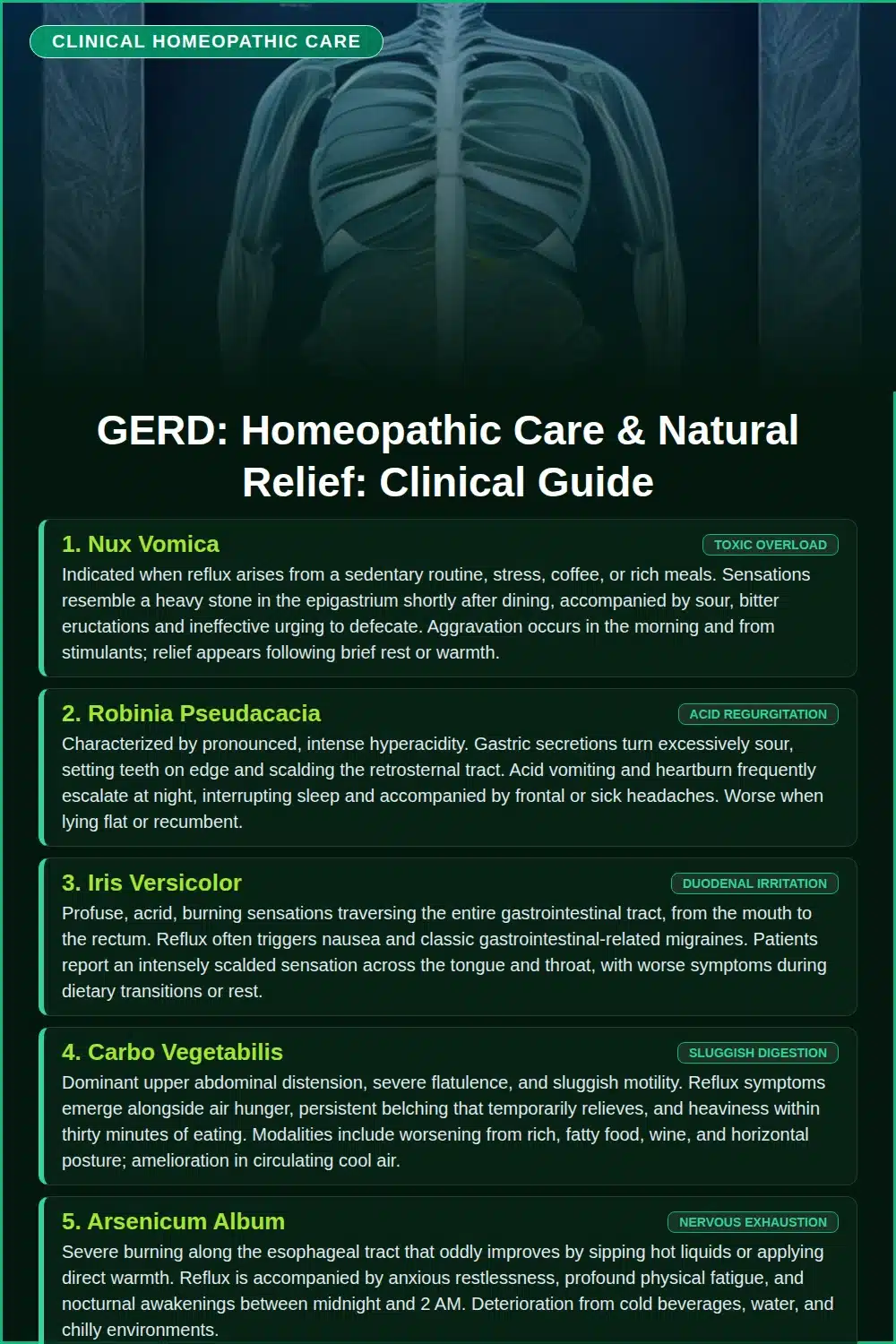
1. Nux Vomica
Nux Vomica is uniquely suited for the consequences of modern stress and dietary indulgence. It matches individuals with sedentary routines who consume high-stress workloads alongside compensatory stimulants such as coffee, rich sauces, spices, or alcohol. Patients describe an oppressive fullness in the stomach, often noting that food sits “like a heavy leaden stone” for hours following intake. Retrograde flow is bitter🌿 BitterMateria Medica Clinical Profile: Click to explore Boericke keynotes, symptoms, modalities, and dosage guidelines. or sour, accompanied by recurrent nausea, irritability, spasmodic belching, and unsuccessful urging to pass stool. Symptoms worsen substantially in the early morning hours and from mental exertion, whereas warmth and brief periods of quiet rest provide relief.
2. Robinia Pseudacacia
When the clinical picture is dominated by excessive, acrid hyperacidity, Robinia Pseudacacia is a chief consideration. The secretions are so aggressively sour that they leave the throat raw and feel as though they set the patient’s teeth on edge. The patient experiences burning along the retrosternal area that intensifies severely during the night, provoking sudden awakenings. Robinia is also indicated when hyperchlorhydria is linked with chronic frontal or temporal headaches that coincide with digestive distress. The condition deteriorates when lying recumbent and from carbohydrates or fatty food.
3. Iris🌿 IrisMateria Medica Clinical Profile: Click to explore Boericke keynotes, symptoms, modalities, and dosage guidelines. Versicolor
Iris Versicolor demonstrates a distinct elective affinity for the complete digestive mucous membrane, particularly addressing pancreas-duodenal axis congestion. The keynote symptom is profound burning that spans the oral cavity, esophagus, and lower intestinal mucosa. The tongue and pharynx often feel as if they have been scalded by boiling water🌿 WaterMateria Medica Clinical Profile: Click to explore Boericke keynotes, symptoms, modalities, and dosage guidelines.. Acid regurgitationBackward flow of blood or fluidsThe casting up of undigested food from the stomach, or the backward flow of blood through a defective heart valve. is bitter, greasy, or acrid, and is frequently paired with sick headaches or classic migraines that originate over one eye.🌿 Eye.Materia Medica Clinical Profile: Click to explore Boericke keynotes, symptoms, modalities, and dosage guidelines. Symptoms are prone to emerge periodically and worsen after resting or consuming rich desserts.
4. Carbo🌿 CarboMateria Medica Clinical Profile: Click to explore Boericke keynotes, symptoms, modalities, and dosage guidelines. Vegetabilis
Known clinically for profound sluggishness and venous stasis, Carbo Vegetabilis is indicated when severe gastrointestinal distension dominates the picture. The upper abdomen feels stretched to maximum capacity, producing intense pressure upward against the diaphragm that interferes with normal inspiration. Frequent, heavy eructations provide transient, slight relief, but the fermentation returns quickly. Patients report immense fatigue, a sensation that the stomach is completely paralyzed, and an instinctive desire to have cool air circulating. Aggravations stem from lying flat, evening🌿 EveningMateria Medica Clinical Profile: Click to explore Boericke keynotes, symptoms, modalities, and dosage guidelines. hours, and meals containing animal fats, milk🌿 MilkMateria Medica Clinical Profile: Click to explore Boericke keynotes, symptoms, modalities, and dosage guidelines., or decadent food.
5. Arsenicum🌿 ArsenicumMateria Medica Clinical Profile: Click to explore Boericke keynotes, symptoms, modalities, and dosage guidelines. Album
Arsenicum Album addresses intense, fiery burning sensations throughout the stomach and retrosternal path. Despite the heat of the inflammation, the physical symptoms are paradoxically relieved by warm applications and drinking hot beverages in small sips. The psychological profile features pronounced health-related anxiety, perfectionism, and deep physical restlessness. Gastrointestinal episodes escalate typically past midnight, especially between 1:00 AM and 2:00 AM, leaving the individual depleted. Symptoms severely aggravate with cold drinks, ice cream, seasonal fruits, and damp weather.
Natural Gut Repair and Mucosal Restoration
Alongside individualized homeopathic support, repairing the mechanical and mucosal integrity of the digestive tract is essential. Long-standing reflux compromises the protective mucin layer that shields the esophagus and stomach from chemical irritation. An evidence-informed gut recovery strategy involves multi-layered support:
Demulcent Barrier Reinforcement: Botanical agents such as Deglycyrrhizinated Licorice🌿 LicoriceMateria Medica Clinical Profile: Click to explore Boericke keynotes, symptoms, modalities, and dosage guidelines. (DGL), Slippery Elm🌿 Slippery ElmMateria Medica Clinical Profile: Click to explore Boericke keynotes, symptoms, modalities, and dosage guidelines. (Ulmus rubra), and Marshmallow Root🌿 Marshmallow RootMateria Medica Clinical Profile: Click to explore Boericke keynotes, symptoms, modalities, and dosage guidelines. (Althaea officinalis) provide plant polysaccharides that physically adhere to the esophageal and gastric tissues. This mucilaginous coating protects bare nerve endings from acid and pepsin exposure, allowing cellular repair mechanisms to operate undisturbed.
Epithelial Integrity Support: Zinc🌿 ZincMateria Medica Clinical Profile: Click to explore Boericke keynotes, symptoms, modalities, and dosage guidelines. carnosine provides targeted benefits for damaged mucosal linings. By stabilizing the gastric mucosa and promoting cellular regeneration through localized antioxidant actions, zinc carnosine assists in addressing persistent micro-ulcerations and tissue friability along the distal esophagus.
Balancing Gastric Secretions: When hypochlorhydria is present, optimizing digestive fire is paramount. Utilizing small quantities of organic unpasteurized apple cider vinegar or digestive herbal bitters diluted in ambient water prior to substantial meals can stimulate normal cephalic and gastrin reflexes. This supports adequate intrinsic acidity, accelerating food clearance into the duodenum and preventing intra-abdominal pressure surges.
Lifestyle and Biomechanical Modifications
Biomechanical adjustments play an indispensable role in preventing retrograde fluid flow. Simple, systematic changes alleviate mechanical load on the lower esophageal sphincter:
Optimize Bed Posture: Gravity remains a vital ally. Elevating the head of the bed frame approximately six inches, or using a medically designed wedge cushion, significantly shortens the duration of nocturnal acid contact. Sleeping on the left lateral decubitus position keeps the gastroesophageal junction elevated above the pool of gastric contents, decreasing nocturnal regurgitation episodes.
Meal Timing and Pacing: Cease food consumption a minimum of three hours prior to retiring for sleep. Refrain from consuming large quantities of liquids during meals, as this dilutes gastric enzymes and inflates gastric volume. Encourage thorough mastication; saliva is rich in epidermal growth factor and bicarbonate, both of which naturally buffer gastric juices.
Diaphragmatic and Vagal Tone: The lower esophageal sphincter relies partially on the physical support of the diaphragmatic crura. Practicing slow, diaphragmatic breathing prior to dining tones the vagus nerve, shifting the autonomic system from sympathetic alarm into parasympathetic digestion, which normalizes esophageal sphincter contractility.
This article is for education and does not replace diagnosis or treatment by your doctor. Do not stop prescribed medication without medical advice.
Chronic reflux should not be accepted as an unavoidable lifestyle tax or suppressed indefinitely without addressing foundational gut health. A comprehensive homeopathic evaluation pairs physical, dietary, and constitutional parameters to restore functional digestive comfort. To schedule an individualized clinical assessment, visit our team to book your consultation today.
This article is for educational purposes only and not a substitute for professional medical advice, diagnosis, or treatment. Always seek the advice of your physician or other qualified health provider with any questions you may have regarding a medical condition.

Dr. Luqman Naseer
This article is for informational purposes and has been reviewed for medical accuracy according to classical homeopathic principles. Editorial Policy.