PCOS & PCOD: Homeopathic Treatment & Natural Relief
Polycystic Ovary Syndrome🩺 Polycystic Ovary SyndromeClinical Disease Treatment Profile: Read homeopathic remedies, dietary recommendations, and natural therapeutic options. (PCOS) and Polycystic Ovarian Disease (PCOD) represent complex multi-system endocrine disorders rather than isolated gynecological complaints. Affecting millions of reproductive-age individuals worldwide, these conditions feature a spectrum of metabolic, ovulatory, and physiological disturbances. While conventional therapies frequently rely on synthetic hormonal suppression or oral contraceptives, evidence-informed constitutional homeopathy approaches the individual through systemic regulation, seeking to stimulate endogenous endocrine stability and optimize ovarian follicular dynamics.
Understanding PCOS vs. PCOD: Clinical Distinctions and Etiology
Although frequently used interchangeably in common dialogue, PCOD and PCOS exhibit crucial clinical variations regarding systemic severity and metabolic involvement. PCOD is primarily a functional disorder characterized by the presence of numerous immature or partially matured follicles within the ovaries. Driven by temporary lifestyle imbalances or nutritional shifts, the ovaries release these partially developed eggs, which subsequently form small benign cysts. With moderate adjustments, normal follicular development often resumes.
Conversely, PCOS represents a deeper, systemic metabolic-endocrine syndrome. Governed under the Rotterdam Diagnostic Criteria, an individual must manifest at least two of the following clinical features: oligo-ovulation or anovulation, biochemical or clinical hyperandrogenism (excess testosterone or DHEA), and polycystic morphology on pelvic ultrasonography. In PCOS, hyperinsulinemia plays a central driving role. Excess circulating insulin🌿 InsulinMateria Medica Clinical Profile: Click to explore Boericke keynotes, symptoms, modalities, and dosage guidelines. stimulates the ovarian theca cells to overproduce androgens while simultaneously downregulating sex hormone-binding globulin (SHBG) synthesis in the liver. This cascade halts healthy folliculogenesis, arrests mature follicle emergence, and locks the hypothalamic-pituitary-ovarian (HPO) axis in a chronic state of feedback failure.
The Classical Homeopathic Approach to Ovarian Cysts
In traditional homeopathy, ovarian cysts and endocrine dysregulation are not viewed as localized mechanical failures demanding surgical excision or hormonal suppression. Instead, they are regarded as outward expressions of internal biological disequilibrium. Synthetic hormones frequently act as an external crutch, imposing artificial cycles without correcting the fundamental signaling deficits within the pituitary or the ovarian receptor beds.
Homeopathic management utilizes the law of similars, choosing individualized remedies that match the patient’s unique totality of symptoms—encompassing mental state, emotional stressors, thermal tendencies, lateralities, and physical modalitiesFactors that make symptoms better or worseEnvironmental influences (like temperature, weather, rest, motion, or time of day) that modify symptoms.. By addressing the constitutional foundation and any underlying sycotic or psoric miasmatic load, classical remedies aim to gently prompt self-regulatory processes, downregulate inflammatory mediators, and facilitate the natural reabsorption of fluid within follicular cysts.
Key Homeopathic Remedies for PCOS, PCOD, and Hormonal Harmony
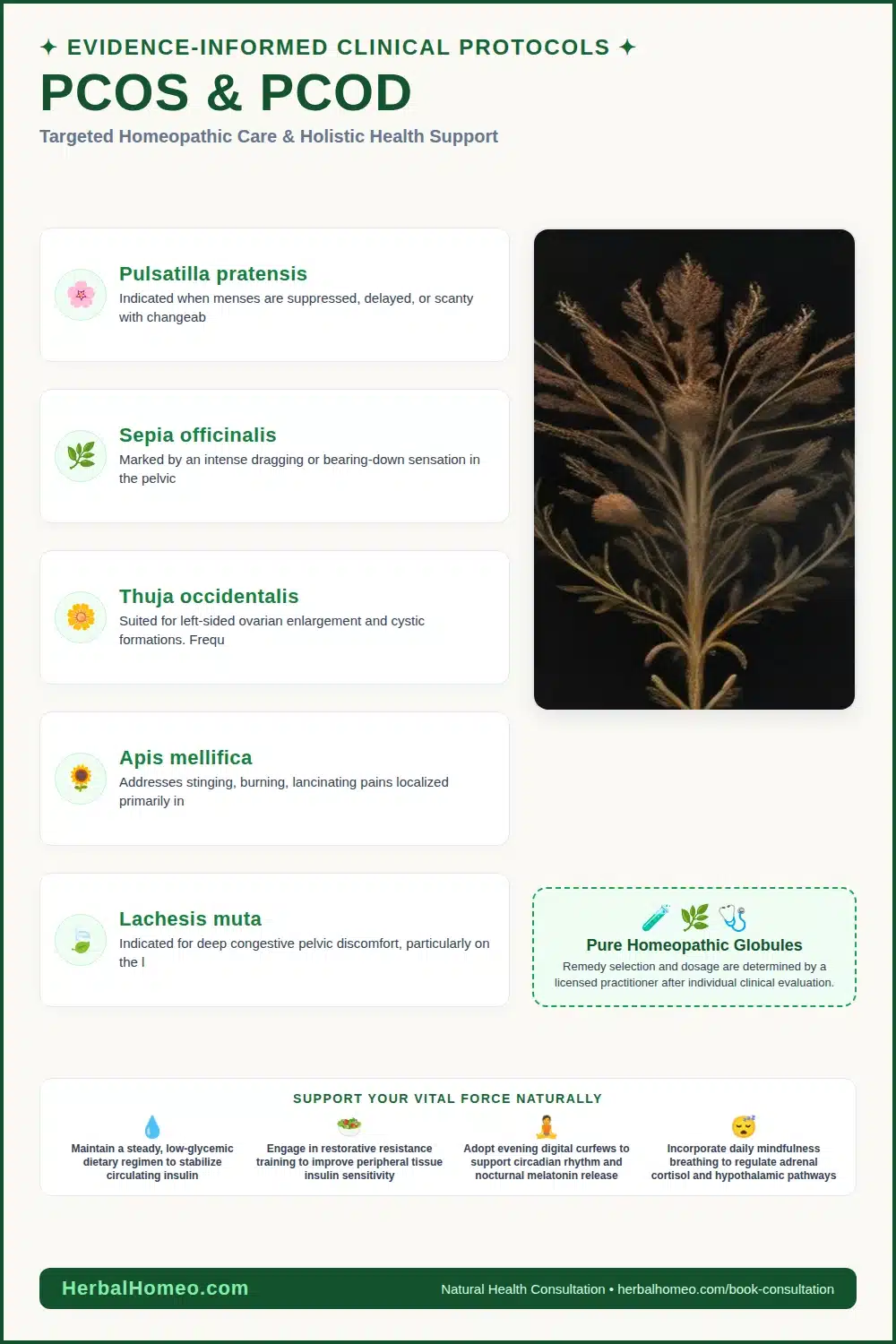
1. Pulsatilla Pratensis (Wind Flower)
Pulsatilla is one of the most widely referenced remedies for functional amenorrhea🩺 AmenorrheaClinical Disease Treatment Profile: Read homeopathic remedies, dietary recommendations, and natural therapeutic options. and secondary menstrual suppression associated with PCOD. The clinical picture typically involves menses that are substantially delayed, light, or completely suppressed after exposure to damp cold or nervous shocks. A key keynote of the remedy is instability: no two cycles or flows are identical, shifting from pale and watery to dark and clotted without warning.
Physiologically, Pulsatilla suits patients experiencing sluggish pelvic circulation combined with emotional vulnerability. Individuals often display a gentle, affectionate disposition and feel prone to weeping during consultations. Physical modalities are striking: the patient is thoroughly aggravated by warm, poorly ventilated rooms and rich, fatty foods, while finding profound mental and physical relief in cool, moving open air. Marked thirstlessness despite dry mucous membranes further solidifies the choice.
2. Sepia Officinalis (Cuttlefish Ink)
Sepia occupies an indispensable role in deep-seated, chronic cases of PCOS where metabolic stagnation and endocrine exhaustion predominate. Clinically, it addresses pronounced venous and portal congestion within the pelvis. Patients describe an unmistakable sensation of downward heaviness or bearing-down pressure, often crossing their limbs tightly to counteract this discomfort.
The Sepia constitution reflects significant hormonal distress, often co-occurring with dark cutaneous hyperpigmentation across the cheeks and bridge of the nose (chloasma), androgen-driven hair thinning, and erratic cycles that appear either chronically delayed or prematurely profuse. Emotionally, chronic fatigue gives rise to uncharacteristic apathy and irritability toward close family members. Modalities include noticeable improvement through vigorous physical exertion, which stimulates sluggish venous return, and a distinct worsening from cold air, damp environments, and restful immobility.
3. Thuja🌿 ThujaMateria Medica Clinical Profile: Click to explore Boericke keynotes, symptoms, modalities, and dosage guidelines. Occidentalis (Arbor Vitae)
Thuja is a premier anti-sycotic remedy suited to conditions marked by abnormal tissue proliferation, including ovarian cysts, skin tags, and uterine polyps. In PCOS presentations, it is frequently called upon when cysts display a distinct predilection for the left ovary, accompanied by distressing androgenic manifestations such as dark hirsutism across the chin, upper lip, or sternum.
The patient requiring Thuja may experience sharp, pinching, or stitch-like pains radiating from the left groin toward the thigh. Menstruation may arrive scantily, often accompanied by oily facial skin and recurrent cystic acne. Modalities center on acute sensitivity to cold and damp weather, with symptoms generally escalating during humid intervals and mid-afternoon. Homeopathically, Thuja helps address stubborn structural overgrowths by modulating underlying miasmatic tendencies.
4. Apis🌿 ApisMateria Medica Clinical Profile: Click to explore Boericke keynotes, symptoms, modalities, and dosage guidelines. Mellifica (Honey Bee)
When ovarian enlargement presents with acute, localized inflammation, vascular congestion, or rapid follicular fluid collection, Apis mellifica provides marked clinical relevance. Its symptom picture is characterized by stinging, burning, lancinating pains, predominantly focused on the right ovary and surrounding adnexa. The pelvic region may feel excessively tender to gentle palpation.
Patients suited to Apis frequently exhibit systemic fluid balance disturbances, visible as puffiness under the lower eyelids, generalized edemaSwelling caused by excess fluid in tissuesA condition characterized by an excess of watery fluid collecting in the cavities or tissues of the body., and ankle swelling preceding the cycle. Modalities are clear and unambiguous: all complaints are severely aggravated by heat in any form—whether hot baths, warm weather, or heated rooms—and are rapidly soothed by cold applications. A complete lack of thirst, even during febrileFeverish or marked by feverRelating to or characterized by an elevated body temperature or fever symptoms. or inflammatory episodes, remains a distinctive clinical keynote.
5. Lachesis Muta (Bushmaster Snake)
Lachesis is particularly suited to chronic pelvic congestion with strong unilateral origin, classically starting on the left ovary and potentially extending to the right. It is invaluable for individuals suffering from severe premenstrual tension, migraines, and pelvic heaviness that steadily mounts in severity until the menstrual discharge commences.
A non-negotiable diagnostic modality for Lachesis is exceptional intolerance to constriction or tight garments around the abdomen and waistline. Patients cannot tolerate snug belts or tight collars. General conditions worsen dramatically after sleep or during the morning hours, while every physical symptom—from ovarian throbbing to emotional irritability—is substantially eased the moment the menstrual flow begins to run freely.
Integrative Metabolic and Lifestyle Protocols
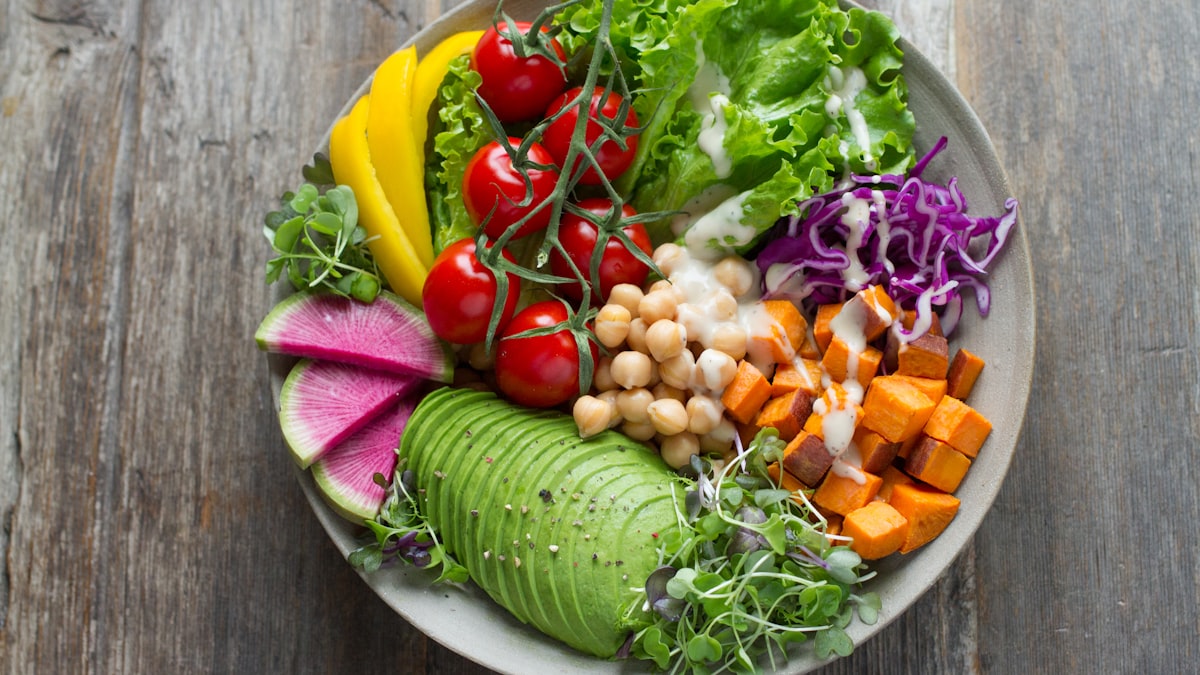
Homeopathic care acts most efficiently when placed within a foundational environment of metabolic support. Because insulin resistance directly fuels ovarian hyperandrogenism, daily nutrition must emphasize unrefined complex carbohydrates, adequate clean proteins, and essential omega-3 fatty acids while limiting refined sugars. Consistent physical movement, particularly resistance exercise, enhances glucose uptake via insulin-independent pathways, directly reducing the metabolic stimulus that drives excessive follicular development.
Chronic activation of the sympathetic nervous system also raises adrenal androgens like DHEA-S. Regular somatic stress relief, mindful breathing, and prioritizing consistent sleep between seven and eight hours nightly protect the pituitary from excessive neuroendocrine strain. When healthy lifestyle practices integrate with precise homeopathic prescribing, patients often observe progressive improvements in regular ovulatory rhythms and pelvic comfort.
Frequently Asked Questions
Can ovarian cysts naturally diminish with homeopathic care?
Functional and follicular cysts associated with PCOS and PCOD regularly undergo natural reabsorption once the balance of the HPO axis is restored and ovulatory signaling resumes. Homeopathy aims to support the body’s self-healing mechanisms to achieve this state without surgical intervention.
How long does it typically take to see menstrual cycle regulation?
Because follicular maturation spans roughly 90 to 120 days, clinical improvements in regularity, basal body temperature stability, and symptom reduction are generally tracked over three to six consecutive cycles under experienced care.
Can these remedies be taken alongside conventional medications?
Homeopathic preparations do not chemically interact with or displace standard pharmacological therapies. However, any adjustment to existing medication must always be conducted under the direct supervision of your prescribing physician.
This article is for education and does not replace diagnosis or treatment by your doctor. Do not stop prescribed medication without medical advice.
To receive an individualized evaluation and a comprehensive homeopathic protocol tailored specifically to your hormonal profile, schedule a personalized consultation with HerbalHomeo today.
How does homeopathy approach PCOS/PCOD, and what makes it different?
What can I expect regarding the duration and outcomes of homeopathic treatment for PCOS/PCOD?
Can homeopathic treatment for PCOS/PCOD be combined with natural relief strategies like diet and lifestyle changes?
What can I expect regarding the duration and outcomes of homeopathic treatment for PCOS/PCOD?
Can homeopathic treatment for PCOS/PCOD be combined with natural relief strategies like diet and lifestyle changes?
Polycystic Ovary Syndrome (PCOS) and Polycystic Ovarian Disease (PCOD) represent complex multi-system endocrine disorders rather than isolated gynecological complaints.
Functional and follicular cysts associated with PCOS and PCOD regularly undergo natural reabsorption once the balance of the HPO axis is restored and ovulatory signaling resumes.
PCOD: Clinical Distinctions and EtiologyThe Classical Homeopathic Approach to Ovarian CystsKey Homeopathic Remedies for PCOS, PCOD, and Hormonal Harmony1.
This article is for educational purposes only and not a substitute for professional medical advice, diagnosis, or treatment. Always seek the advice of your physician or other qualified health provider with any questions you may have regarding a medical condition.

Dr. Luqman Naseer
This article is for informational purposes and has been reviewed for medical accuracy according to classical homeopathic principles. Editorial Policy.