Sciatica: Homeopathic Care & Natural Relief
SciaticaNerve pain radiating from the lower back down the legsPain radiating along the sciatic nerve, which runs down one or both legs from the lower back. is one of the most debilitating manifestations of neuropathic discomfort encountered in clinical practice. Characterized by radiating pain that travels along the course of the sciatic nerve—from the lower back through the hip, buttock, and down the posterior aspect of the leg—it affects mobility, restorative sleep, and overall quality of life. In modern integrative health, individuals increasingly seek complementaryAssisting or completing remedyA remedy that naturally follows and completes the action of another remedy, helping it work better. modalitiesFactors that make symptoms better or worseEnvironmental influences (like temperature, weather, rest, motion, or time of day) that modify symptoms. that respect the nervous system’s capacity for balance without relying exclusively on long-term pharmaceutical interventions.
Homeopathic care offers an individualized, biological approach to managing nerve distress. By considering the precise physical sensations, postural aggravations, thermal sensitivities, and systemic vitality of the individual, homeopathy seeks to support the body’s endogenous regulatory processes. When woven alongside physical therapies and lifestyle modifications, natural protocols can facilitate meaningful comfort and functional recovery.
Understanding Sciatica: Anatomy and Pathophysiology
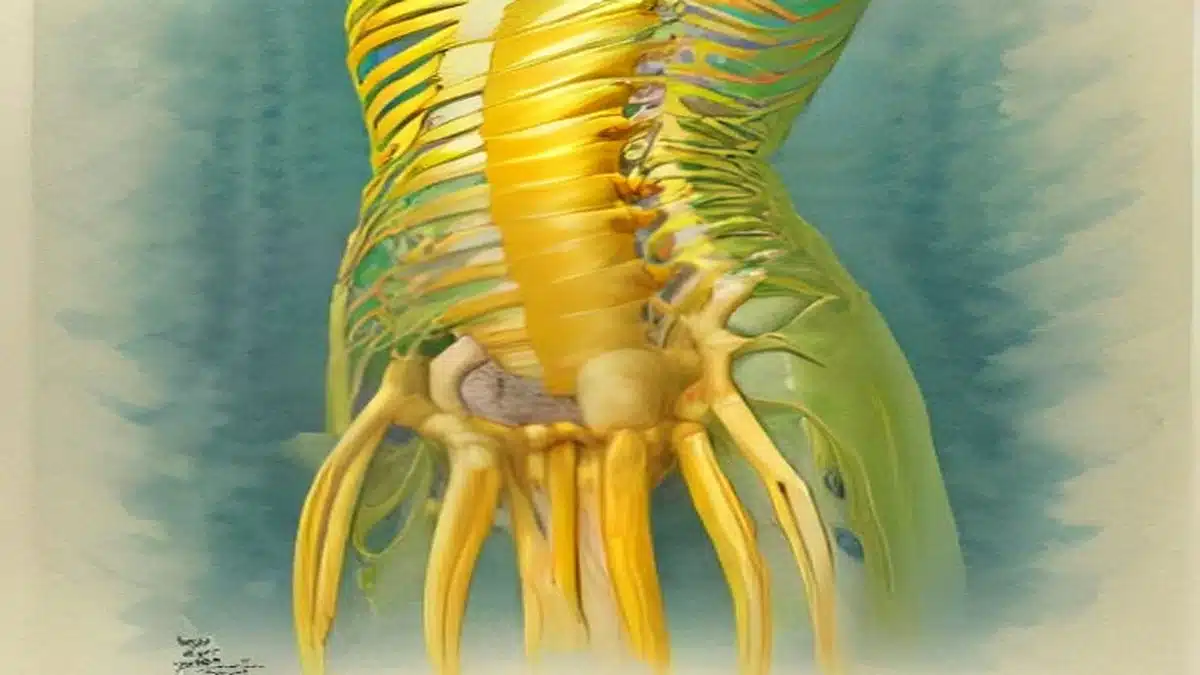
The sciatic nerve is the thickest and longest single nerve trunk in the human body, arising from the L4 through S3 spinal nerve roots. These roots converge in the pelvic basin to form a major neural conduit that descends through the greater sciatic foramen, travels beneath or occasionally through the piriformis muscle, and branches into the tibial and common peroneal nerves to innervate the lower leg and foot.
True sciatica—clinically termed lumbar radiculopathy—results from mechanical irritation, chemical inflammation, or ischemic compromise of one or more of these nerve roots. Common clinical drivers include:
- Lumbar Intervertebral Disc Herniation: Protrusion of the nucleus pulposus through the annulus fibrosus, causing physical impingement and releasing pro-inflammatory cytokines such as tumor necrosisDeath of cells or body tissuesThe premature death of cells or tissues in a localized area, caused by injury, infection, or lack of blood flow. factor-alpha (TNF-α).
- Lumbar Spinal Stenosis🩺 Spinal StenosisClinical Disease Treatment Profile: Read homeopathic remedies, dietary recommendations, and natural therapeutic options.: Degenerative narrowing of the spinal canal or intervertebral neural foramina, compressing nerve elements, especially during spinal extension.
- Spondylolisthesis: Slippage of one vertebra over another, creating traction or shearing forces across neural pathways.
- Piriformis Syndrome: Hypertonicity or spasm of the piriformis muscle that mechanically compresses the underlying sciatic nerve within the gluteal region.
Because nerve fibers possess high metabolic demands and delicate microcirculation, protracted compression leads to sustained sensory aberration, manifesting as burning, electric shocks, hyperesthesiaExtreme sensitivity to touch or painAn abnormal increase in sensitivity to sensory stimuli, such as touch, heat, cold, or pain., or progressive numbness.
Clinical Red Flags Requiring Immediate Medical Attention
While natural therapies and homeopathic care provide supportive interventions for chronic or subacute nerve irritation, practitioners and patients must remain vigilant regarding severe structural compromise. Urgent conventional medical evaluation is required if any of the following symptoms develop:
- New or progressive bowel or bladder dysfunction (incontinence or retention).
- “Saddle anesthesia” characterized by loss of sensation in the perineum, buttocks, and inner thighs.
- Rapidly progressive motor weakness, such as acute foot drop or inability to bear weight.
- Severe nocturnal pain unmitigated by any posture, accompanied by unexplained weight loss or fever.
These clinical signs may indicate Cauda Equina Syndrome or severe neuro-compressive states requiring rapid surgical decompression to prevent irreversible neurological deficit.
Homeopathic Principles in Neuropathic Pain Management
Homeopathy views nerve discomfort not as an isolated mechanical failure, but as a dynamic expression of physiological strain. Two individuals presenting with an identical L5-S1 disc protrusion may experience radically divergent clinical patterns: one may describe burning pains eased only by movement in warm air, while the other experiences sharp, spasmodic shooting sensations relieved strictly by firm, hard pressure and remaining curled motionless.
In classical and clinical homeopathy, these distinct individualizing factors—known as modalities—form the foundation of remedy selection. By matching the comprehensive symptom picture to a pharmacologically prepared substance derived from mineral, botanical, or natural sources, the goal is to gently stimulate neuromuscular homeostasis and modulate inflammatory cascades.
5 Core Homeopathic Remedies for Sciatic Discomfort
The following remedies represent five of the most frequently indicated medicines in clinical practice for managing lumbar radiculopathy, neuralgiaSharp nerve pain along a nerve pathIntense, shooting, or burning pain that radiates along the course of one or more nerves., and radiating nerve distress.
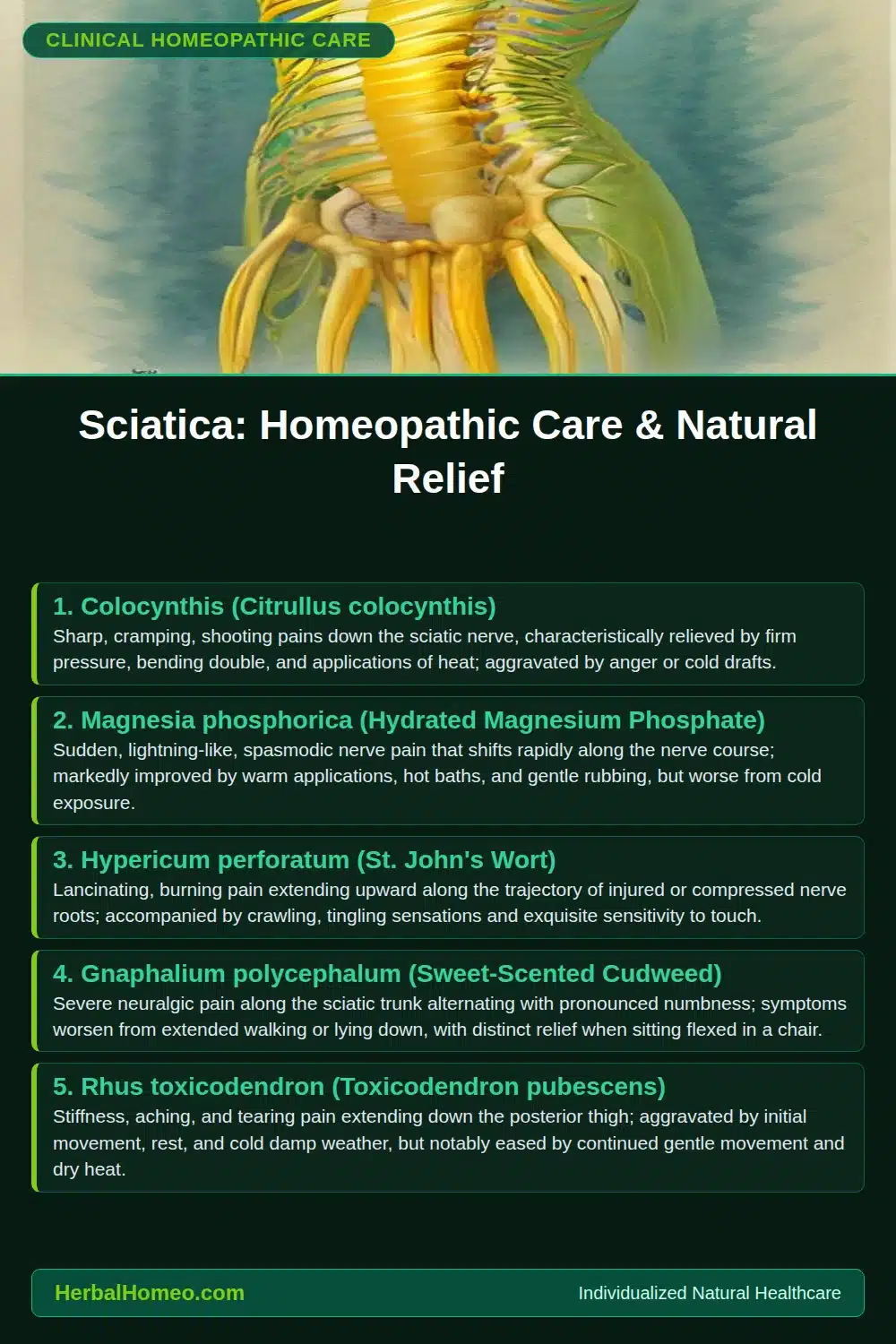
1. Colocynthis (Citrullus colocynthis)
Derived from the bitter🌿 BitterMateria Medica Clinical Profile: Click to explore Boericke keynotes, symptoms, modalities, and dosage guidelines. apple, Colocynthis holds a prominent position in managing acute neuralgicRelating to sharp nerve painDescribe symptoms or pain that radiates along the path of one or more nerves. conditions. The primary keynote of this remedy is relief through intense counter-pressure and flexion. Patients needing Colocynthis typically present with sharp, darting, or shooting pains, most frequently affecting the right sciatic distribution. They often lean heavily toward the affected side, draw their knees up toward the abdomen, or press hard objects against the gluteal trigger points to gain temporary comfort. Cold exposure and emotional frustration markedly intensify the distress, whereas external heat brings moderate alleviation.
2. Magnesia🌿 MagnesiaMateria Medica Clinical Profile: Click to explore Boericke keynotes, symptoms, modalities, and dosage guidelines. phosphorica
Recognized biochemically as a vital constituent of muscular and nervous tissue, Magnesia phosphorica is indicated in cases characterized by severe, lightning-like, spasmodic pains. The nerve pain often shifts rapidly along the pathway, feeling like an electric shock that leaves the surrounding musculature contracted and trembling. The defining modality for this remedy is an extraordinary sensitivity to cold: drafts, light cold touch, or uncovering the limb trigger sharp flare-ups. Conversely, intense warmth, hot water🌿 WaterMateria Medica Clinical Profile: Click to explore Boericke keynotes, symptoms, modalities, and dosage guidelines. bottles, warm baths, and firm rubbing provide decisive relief.
3. Hypericum🌿 HypericumMateria Medica Clinical Profile: Click to explore Boericke keynotes, symptoms, modalities, and dosage guidelines. perforatum
Commonly known as St. John’s Wort, Hypericum is widely regarded as the premier remedy for mechanical injury, contusion, and inflammation of nerve-rich tissues. In sciatic presentations, it is particularly suitable when the discomfort follows trauma to the coccyx, spinal compression, or post-surgical nerve irritation. The pain is described as lancinating, tearing, or burning, often traveling centripetally (upward along the course of the nerve toward the spine). The affected path is exquisitely tender to touch, and the patient may experience paresthesia, such as crawling, prickling, or numbness alongside the acute distress.
4. Gnaphalium🌿 GnaphaliumMateria Medica Clinical Profile: Click to explore Boericke keynotes, symptoms, modalities, and dosage guidelines. polycephalum
Gnaphalium is distinct in its presentation of sciatic neuralgia intertwined with sensory loss. The clinical hallmark of this remedy is intense pain along the sciatic trunk accompanied by, or alternating with, marked numbness and deadness in the calves, ankles, or feet. The pain commonly worsens when the patient attempts to walk, step down, or lie flat on their back. Curiously, sitting upright in a chair with the thighs drawn up toward the torso provides notable ease, making this remedy invaluable for individuals unable to lie in bed comfortably during flare-ups.
5. Rhus🌿 RhusMateria Medica Clinical Profile: Click to explore Boericke keynotes, symptoms, modalities, and dosage guidelines. toxicodendron
Rhus toxicodendron is indicated when sciatic nerve irritation arises secondary to muscular strain, heavy lifting, structural ligament laxity, or exposure to cold damp environments. The clinical profile features prominent stiffness alongside aching, tearing pains that course down the back of the leg. The classic modality of Rhus toxicodendron involves aggravationWorsening of symptomsAn increase in severity or intensity of symptoms, often caused by environmental factors or after taking a remedy. upon initial movement or after long periods of rest, which gradually eases as the individual continues gentle, continuous walking. Symptoms consistently worsen at night, before storms, and in damp weather, but respond favorably to dry heat and sustained gentle mobility.
Integrative Lifestyle and Supportive Natural Therapies
Homeopathic remedies perform best when supported by structural, biochemical, and behavioral measures designed to decompress neural structures and reduce systemic neuroinflammation.
Mechanical Decompression and Physical Movement
Prolonged bed rest is generally counterproductive in sciatic management, as immobility weakens stabilizing musculature and impedes lymphatic circulation around nerve sheaths. Instead, targeted physical approaches should be prioritized:
- McKenzie Method: Directional preference exercises that encourage extension-based movements to assist in centralizing radicular discomfort.
- Nerve Flossing (Neural Mobilization): Gentle, rhythmic movements designed to restore free sliding of the sciatic nerve within its surrounding fascial tunnel, reducing adhesions.
- Pelvic Alignment and Ergonomics: Utilizing ergonomic lumbar supports, avoiding thick wallets in back pockets, and ensuring adequate hip mobility to relieve piriformis tension.
Targeted Nutritional Support
A diet dense in refined sugars, hydrogenated oils, and ultra-processed foods exacerbates systemic inflammatory mediators. Incorporating nutrient-dense, neuro-supportive elements can aid nerve recovery:
- B-Complex Vitamins: Methylated forms of vitamin B12🌿 Vitamin B12Materia Medica Clinical Profile: Click to explore Boericke keynotes, symptoms, modalities, and dosage guidelines. (methylcobalamin) and vitamin B1🌿 Vitamin B1Materia Medica Clinical Profile: Click to explore Boericke keynotes, symptoms, modalities, and dosage guidelines. play direct roles in maintaining myelin sheath integrity and axonal repair.
- Magnesium🌿 MagnesiumMateria Medica Clinical Profile: Click to explore Boericke keynotes, symptoms, modalities, and dosage guidelines. Glycinate: Promotes neuromuscular relaxation, eases associated paraspinal muscular spasms, and supports restorative sleep.
- Anti-Inflammatory Botanicals: High-bioavailability Curcumin and Boswellia🌿 BoswelliaMateria Medica Clinical Profile: Click to explore Boericke keynotes, symptoms, modalities, and dosage guidelines. serrata modulate inflammatory pathways such as COX-2 and 5-LOX without irritating the gastric mucosa.
Long-Term Outlook and Collaborative Care
Achieving stable relief from sciatica requires patience, structural awareness, and a personalized approach. While acute symptoms can often be managed effectively, recurring sciatic episodes suggest underlying biomechanical imbalances or persistent postural stressors that must be methodically unraveled. Collaborative care—combining formal diagnostic imaging, physical therapy, and individualized homeopathic care—offers a holistic pathway that honors both structural and constitutional needs.
This article is for education and does not replace diagnosis or treatment by your doctor. Do not stop prescribed medication without medical advice.
If you are struggling with persistent nerve pain and wish to explore an individualized, natural approach to your spinal health, schedule an in-depth clinical review with our experienced practitioners today: Book your consultation at HerbalHomeo.
This article is for educational purposes only and not a substitute for professional medical advice, diagnosis, or treatment. Always seek the advice of your physician or other qualified health provider with any questions you may have regarding a medical condition.

Dr. Luqman Naseer
This article is for informational purposes and has been reviewed for medical accuracy according to classical homeopathic principles. Editorial Policy.