
Vitiligo: Homeopathic Treatment & Natural Relief: Clinical Guide
Vitiligo, frequently identified in clinical practice alongside forms of leucoderma, represents a chronic dermatological state defined by the selective progressive loss of melanocytes. These specialized dendritic cells, residing predominantly within the basal layer of the epidermis, are tasked with the biosynthesis of melanin—the organic pigment responsible for cutaneous, piliary, and ocular photoprotection. When melanocytes experience cellular apoptosis or metabolic arrest, clinically demarcated macules and patches of depigmentation manifest across the cutaneous envelope.
The manifestation of white🌿 WhiteMateria Medica Clinical Profile: Click to explore Boericke keynotes, symptoms, modalities, and dosage guidelines. patches introduces profound biological and psychological consequences. Conventional paradigms frequently view vitiligo through an isolated autoimmune lens, employing topical immunosuppressive agents, phototherapy, or localized interventions. While targeted therapies hold distinct utility, homeopathy approaches the presentation through a constitutional, holistically integrated lens. By addressing underlying immune dysregulation, oxidative microenvironments, and neuro-endocrine stress responses, homeopathic medicine seeks to support endogenous repigmentation pathways and encourage cellular balance from within.
Understanding the Pathophysiology of Melanocyte Loss
Melanin biosynthesis is an intricate enzymatic cascade governed primarily by tyrosinase. In the development of vitiligo and acquired leucoderma, multiple convergent mechanisms participate in melanocytic destruction:
- Autoimmune Destruction: Autoreactive CD8+ cytotoxic T lymphocytes infiltrate the perilesional dermal-epidermal junction, liberating pro-inflammatory cytokines such as interferon-gamma (IFN-γ). This pathway triggers downstream chemokines that perpetuate the recruitment of immune cells against melanocytic antigens.
- Cutaneous Oxidative Stress: Elevated levels of reactive oxygen species (ROS), coupled with impaired endogenous antioxidant enzyme function (such as catalase and superoxide dismutase), result in lipid peroxidation within cellular membranes and subsequent melanocyte detachment.
- Neurogenic Hypotheses: Neural mediators, catecholamines, and neuropeptides discharged near localized epidermal endings can precipitate microvascular constriction and direct cytotoxicity against localized pigment-producing cells, frequently explaining segmental vitiligo presentations.
- Intrinsic Structural Defects: Melanosomes within predisposed individuals demonstrate fragile endoplasmic reticulum architecture, heightening susceptibility to environmental triggers, physical trauma (the Koebner phenomenon), and metabolic stress.
Recognizing that cutaneous depigmentation is a systemic expression of physiological disequilibrium, individualized homeopathic case evaluation endeavors to identify the underlying constitutional susceptibility rather than merely observing the external surface lesions.
The Homeopathic Approach to Leucoderma and Vitiligo
Classical homeopathy evaluates each patient as a distinct biological entity. In managing pigmentary disturbances, the practitioner does not simply assign a standard generic remedy to the label of vitiligo. Instead, the analysis incorporates the clinical topology of the lesions, the speed of progression, concomitant gastrointestinal or endocrine patterns, emotional stressors that preceded the depigmentation, and constitutional modalitiesFactors that make symptoms better or worseEnvironmental influences (like temperature, weather, rest, motion, or time of day) that modify symptoms. reflecting environmental reactivity.
The primary clinical objective within homeopathic management is to arrest the expansion of active depigmentation, normalize systemic immune hyperactivity, and stimulate the latent melanocyte reservoirs located within the hair follicle outer root sheath. When these dormant amelanotic melanocytes are awakened, follicular repigmentation—visible as tiny islands of pigment emerging within the pale patches—can gradually unfold over extended periods of dedicated care.
Key Homeopathic Remedies in Clinical Practice
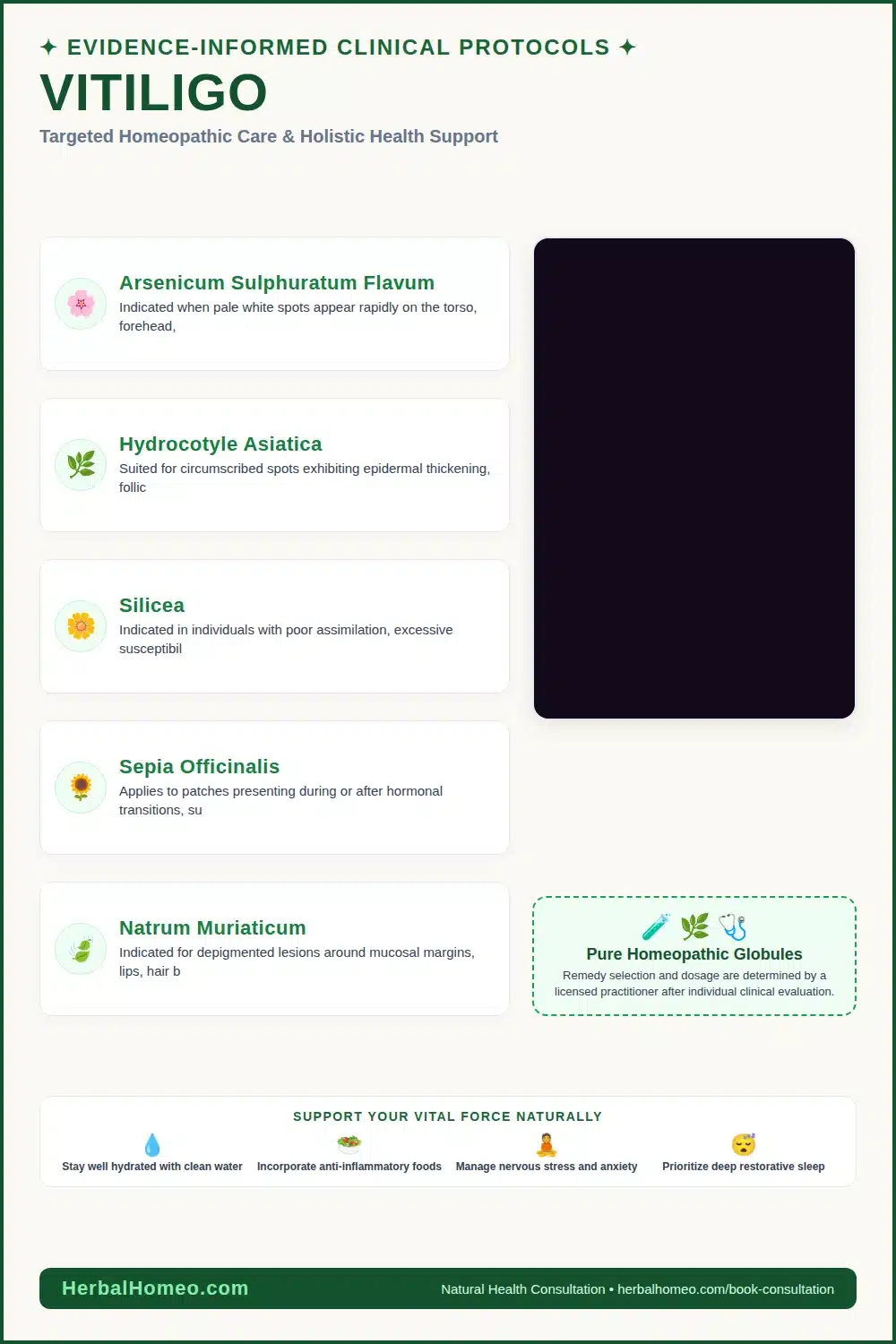
The following remedies represent some of the most clinically verified medicines used by practitioners in individualized vitiligo care protocols:
1. Arsenicum🌿 ArsenicumMateria Medica Clinical Profile: Click to explore Boericke keynotes, symptoms, modalities, and dosage guidelines. Sulphuratum Flavum
Arsenicum Sulphuratum Flavum holds prominent standing in the clinical management of rapidly evolving, widespread leucodermic patches. It is particularly indicated when lesions exhibit chalky whiteness accompanied by noticeable dry scaling, underlying cutaneous burning, or intense itching that intensifies toward midnight.
Patients benefiting from this medicine frequently exhibit internal anxiety, motor restlessness, and a pronounced sensitivity to environmental shifts. Modalities: Symptoms typically aggravate in cold, damp weather and during late evening🌿 EveningMateria Medica Clinical Profile: Click to explore Boericke keynotes, symptoms, modalities, and dosage guidelines. hours, while gentle dry warmth provides symptomatic comfort to reactive skin surfaces.
2. Hydrocotyle🌿 HydrocotyleMateria Medica Clinical Profile: Click to explore Boericke keynotes, symptoms, modalities, and dosage guidelines. Asiatica
Derived from the botanical entity Centella🌿 CentellaMateria Medica Clinical Profile: Click to explore Boericke keynotes, symptoms, modalities, and dosage guidelines. asiatica, Hydrocotyle exerts a notable affinity for the epidermal stratum and connective tissue matrices. It is clinically indicated when depigmented areas present with localized indurationHardening of body tissueThe hardening of normally soft organic tissues, usually due to chronic inflammation, infiltration, or scarring., epidermal thickening, or a mild circular annular configuration. The margins of the spots may show heightened desquamationPeeling or shedding of skin layersThe shedding or peeling of the outer layers of the skin, typically in scales or sheets, following inflammation or infection. or follicular plugging.
Constitutional characteristics include general abdominal intolerance and venous congestion. Modalities: The skin symptoms typically worsen from heat, occlusive moisture, and heavy physical perspiration, displaying improvement in cool, dry, well-ventilated environments.
3. Silicea
Silicea is a foundational constitutional medicine chosen when pigmentary failure associates with compromised assimilation, defective tissue repair, and chronic immune vulnerability. Lesions commonly distribute across the acral zones, such as the fingertips, knuckles, toe pads, and periungual tissues, areas traditionally regarded as refractory to rapid repigmentation.
Patients present as physically delicate, exquisitely chillyHypersensitive to cold temperaturesA constitutional state of feeling exceptionally cold, lacking vital heat, and needing warmth or heavy blankets., easily exhausted, and prone to offensive perspiration on the extremities. Modalities: Aggravations stem from drafts of air, cold temperatures, and physical overexertion. Improvement occurs consistently through external warmth, thermal coverings, and gentle rest.
4. Sepia Officinalis
Sepia finds extensive application when pigment alterations arise in direct association with hormonal perturbations, such as the post-parturient phase, oral contraceptive discontinuation, or peri-menopausal transitions. Patches frequently reveal irregular edges and may coexist with hyperpigmented melasma across the facial saddle, depicting a dysregulated melanogenic apparatus.
Systemically, the individual exhibits mental apathy, pelvic sluggishness, and fatigue, accompanied by a craving for acidic or pungent foods. Modalities: Sufferers feel worse from damp cold, prolonged stillness, and morning waking, while experiencing substantial systemic ameliorationImprovement or relief of symptomsA change or modification that results in feeling better, or a decrease in symptom severity. through vigorous, aerobic motion and focused physical exercise.
5. Natrum🌿 NatrumMateria Medica Clinical Profile: Click to explore Boericke keynotes, symptoms, modalities, and dosage guidelines. Muriaticum🌿 MuriaticumMateria Medica Clinical Profile: Click to explore Boericke keynotes, symptoms, modalities, and dosage guidelines.
Natrum Muriaticum matches cases wherein the onset or exacerbation of depigmented patches correlates with deep-seated emotional strain, internalized grief, or long-standing nervous tension. Common lesion distributions include the mucocutaneous borders—such as the vermilion border of the lips, peri-orbital contours, and the anterior hair margin.
Skin texture may oscillate between greasy sebaceous activity and intense xerosis, accompanied by a strong craving for salt and intolerance to hot sunlight. Modalities: Cutaneous and nervous distress aggravates around mid-morning (10 AM to 11 AM) and under direct solar exposure. Symptoms improve in fresh open air and when unencumbered by restrictive garments.
Integrative Support and Lifestyle Optimization
Complementing personalized homeopathic medicine with targeted lifestyle adjustments establishes a biological milieu conducive to follicular pigment mobilization and overall immunological stabilization:
- Protecting Fragile Epidermal Zones: Unpigmented lesions lack natural melanin filtration, leaving underlying keratinocytes susceptible to actinic burn. Sun protection via mineral-based broad-spectrum barriers is essential, yet brief, gentle morning sun exposure (5 to 10 minutes) can assist in stimulating follicular melanocyte stem cells without provoking inflammation.
- Antioxidant Rich Nutrition: Enhancing the intake of dietary polyphenols, dark leafy greens, berries, and omega-3 essential fatty acids mitigates intracellular oxidative stress within the dermal micro-architecture.
- Trace Mineral Homeostasis: Foods providing balanced Copper🌿 CopperMateria Medica Clinical Profile: Click to explore Boericke keynotes, symptoms, modalities, and dosage guidelines., Zinc🌿 ZincMateria Medica Clinical Profile: Click to explore Boericke keynotes, symptoms, modalities, and dosage guidelines., and Selenium🌿 SeleniumMateria Medica Clinical Profile: Click to explore Boericke keynotes, symptoms, modalities, and dosage guidelines. support the catalytic functions of tyrosinase, aiding natural enzymatic paths involved in pigment preservation.
- Stress Attenuation Practices: Because systemic neurogenic triggers provoke the release of melanocyte-inhibiting chemicals, incorporating mindfulness modalities, yoga, and adequate respiratory practices supports clinical progress.
- Avoiding the Koebner Phenomenon: Mechanical friction from tight elastic clothing, harsh chemical contacts, or abrasive treatments should be strictly avoided to prevent physical induction of new depigmentation zones.
Vitiligo and leucoderma require an empathetic, measured, and comprehensive therapeutic outlook. Rather than forcing sudden alterations on delicate tissues, constitutional homeopathic care respects the intrinsic regulatory networks of the body, fostering long-range stability, immunological poise, and healthy epidermal equilibrium.
This article is for education and does not replace diagnosis or treatment by your doctor. Do not stop prescribed medication without medical advice.
To evaluate your individualized case and develop a comprehensive, natural clinical strategy tailored to your skin, schedule your professional clinical consultation today.
This article is for educational purposes only and not a substitute for professional medical advice, diagnosis, or treatment. Always seek the advice of your physician or other qualified health provider with any questions you may have regarding a medical condition.