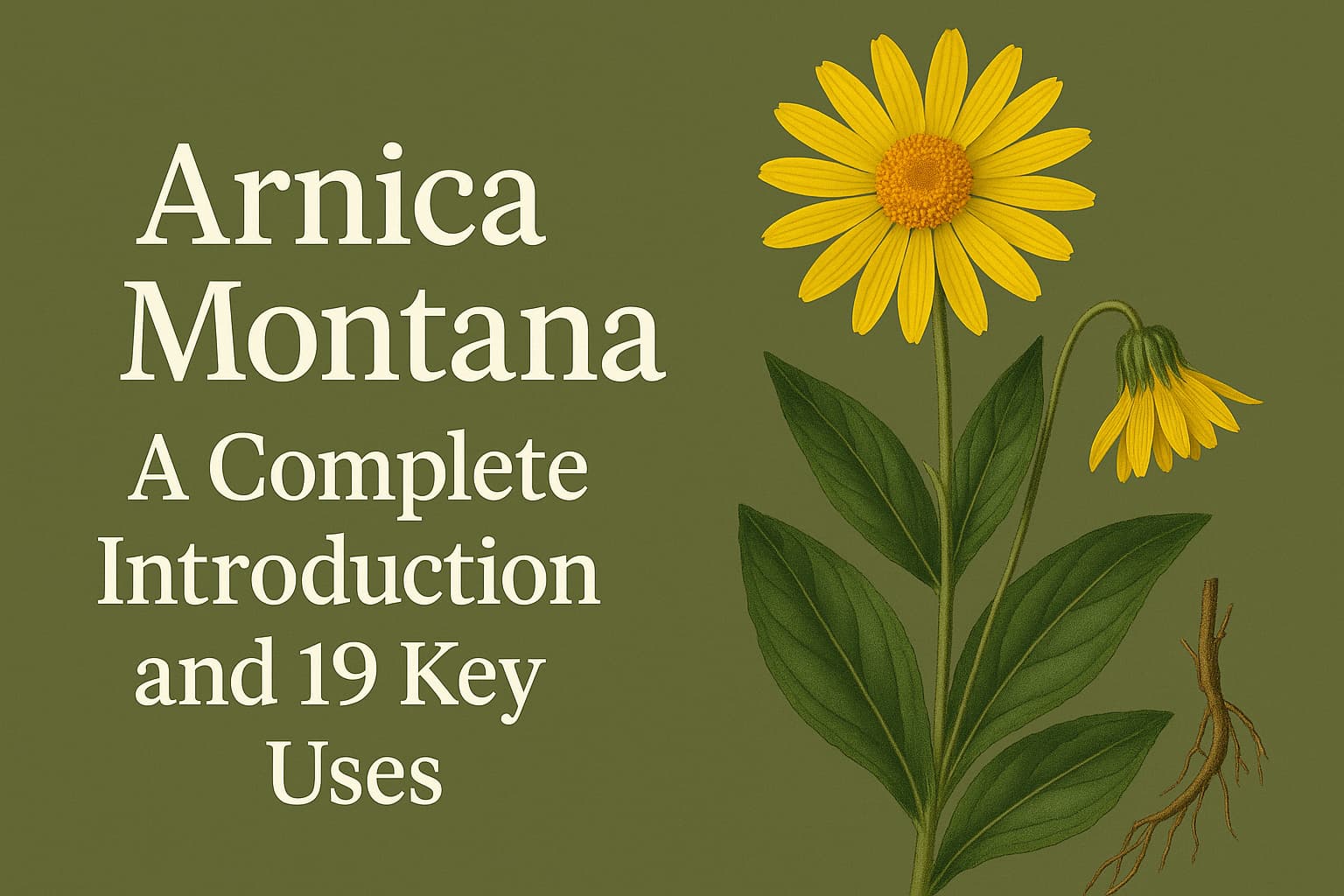
Arnica Montana (Leopard’s Bane)
Key Characteristics
- Primary action: Simulates effects of physical trauma (injuries, falls, blows, contusions)
- Best for: Plethoric individuals; less effective for debilitated persons
- Main influence: Blood, venous system, muscles, brain
Main Therapeutic Actions
- Traumatic injuries and their after-effects
- Muscular tonic
- Septic conditions and putrid phenomena
- Hemorrhages and ecchymosis
- RheumatismJoint, muscle, or tissue painInflammatory pain, stiffness, and swelling in joints, muscles, or surrounding connective tissues. of muscular and tendinous tissue
- Neuralgias from pneumogastric disturbances
Key Symptoms
Mental Symptoms (Highlighted)
- Fears touch or approach of anyone
- Indifference; inability to perform continuous active work
- Says there is nothing wrong when very sick
- Wants to be let alone
- Agoraphobia (fear of space)
- Nervous; cannot bear pain; whole body oversensitive
Physical Symptoms (Key symptoms highlighted)
- Head: Hot head with cold body, vertigoSensation of dizziness or spinningA feeling of movement or spinning of oneself or the surroundings when there is no actual movement. when walking
- Eyes: DiplopiaDouble visionThe simultaneous perception of two images of a single object that may be displaced horizontally, vertically, or diagonally. from trauma, bruised feeling after close work
- Ears: TinnitusRinging or buzzing in the earsThe perception of noise or ringing in the ears when no external sound is present., dullness of hearing after concussion
- Nose: Bleeding after coughing, dark fluid blood
- Mouth: Bitter taste, soreness after tooth extraction
- Chest: Cough from cardiac issues, pneumoniaLung infection with inflamed air sacsInflammatory condition of the lung affecting primarily the microscopic air sacs (alveoli), usually caused by infection. approaching paralysisLoss of voluntary muscle functionThe loss of the ability to move (and sometimes to feel anything) in part or most of the body.
- Heart: AnginaChest pain from reduced heart blood flowA condition marked by severe pain in the chest, often also spreading to the shoulders, arms, and neck, caused by an inadequate blood supply to the heart. pectoris, weak pulse, cardiac dropsyFluid retention and swelling (edema)An old medical term for edema, which is swelling caused by excess fluid trapped in your body's tissues.
- Extremities: Pain as if bruised or beaten, sprained feeling
- Skin: Black and blue marks, bed sores
- Sleep: Sleeplessness when overtired, horrors in the night
- General: Everything on which he lies seems too hard
- Characteristic: Sore, lame, bruised feeling all over body
Modalities
- Worse: Touch, motion, wine, damp cold
- Better: Lying down, head low
Dosage
- PotencyStrength level of a remedyThe dilution and succussion scale of a remedy (e.g., 6C, 30C, 200C, 1M), indicating its energetic concentration.: 3rd to 30th
- Locally: TinctureConcentrated liquid raw extractA mother tincture prepared by soaking botanical, animal, or mineral raw materials in alcohol and water. (never on open wounds or hot)
Relationships
- ComplementaryAssisting or completing remedyA remedy that naturally follows and completes the action of another remedy, helping it work better.: Aconitum, Ipecacuanha
- Compare: Aconitum, Baptisia, Bellis, Hamamelis, Rhus, Hypericum
- AntidoteNeutralizing substance or remedyA remedy or substance that stops, counteracts, or neutralizes the action of a previously taken remedy.: Camphor
Remember: Arnica is often the first remedy for any physical trauma or its after-effects, with marked action on blood and blood vessels. It’s particularly useful for the “bruised, sore feeling” that accompanies many conditions.
Here are key uses of Arnica Montana and its recommended combinations for specific conditions:
1. Injury and Trauma:
- Arnica Montana is most effective for injuries such as bruises, falls, and blunt trauma where bruising or blood clotting occurs.
- Combination: Use with Aconite for severe bruising and shock from injury.
- Potency: Higher potencies (e.g., Arnica 1000) work better for deep or longstanding injuries.
2. Heart Conditions:
- Arnica can help dissolve blood clots related to heart attacks.
- Combination: Combine with Lachesis (often used for clots in arteries).
- Note: For heart issues involving blood coagulation, both Arnica and Lachesis should be administered simultaneously for enhanced effectiveness.
3. Bone Fractures:
- Arnica helps with fractures by reducing swelling and promoting healing.
- Combination: Pair with Symphytum, Ruta, and Calcarea Phosphorica to accelerate bone healing and repair tissue around fractures.
4. Post-Childbirth and Surgery Recovery:
- Arnica can prevent complications from surgery or childbirth, including reducing bruising and pain.
- Combination: Administer Arnica with Bryonia and Sulphur to manage pain and inflammation effectively.
- Usage: Use Arnica 1000 potency before surgery or childbirth to reduce post-operative complications.
5. Whooping Cough and Respiratory Ailments:
- Arnica provides relief from symptoms of whooping cough, especially if the coughing leads to bruising or bleeding.
- Combination: Combine with Drosera for effective relief of intense coughing bouts.
6. Chronic Back Pain:
- For back pain due to strain or sprains, Arnica works well.
- Combination: Combine with Rhus Toxicodendron for deeper, chronic muscle pain and Bryonia for muscle strain relief.
7. Mental and Emotional Health:
- Arnica helps with fatigue, sadness, and nightmares following mental or physical strain.
- Combination: Pair with Bryonia for individuals experiencing intense mental strain alongside physical pain.
8. Skin and Herpes Infections:
- Arnica is used for skin conditions and herpes infections related to nerve irritation.
- Combination: Use with Arsenic and Ledum for nerve-related herpes and skin infections.
These combinations leverage Arnica’s effects and enhance its benefits across various conditions, ensuring targeted relief and promoting faster recovery.
🧪 Complete Liver Enzyme Panel Analyzer
Input your ALT, AST, and ALP levels to analyze hepatic cell function and evaluate enzyme patterns.
Calculator not found.
This article is for educational purposes only and not a substitute for professional medical advice, diagnosis, or treatment. Always seek the advice of your physician or other qualified health provider with any questions you may have regarding a medical condition.