Arnica Montana: A Complete Introduction and 19 Key Uses
Introduction – The Flower of Healing
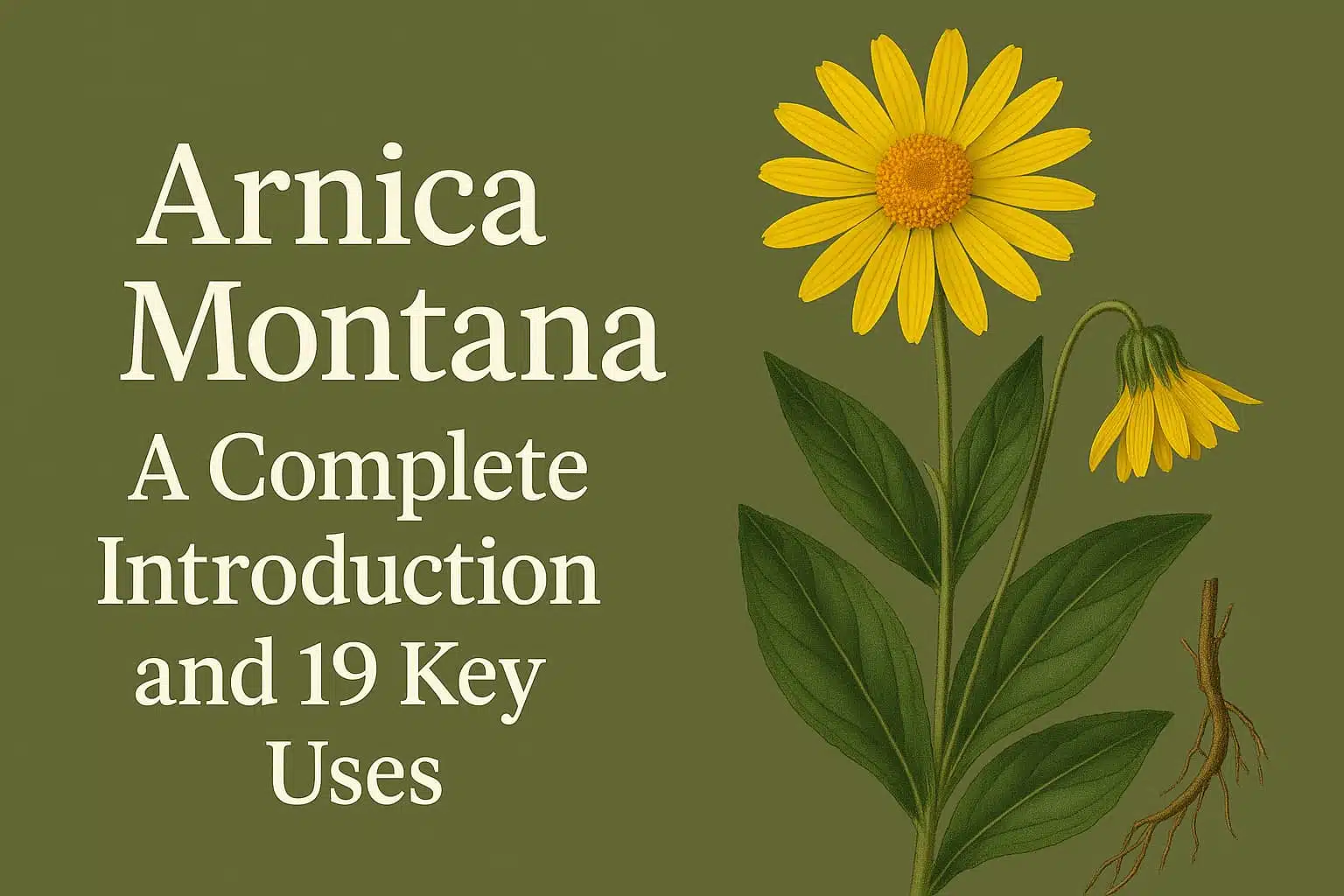
Arnica montana, known as the “mountain daisy,” is one of the most famous and trusted remedies in both homeopathy and herbal medicine.
This golden🌿 GoldenMateria Medica Clinical Profile: Click to explore Boericke keynotes, symptoms, modalities, and dosage guidelines.-yellow🌿 YellowMateria Medica Clinical Profile: Click to explore Boericke keynotes, symptoms, modalities, and dosage guidelines. alpine flower has been used for centuries to relieve pain, bruises, swelling, and the after-effects of shock or trauma.
Its name derives from the Greek arnakis meaning “lamb’s coat,” referring to its soft, downy leaves. Arnica grows naturally in mountain meadows of Europe and Siberia and has become a symbol of natural pain relief worldwide.
Disclaimer: This article is for informational purposes only and does not replace professional medical advice. Always consult a qualified homeopath or physician before use.
Botanical & Historical Overview
- Scientific Name: Arnica montana
- Family: Asteraceae (Daisy family)
- Common Names: Mountain daisy, Leopard’s bane
- Native Regions: Central and Northern Europe, Siberia
- Plant Part Used: Flowers and roots
- Active Compounds: Sesquiterpene lactones (helenalin), flavonoids, thymol
In traditional European folk medicine, Arnica was applied to bruises and muscle strains long before homeopathy was formalized. In 1799, Dr. Samuel Hahnemann recognized its similia principle — that it could relieve injuries and shock when given in potentized (diluted) form.🌿 Form.Materia Medica Clinical Profile: Click to explore Boericke keynotes, symptoms, modalities, and dosage guidelines.
Homeopathic Viewpoint
In homeopathy, Arnica montana is the first remedy for trauma — physical or emotional. It corresponds to the state of bruising, shock, or denial of injury.
A typical Arnica patient says: “I’m fine — don’t touch me!” even when badly hurt.
It acts on the muscular, vascular, and nervous systems, promoting circulation, reducing internal bleeding, and preventing complications after trauma or surgery.
Key remedy themes:
- Bruised, sore feeling as if beaten
- Fear of being approached or touched
- Restlessness after injury
- Mental shock or fright after accident
Learn more on homeopathycenter.org or abchomeopathy.com.
Chemical & Physiological Insights
Scientific studies (see PubMed) show that Arnica contains natural anti-inflammatory and analgesic compounds.
Its main active component, helenalin, inhibits inflammatory pathways similar to NSAIDs but without their side effects when used properly.
In herbal form, Arnica tinctures and creams are applied externally, while in homeopathic form (potencies like 6C, 30C, 200C), it acts systemically to restore vitality and circulation.
19 Key Uses of Arnica Montana
Below are the 19 most recognized uses — from trauma to emotional stress — supported by classical materia medicaEncyclopedia of homeopathic remediesA comprehensive body of collected knowledge describing the origin, preparation, and detailed symptom profiles of healing substances. and modern experience.
| Category | Key Indications / Use |
|---|---|
| 1. Physical Injury | Primary remedy after falls, blows, or accidents; prevents internal bleeding. |
| 2. Bruising & Hematoma | Reduces discoloration and swelling from trauma or injections. |
| 3. Muscle Strain | Relieves soreness from overexertion or sports injuries. |
| 4. Surgery Recovery | Supports healing, reduces pain and bruising post-operation. |
| 5. Dental Extraction | Minimizes pain, bleeding, and swelling after dental work. |
| 6. Childbirth Trauma | Aids mothers after difficult labor or instrumental delivery. |
| 7. Shock & Emotional Trauma | Restores calm after fright, grief, or accidents. |
| 8. Head Injury | Helpful in minor concussion or head trauma (under supervision). |
| 9. HemorrhageProfuse bleeding from a ruptured blood vesselAn escape of blood from a ruptured blood vessel, especially when profuse. Tendency | Reduces capillary fragility; useful after strain or injury. |
| 10. Varicose Veins🩺 Varicose VeinsClinical Disease Treatment Profile: Read homeopathic remedies, dietary recommendations, and natural therapeutic options. | Strengthens venous walls, improves blood circulation. |
| 11. Muscle Fatigue | Relieves stiffness from long physical activity or tension. |
| 12. Post-Workout Recovery | Accelerates muscle repair and reduces lactic acid buildup. |
| 13. ArthritisJoint inflammation causing pain and stiffnessPainful inflammation and stiffness of the joints, often worsening with age. & Joint Pain | Alleviates soreness and inflammation in overused joints. |
| 14. Backache & Sciatica🩺 SciaticaClinical Disease Treatment Profile: Read homeopathic remedies, dietary recommendations, and natural therapeutic options. | Calms nerve irritation caused by physical strain. |
| 15. Heart Strain | In older adults after physical effort; relieves cardiac soreness. |
| 16. Psychological Injury | Helps emotional denial or fear after trauma (“Don’t touch me” state). |
| 17. Altitude or Travel Exhaustion | Refreshes circulation and prevents swelling. |
| 18. Post-Illness Weakness | Restores tone after fevers or exhaustion. |
| 19. Animal Use (Veterinary) | For pets after injuries, falls, or surgeries — under veterinary advice. |
Complementary Remedies
Arnica works well with several other homeopathic medicines:
| Remedy | Complementary Action |
|---|---|
| Bellis Perennis🌿 Bellis PerennisMateria Medica Clinical Profile: Click to explore Boericke keynotes, symptoms, modalities, and dosage guidelines. | Deeper soft-tissue trauma (after Arnica). |
| Ruta graveolens🌿 Ruta GraveolensMateria Medica Clinical Profile: Click to explore Boericke keynotes, symptoms, modalities, and dosage guidelines. | Tendon and ligament strain. |
| Symphytum officinale🌿 Symphytum OfficinaleMateria Medica Clinical Profile: Click to explore Boericke keynotes, symptoms, modalities, and dosage guidelines. | Bone injury or fracture healing. |
| Hypericum Perforatum🌿 Hypericum PerforatumMateria Medica Clinical Profile: Click to explore Boericke keynotes, symptoms, modalities, and dosage guidelines. | Nerve injury or crushing pain. |
| Calendula Officinalis🌿 Calendula OfficinalisMateria Medica Clinical Profile: Click to explore Boericke keynotes, symptoms, modalities, and dosage guidelines. | Wound healing and infection prevention. |
Herbal Applications (External Use Only)
In herbalism, Arnica montana is used topically as ointments, gels, or oils for bruises, joint pain, and sprains.
Clinical data from Cochrane Reviews and NIH MedlinePlus show Arnica preparations may reduce post-surgical pain and inflammation when used safely on unbroken skin.
Note: Herbal Arnica should never be taken internally unless in homeopathic potencyStrength level of a remedyThe dilution and succussion scale of a remedy (e.g., 6C, 30C, 200C, 1M), indicating its energetic concentration..
Energetic & Emotional Signature
Arnica is a symbol of resilience — it thrives in harsh alpine environments, just as it helps humans recover from life’s physical and emotional shocks.
Emotionally, it helps individuals who appear strong but suppress vulnerability, teaching the wisdom of rest and recovery.
Modern Research & References
Recent studies suggest Arnica extracts can:
- Reduce inflammatory cytokines (PubMed ID: 31435684)
- Accelerate cellular repair and circulation
- Aid muscle recovery post-exercise (Journal of Phytomedicine, 2021)
It remains one of the most studied natural pain-relievers, widely integrated in sports medicine, post-operative recovery, and holistic care.
Classical References
- Clarke, J.H. – A Dictionary of Practical Materia Medica
- Boericke, W. – Homeopathic Materia Medica
- Banerji, P. & Prasanta Banerji – The Banerji Protocols
- Chevallier, A. – Herbal Remedies: DK Publishing
- Aruna Siewert – Natural Antibiotics & Botanical Treatments
Summary Table
| Aspect | Details |
|---|---|
| Common Name | Mountain Daisy |
| Scientific Name | Arnica montana |
| Main Actions | Anti-inflammatory, circulatory, trauma healing |
| Body Systems | Muscular, vascular, nervous |
| Keywords | Bruises, injuries, swelling, recovery, shock |
| Complementary Remedies | Bellis🌿 BellisMateria Medica Clinical Profile: Click to explore Boericke keynotes, symptoms, modalities, and dosage guidelines. perennis, Ruta🌿 RutaMateria Medica Clinical Profile: Click to explore Boericke keynotes, symptoms, modalities, and dosage guidelines., Symphytum🌿 SymphytumMateria Medica Clinical Profile: Click to explore Boericke keynotes, symptoms, modalities, and dosage guidelines., Hypericum🌿 HypericumMateria Medica Clinical Profile: Click to explore Boericke keynotes, symptoms, modalities, and dosage guidelines. |
| Form Used | Homeopathic remedy (potentized) or external ointment |
Conclusion
Few natural remedies equal Arnica montana in breadth and reliability.
From sprains to surgery recovery, from shock to emotional resilience, Arnica remains a cornerstone of natural healing trusted by generations of physicians, herbalists, and athletes alike.
Disclaimer: The content on this site is provided for informational and educational purposes only. It is not a substitute for professional medical diagnosis or treatment. Always consult your GP or qualified healthcare provider before using any medicinal product.
External Authority Links:
What is Arnica Montana’s primary role and common uses in homeopathy?
How does homeopathic Arnica Montana, even in diluted forms, contribute to healing?
Are there specific, perhaps lesser-known, applications among the ’19 key uses’ of Arnica Montana beyond typical bruises?
How does homeopathic Arnica Montana, even in diluted forms, contribute to healing?
Are there specific, perhaps lesser-known, applications among the ’19 key uses’ of Arnica Montana beyond typical bruises?
Introduction – The Flower of Healing Arnica montana, known as the “mountain daisy,” is one of the most famous and trusted remedies in both homeopathy and herbal medicine.
How does homeopathic Arnica Montana, even in diluted forms, contribute to healing?
This article is for educational purposes only and not a substitute for professional medical advice, diagnosis, or treatment. Always seek the advice of your physician or other qualified health provider with any questions you may have regarding a medical condition.

Dr. Luqman Naseer
This article is for informational purposes and has been reviewed for medical accuracy according to classical homeopathic principles. Editorial Policy.