
Asthma: Homeopathic Care & Natural Relief: Clinical Guide
Asthma🩺 AsthmaClinical Disease Treatment Profile: Read homeopathic remedies, dietary recommendations, and natural therapeutic options. and associated bronchial spasms represent chronic inflammatory conditions of the respiratory tract characterized by airway hyperresponsiveness, mucosal edemaSwelling caused by excess fluid in tissuesA condition characterized by an excess of watery fluid collecting in the cavities or tissues of the body., and variable airflow obstruction. Conventional treatment regimens rely heavily on inhaled corticosteroids and bronchodilators to mitigate life-threatening episodes and control chronic inflammation. Alongside necessary conventional oversight, an increasing number of patients seek integrative modalitiesFactors that make symptoms better or worseEnvironmental influences (like temperature, weather, rest, motion, or time of day) that modify symptoms. such as individualized homeopathy and natural supportive interventions to optimize respiratory endurance, regulate systemic vitality, and address underlying sensitivities.
Pathophysiology of Bronchial Spasms and Airway Obstruction
The human bronchial tree is a highly vascular, finely tuned conduit for atmospheric gas exchange. In an individual predisposed to asthmaChronic respiratory disease causing difficulty breathingA condition characterized by spasms in the bronchi of the lungs, causing difficulty in breathing, typically from an allergic reaction or hypersensitivity., environmental or intrinsic triggers stimulate mast cells, eosinophils, and T-lymphocytes within the bronchial mucosa. This cascade prompts the release of inflammatory mediators, including histamines, leukotrienes, and prostaglandins, which in turn produce three distinct physiological hurdles:
- Smooth Muscle Constriction: The bands of smooth muscle encircling the bronchioles contract spastically, dramatically narrowing airway diameter.
- Mucosal Edema: Chronic inflammatory infiltration leads to tissue swelling, diminishing internal luminal area.
- Mucus Hypersecretion: Goblet cells overproduce viscous secretions that adhere to bronchial walls, creating physical plugs that resist simple expectoration.
The resulting clinical manifestation includes recurrent wheezing, dyspneaDifficulty or shortness of breathLaborious or painful breathing, often associated with respiratory or cardiac conditions., non-productive or tenacious coughing, and a sensation of chest tightness. Because these reactions can fluctuate in severity from mild limitation to acute respiratory distress, clinical management necessitates meticulous understanding, regular pulmonary monitoring, and collaborative care.
The Homeopathic Approach to Respiratory Health
Homeopathy views bronchial asthma not merely as an isolated pulmonary dysfunction, but as an expression of internal constitutional disequilibrium. While conventional pharmacology focuses on immediate receptor-level blockade (e.g., beta-2 agonists) or global suppression of the immune cascade (e.g., corticosteroids), classical homeopathy seeks to stimulate the individual’s inherent self-regulatory mechanisms.
In clinical homeopathy, the practitioner records an exhaustive picture of the patient’s unique symptom topography. This assessment takes into account not only the mechanical quality of the wheeze, but the precise modalities: What time of night does the spasm peak? Does cold dry air provoke the reflex, or is dampness the primary inciting factor? What posture grants ease? By aligning these individualized nuances with matching medicinal profiles, the practitioner seeks to reduce overall airway hyperreactivity over time.
Key Homeopathic Remedies in Bronchial Hyperactivity
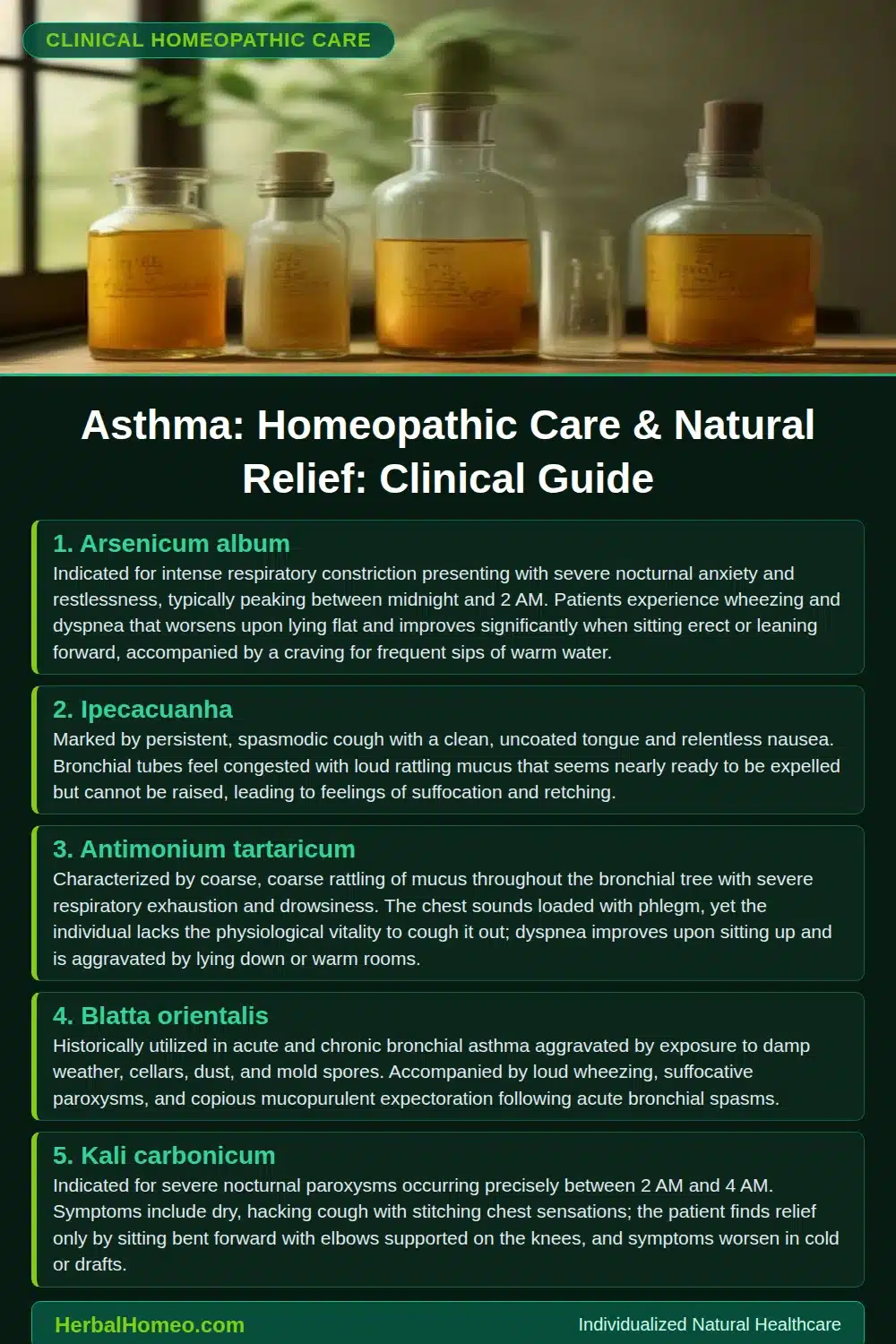
Homeopathic literature documents a vast pharmacopeia for respiratory complaints. Below are five foundational remedies frequently evaluated in clinical practice for asthma and reactive bronchial states. These portraits emphasize qualitative symptom patterns and modality shifts without specifying therapeutic dosages or potencies, as administration must always be individualized by a qualified healthcare professional.
1. Arsenicum🌿 ArsenicumMateria Medica Clinical Profile: Click to explore Boericke keynotes, symptoms, modalities, and dosage guidelines. album
Arsenicum album is indicated when respiratory constriction is coupled with deep psycho-emotional agitation. Attacks frequently awaken the patient in the dead of night, notably between midnight and 2 AM. The individual experiences suffocative air hunger, accompanied by disproportionate fear, anxiety, and restlessness, compelling them to move from chair to bed despite profound physical exhaustion.
Clinical Modalities: The bronchial spasm is aggravated by lying down, which intensifies the sensation of suffocation, and by exposure to cold atmospheric air. Relief is observed when sitting upright, particularly leaning forward, and through the application of warmth or the gentle sipping of warm beverages.
2. Ipecacuanha
Derived from the dried root of Carapichea ipecacuanha, this remedy centers upon persistent nausea accompanying respiratory distress. The patient presents with a relentless, violent cough that borders on convulsive, culminating in gagging or retching. A classical clinical marker is a clean, largely uncoated tongue despite profound digestive distress and nausea.
Clinical Modalities: There is marked rattling of mucus within the chest, yet minimal expectoration occurs. Spasms worsen with movement, in warm moist winds, or upon lying down flat, and do not improve following emesis. Cool open air often facilitates easier diaphragmatic expansion.
3. Antimonium🌿 AntimoniumMateria Medica Clinical Profile: Click to explore Boericke keynotes, symptoms, modalities, and dosage guidelines. tartaricum🌿 TartaricumMateria Medica Clinical Profile: Click to explore Boericke keynotes, symptoms, modalities, and dosage guidelines.
When the bronchial tree is overwhelmed with thick, liquid secretions that the patient cannot mobilize, Antimonium tartaricum becomes a primary consideration. Auscultation in these states typically reveals diffuse, coarse bubbling rales throughout both lung fields. The patient often demonstrates extreme physical weariness, drowsiness, and paleness, showing reduced physiological vitality to generate an effective productive cough.
Clinical Modalities: The patient is aggravated by warm rooms, lying recumbent, and during early morning hours. They demand to sit upright, as assuming a supine position triggers sudden suffocative gasps. Cool, circulating air and expectoration, when achieved, bring partial, temporary relief.
4. Blatta🌿 BlattaMateria Medica Clinical Profile: Click to explore Boericke keynotes, symptoms, modalities, and dosage guidelines. orientalis
Blatta orientalis occupies a specific niche in clinical practice for respiratory conditions initiated or aggravated by environmental allergens, particularly house dust, mold, and damp surroundings. It corresponds to acute asthmatic episodes characterized by labored inspiration, heavy audible wheezing, and rapid bronchial spasm after acute rhinitis or bronchitisInflammation of the bronchial tubesInflammation of the mucous membrane in the bronchial tubes, typically causing bronchospasm and coughing..
Clinical Modalities: Symptoms intensify significantly during seasonal transitions, rainy periods, or inside damp basements and older structures. The cough is initially dry and hacking, later transitioning into bouts with yellow🌿 YellowMateria Medica Clinical Profile: Click to explore Boericke keynotes, symptoms, modalities, and dosage guidelines., purulent phlegm. Sitting bent forward provides mechanical ease for the accessory respiratory muscles.
5. Kali🌿 KaliMateria Medica Clinical Profile: Click to explore Boericke keynotes, symptoms, modalities, and dosage guidelines. carbonicum
Kali carbonicum is indicated in nocturnal bronchial complaints that manifest with clock-like periodicity between 2 AM and 4 AM. The patient wakes suddenly with severe chest constriction, dry hacking coughing fits, and sharp, stitching thoracic pains that impair deep inspiratory effort. Swelling of the upper eyelids is a classic systemic keynote.
Clinical Modalities: Symptoms are exacerbated by cold drafts, changes in barometric pressure, and lying on the affected or painful side. The quintessential physical posture of this remedy is sitting straight up, leaning forward with the elbows resting on the knees or a table, which mechanically unloads the diaphragm and facilitates respiratory comfort.
Integrative & Natural Supportive Strategies
Long-term control of reactive airways benefits from an integrative framework that combines constitutional homeopathy with lifestyle adjustments, environmental controls, and functional respiratory training.
Environmental Control and Allergen Mitigation
Indoor air quality is a dominant factor in bronchial reactiveness. Employing medical-grade HEPA filters minimizes suspended particulate matter, pet dander, and fungal spores. Managing relative indoor humidity between 35% and 50% helps inhibit both dust mite proliferation and mold germination, lowering the burden on hyperreactive mucosal linings.
Breathing Retraining Techniques
Dysfunctional breathing patterns, particularly chronic oral hyperventilation, deplete alveolar carbon dioxide levels. Because carbon dioxide functions as an endogenous smooth muscle relaxant, hypocapnia can directly trigger or worsen bronchial spasms. Structured modalities such as the Buteyko Breathing Method and Pranayama emphasize nasal diaphragmatic breathing, reduced breath volume, and controlled breath-holds to help restore physiological carbon dioxide balance and ease airway tension.
Anti-Inflammatory Nutrition
Systemic inflammatory tone influences pulmonary reactivity. Incorporating essential omega-3 fatty acids (EPA and DHA), abundant dietary bioflavonoids like quercetin, and adequate magnesium🌿 MagnesiumMateria Medica Clinical Profile: Click to explore Boericke keynotes, symptoms, modalities, and dosage guidelines. can promote neuromuscular and immune balance. Identifying and eliminating individual food intolerances—such as sulfites in preserved foods or sensitivity to dairy proteins—removes unnecessary systemic triggers that can heighten bronchial responses.
Clinical Red Flags and Safety Considerations
Asthma is a serious, potentially life-threatening medical disorder. Integrative and homeopathic therapies should always serve as complementaryAssisting or completing remedyA remedy that naturally follows and completes the action of another remedy, helping it work better. strategies within an established medical management plan, never as a replacement for emergency rescue medication. Individuals must maintain active peak flow monitoring and follow their personal Asthma Action Plan as established with their primary pulmonologist or physician.
Immediate emergency medical intervention is mandatory if any of the following signs appear:
- Severe breathlessness resulting in the inability to speak full sentences.
- Marked retractions of the intercostal spaces or supraclavicular fossae during inspiration.
- CyanosisBluish discoloration of the skinA bluish or purplish discoloration of the skin and mucous membranes due to low oxygen levels in the blood. (bluish discoloration) of the lips, tongue, or nail beds.
- Peak expiratory flow readings falling into the red zone (typically below 50% of personal best).
- Lack of response to fast-acting prescribed rescue bronchodilators within 15 minutes.
This article is for education and does not replace diagnosis or treatment by your doctor. Do not stop prescribed medication without medical advice.
Conclusion: Personalized Guidance for Respiratory Wellness
Navigating asthma and recurrent bronchial spasms requires an individualized, multi-layered approach. While conventional therapeutics offer indispensable crisis intervention and baseline mucosal control, constitutional homeopathy offers a refined, supportive avenue for strengthening internal resilience and reducing reactivity to ambient triggers.
Because each individual’s respiratory profile is governed by distinct modalities, temperaments, and systemic tendencies, working directly with an experienced professional ensures that interventions are tailored safely and effectively to your unique constitution.
To explore an individualized, evidence-informed homeopathic care plan suited to your respiratory needs, schedule a comprehensive clinical consultation today.
Does cold dry air provoke the reflex, or is dampness the primary inciting factor?
Table of ContentsPathophysiology of Bronchial Spasms and Airway ObstructionThe Homeopathic Approach to Respiratory HealthKey Homeopathic Remedies in Bronchial Hyperactivity1.
By aligning these individualized nuances with matching medicinal profiles, the practitioner seeks to reduce overall airway hyperreactivity over time.
This article is for educational purposes only and not a substitute for professional medical advice, diagnosis, or treatment. Always seek the advice of your physician or other qualified health provider with any questions you may have regarding a medical condition.

Dr. Luqman Naseer
This article is for informational purposes and has been reviewed for medical accuracy according to classical homeopathic principles. Editorial Policy.