Case Taking for Children in Homeopathy
Case Taking for Children in Homeopathy
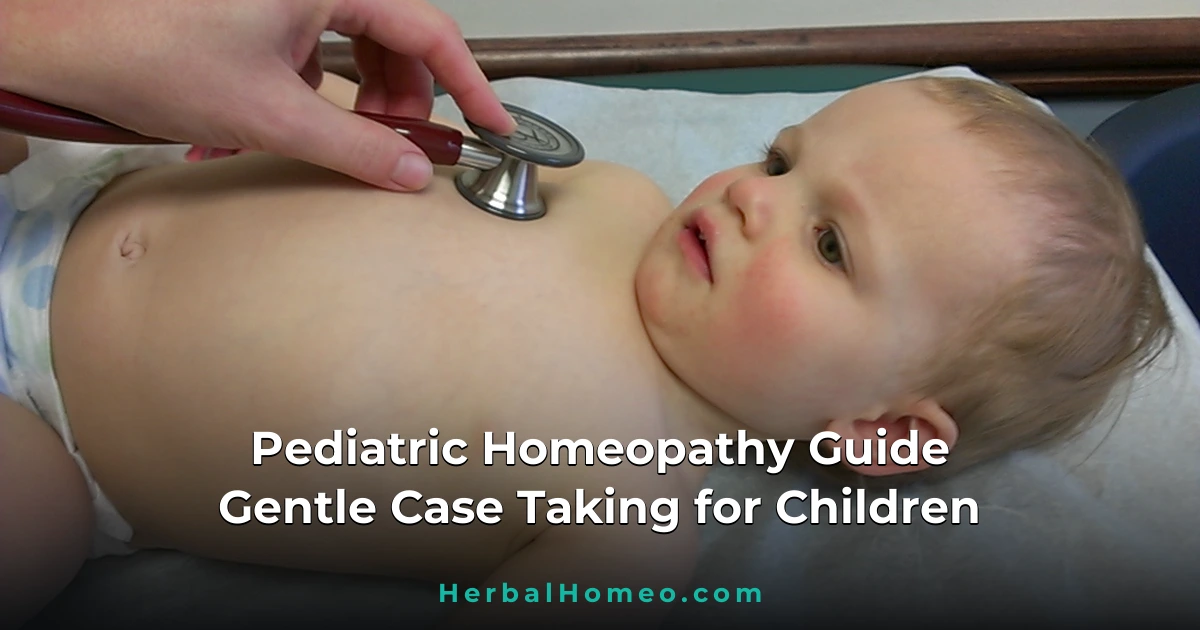
It is often said that taking the case of small children is very challenging. However, if a few key points are kept in mind, it becomes much easier to take their case effectively. This post specifically discusses how to approach case-taking for small children in homeopathy.
- Pregnancy History of the Mother
During case-taking for a child, always start by asking about the mother’s health during pregnancy. Treat the child according to the mother’s conditions during pregnancy, as many maternal illnesses or emotional/psychological problems can cause the child to be born with health issues.- For example, if the mother experienced significant grief, such as the death of a close family member during pregnancy, the child may be born weak or ill.
Case Example:
A 3-year-old girl was born with congenital strabismus🩺 StrabismusClinical Disease Treatment Profile: Read homeopathic remedies, dietary recommendations, and natural therapeutic options. (crossed eyes). Upon taking the mother’s history, it was revealed that the mother experienced the severe grief of her brother’s death during pregnancy. The child was born prematurely, weak, and with strabismus.- Prescription: The child was given a single dose of Carcinosin🌿 CarcinosinMateria Medica Clinical Profile: Click to explore Boericke keynotes, symptoms, modalities, and dosage guidelines. CM followed by Ignatia🌿 IgnatiaMateria Medica Clinical Profile: Click to explore Boericke keynotes, symptoms, modalities, and dosage guidelines. CM. Within a month, her condition improved significantly and, over time, she fully recovered.
- Effects of Maternal Illnesses on the Child
If the mother suffered from any illnesses during pregnancy, these can be transferred to the child.- For example, if the mother experienced excessive vomiting during pregnancy, resulting in the child being born weak, begin treatment with Carcinosin followed by China.
- Impact of Allopathic Medicines Taken During Pregnancy
Many mothers take iron🌿 IronMateria Medica Clinical Profile: Click to explore Boericke keynotes, symptoms, modalities, and dosage guidelines. supplements or other allopathic medicines during pregnancy (e.g., iron tablets or injections like Venofer). These can negatively affect the child.- Prescription for such children: Start with Carcinosin, then Pulsatilla🌿 PulsatillaMateria Medica Clinical Profile: Click to explore Boericke keynotes, symptoms, modalities, and dosage guidelines., followed by Chelidonium🌿 ChelidoniumMateria Medica Clinical Profile: Click to explore Boericke keynotes, symptoms, modalities, and dosage guidelines. 30.
- Observation and Family History
After taking the mother’s history, focus on the child’s family history and miasmatic background, especially if the child has chronic diseases🌿 DiseasesMateria Medica Clinical Profile: Click to explore Boericke keynotes, symptoms, modalities, and dosage guidelines..- For acute illnesses, a detailed history may not be necessary. Observing the child carefully can often help determine the correct remedy.
Examples of Observation:
- A child needing Antimonium Crudum🌿 Antimonium CrudumMateria Medica Clinical Profile: Click to explore Boericke keynotes, symptoms, modalities, and dosage guidelines. dislikes being touched or observed and has stomach-related issues.
- A child with chest-related symptoms might require Antimonium🌿 AntimoniumMateria Medica Clinical Profile: Click to explore Boericke keynotes, symptoms, modalities, and dosage guidelines. Tart.
- Quiet, submissive children often respond well to Opium🌿 OpiumMateria Medica Clinical Profile: Click to explore Boericke keynotes, symptoms, modalities, and dosage guidelines..
- Highly sensitive and irritable children, who cry or scream at the slightest discomfort, usually benefit from Chamomilla🌿 ChamomillaMateria Medica Clinical Profile: Click to explore Boericke keynotes, symptoms, modalities, and dosage guidelines..
- Gentle, innocent children with a placid demeanor may need Baryta Carb🌿 Baryta CarbMateria Medica Clinical Profile: Click to explore Boericke keynotes, symptoms, modalities, and dosage guidelines..
- Hyperactive children who cannot sit still, with restlessness in their legs, often require Tarentula🌿 TarentulaMateria Medica Clinical Profile: Click to explore Boericke keynotes, symptoms, modalities, and dosage guidelines..
- Plump, sluggish children who prefer staying in one place may need Calcarea🌿 CalcareaMateria Medica Clinical Profile: Click to explore Boericke keynotes, symptoms, modalities, and dosage guidelines. Carb.
- Studying the Remedies
To effectively treat children, study remedies associated with their temperaments, such as Antimonium Crudum, Baryta🌿 BarytaMateria Medica Clinical Profile: Click to explore Boericke keynotes, symptoms, modalities, and dosage guidelines. Carb, Chamomilla, Cina🌿 CinaMateria Medica Clinical Profile: Click to explore Boericke keynotes, symptoms, modalities, and dosage guidelines., and Hyoscyamus🌿 HyoscyamusMateria Medica Clinical Profile: Click to explore Boericke keynotes, symptoms, modalities, and dosage guidelines.. This helps in understanding and selecting the appropriate remedy based on the child’s behavior and observation. - Role of the Mother
The mother is often the best observer of the child and can provide the most detailed history of the child’s symptoms. Always take the mother’s account of her child’s condition and pregnancy history, especially for children under 14 years of age. In some cases, fathers or other close family members may also provide useful insights. - Direct Interaction with the Child
If possible, ask the child directly about their discomfort and symptoms, as children today are often capable of expressing themselves well. - Use of Medical Reports
Medical test results and the child’s past medical history can greatly aid in case-taking and help determine the most suitable remedy.
Important Points to Remember:
- Observation is key in pediatric homeopathic case-taking.
- Acute and chronic diseases may require different approaches in case history.
- These posts are shared purely for informational purposes.
By following these guidelines, homeopaths can take a child’s case effectively and reach the right remedy quickly, ensuring better outcomes.
How does case-taking for children differ from that for adults in homeopathy?
My child is very young and can’t describe their symptoms. How do you gather information then?
What specific information is most crucial when taking a homeopathic case for a child?
My child is very young and can’t describe their symptoms.
What specific information is most crucial when taking a homeopathic case for a child?
Case Taking for Children in Homeopathy It is often said that taking the case of small children is very challenging.
My child is very young and can’t describe their symptoms.
This article is for educational purposes only and not a substitute for professional medical advice, diagnosis, or treatment. Always seek the advice of your physician or other qualified health provider with any questions you may have regarding a medical condition.

Dr. Luqman Naseer
This article is for informational purposes and has been reviewed for medical accuracy according to classical homeopathic principles. Editorial Policy.