Corns on Feet: Soles, Heels, and Toe Balls – Detailed Explanation and Homeopathic Treatment
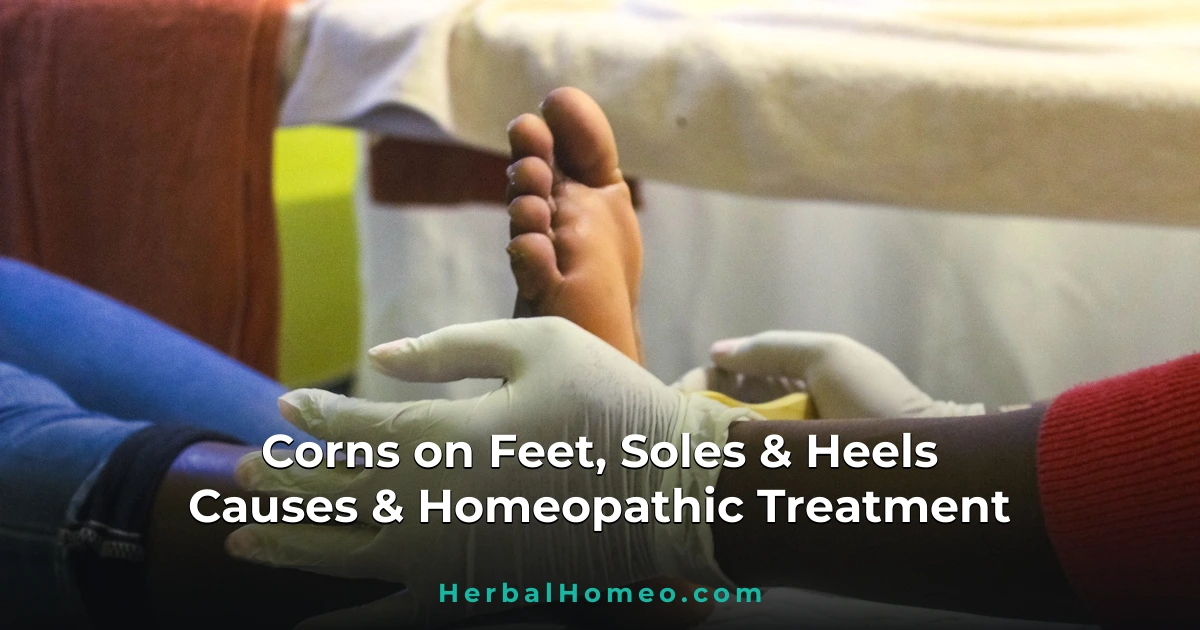
Corns are small, round areas of thickened skin that develop on the feet due to pressure or friction. These pesky skin conditions are common but can be quite painful and bothersome. Let’s dive into understanding corns and explore homeopathic treatments for relief.
What Are Corns?
Corns are hardened areas of skin that develop as a protective response to pressure or repeated friction. They often form on weight-bearing areas of the feet, such as the soles, heels, and toe balls.
Causes of Corns
- Tight or Uncomfortable Footwear: Shoes that pinch or rub can lead to corns.
- Prolonged Standing or Walking: Excessive pressure from long hours on your feet contributes to corn formation.
- Structural Foot Issues: Bone deformities, like bunions, can create areas prone to friction.
- Lack of Foot Care: Neglecting regular exfoliation and moisturizing can make the skin more vulnerable.
Symptoms of Corns
- Hard, Thickened Skin: Corns appear as rough patches with a yellowish tint.
- Pain and Discomfort: Walking or standing can become uncomfortable.
- Redness and Inflammation: Surrounding skin may appear irritated.
Types of Corns
- Hard Corns: Dense, thickened patches, usually on the soles.
- Soft Corns: Found between toes, soft and often moist.
- Seed Corns: Tiny corns that form on weight-bearing areas.
Homeopathic Approach to Corns
Homeopathy treats corns by addressing the underlying cause and individual symptoms. It focuses on personalized treatment to ensure lasting relief.
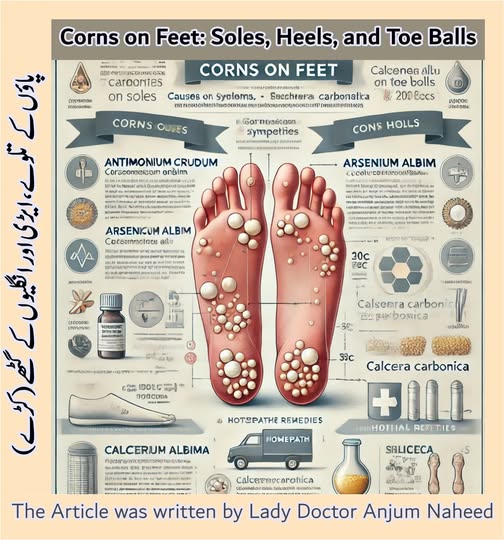
Corns on Soles and Homeopathic Remedies
- Antimonium Crudum🌿 Antimonium CrudumMateria Medica Clinical Profile: Click to explore Boericke keynotes, symptoms, modalities, and dosage guidelines. (Ant-c):
- Symptoms: Hard, rough corns causing pain.
- PotencyStrength level of a remedyThe dilution and succussion scale of a remedy (e.g., 6C, 30C, 200C, 1M), indicating its energetic concentration.: 30C, twice daily.
- Arsenicum Album🌿 Arsenicum AlbumMateria Medica Clinical Profile: Click to explore Boericke keynotes, symptoms, modalities, and dosage guidelines. (Ars):
- Symptoms: Burning sensation with dry skin and tightness.
- Potency: 30C or 200C, once daily.
- Calcarea Carbonica🌿 Calcarea CarbonicaMateria Medica Clinical Profile: Click to explore Boericke keynotes, symptoms, modalities, and dosage guidelines. (Calc):
- Symptoms: Thick, hard corns with excessive sweating and odor.
- Potency: 6X or 30C, three times daily.
- Phosphorus🌿 PhosphorusMateria Medica Clinical Profile: Click to explore Boericke keynotes, symptoms, modalities, and dosage guidelines. (Phos):
- Symptoms: Soft corns prone to bleeding.
- Potency: 30C, twice daily.
- Silicea🌿 SiliceaMateria Medica Clinical Profile: Click to explore Boericke keynotes, symptoms, modalities, and dosage guidelines. (Sil):
- Symptoms: Deep, embedded corns.
- Potency: 6X or 30C, three times daily.
Corns on Heels and Homeopathic Remedies
- Arnica Montana🌿 Arnica MontanaMateria Medica Clinical Profile: Click to explore Boericke keynotes, symptoms, modalities, and dosage guidelines. (Arn):
- Symptoms: Corns caused by trauma or pressure.
- Potency: 30C, three times daily.
- Lycopodium🌿 LycopodiumMateria Medica Clinical Profile: Click to explore Boericke keynotes, symptoms, modalities, and dosage guidelines. (Lyc):
- Symptoms: Dry, hard corns, especially on the right heel.
- Potency: 200C, twice weekly.
- Phosphorus (Phos):
- Symptoms: Burning, soft corns.
- Potency: 30C, twice daily.
Corns on Toe Balls and Homeopathic Remedies
- Antimonium🌿 AntimoniumMateria Medica Clinical Profile: Click to explore Boericke keynotes, symptoms, modalities, and dosage guidelines. Crudum (Ant-c):
- Symptoms: Hard, rough corns.
- Potency: 30C, twice daily.
- Caladium🌿 CaladiumMateria Medica Clinical Profile: Click to explore Boericke keynotes, symptoms, modalities, and dosage guidelines. (Calad):
- Symptoms: Corns forming in moist areas with itching or burning.
- Potency: 30C, once daily.
- Ranunculus Scleratus (Ran-s):
- Symptoms: Deep, painful corns.
- Potency: 30C, twice daily.
Homeopathic Remedies for Specific Corn Types
- Hard Corns: Antimonium Crudum, Calcarea🌿 CalcareaMateria Medica Clinical Profile: Click to explore Boericke keynotes, symptoms, modalities, and dosage guidelines. Carbonica.
- Soft Corns: Phosphorus, Silicea.
- Deep Corns: Silicea, Ranunculus Scleratus.
General Homeopathic Guidelines
- Choose Remedies Based on Symptoms: Match the remedy to the individual case.
- Dosage and Potency: Consult a practitioner for advice on appropriate potencies.
- Foot Hygiene: Keep feet clean and moisturized.
Prevention Tips
- Wear properly fitting shoes with cushioned soles.
- Use protective pads to reduce friction.
- Moisturize your feet regularly to keep the skin supple.
When to Consult a Practitioner
Seek medical advice if the corns become increasingly painful, show signs of infection, or do not improve with homeopathic treatment.
Holistic Benefits of Homeopathy
Homeopathy not only alleviates symptoms but also addresses the root causes, promoting long-term relief and overall skin health.
Conclusion
Corns can be a painful nuisance, but with the right care and treatment, you can find relief. Homeopathy offers a safe, holistic approach tailored to your individual needs. Remember to prioritize foot hygiene and wear comfortable footwear to prevent future corns.
FAQs
- What causes corns on feet?
Corns develop due to repeated pressure or friction, often from poorly fitting shoes. - Are homeopathic remedies safe?
Yes, homeopathic remedies are natural and generally safe when used as directed. - Can corns go away on their own?
In some cases, removing the source of friction can help. However, persistent corns may need treatment. - How long does homeopathic treatment take?
Results vary based on the severity of the corn and individual response to remedies. - Can children develop corns?
Yes, but they are less common in children. Proper footwear can help prevent them.
What are corns, and how does homeopathy approach their treatment?
Which homeopathic remedies are commonly used for corns, and how are they chosen?
How long does homeopathic treatment for corns typically take, and what results can I expect?
Corn TypesGeneral Homeopathic GuidelinesPrevention TipsWhen to Consult a PractitionerHolistic Benefits of HomeopathyConclusionFAQsWhat are corns, and how does homeopathy approach their treatment?
Which homeopathic remedies are commonly used for corns, and how are they chosen?
How long does homeopathic treatment for corns typically take, and what results can I expect?
Corns are small, round areas of thickened skin that develop on the feet due to pressure or friction.
Which homeopathic remedies are commonly used for corns, and how are they chosen?
This article is for educational purposes only and not a substitute for professional medical advice, diagnosis, or treatment. Always seek the advice of your physician or other qualified health provider with any questions you may have regarding a medical condition.

Dr. Luqman Naseer
This article is for informational purposes and has been reviewed for medical accuracy according to classical homeopathic principles. Editorial Policy.