Vertigo, BPPV & Dizziness: Natural Homeopathic Cure for Inner Ear Balance Disorders
Clinical Summary & Key Takeaways:
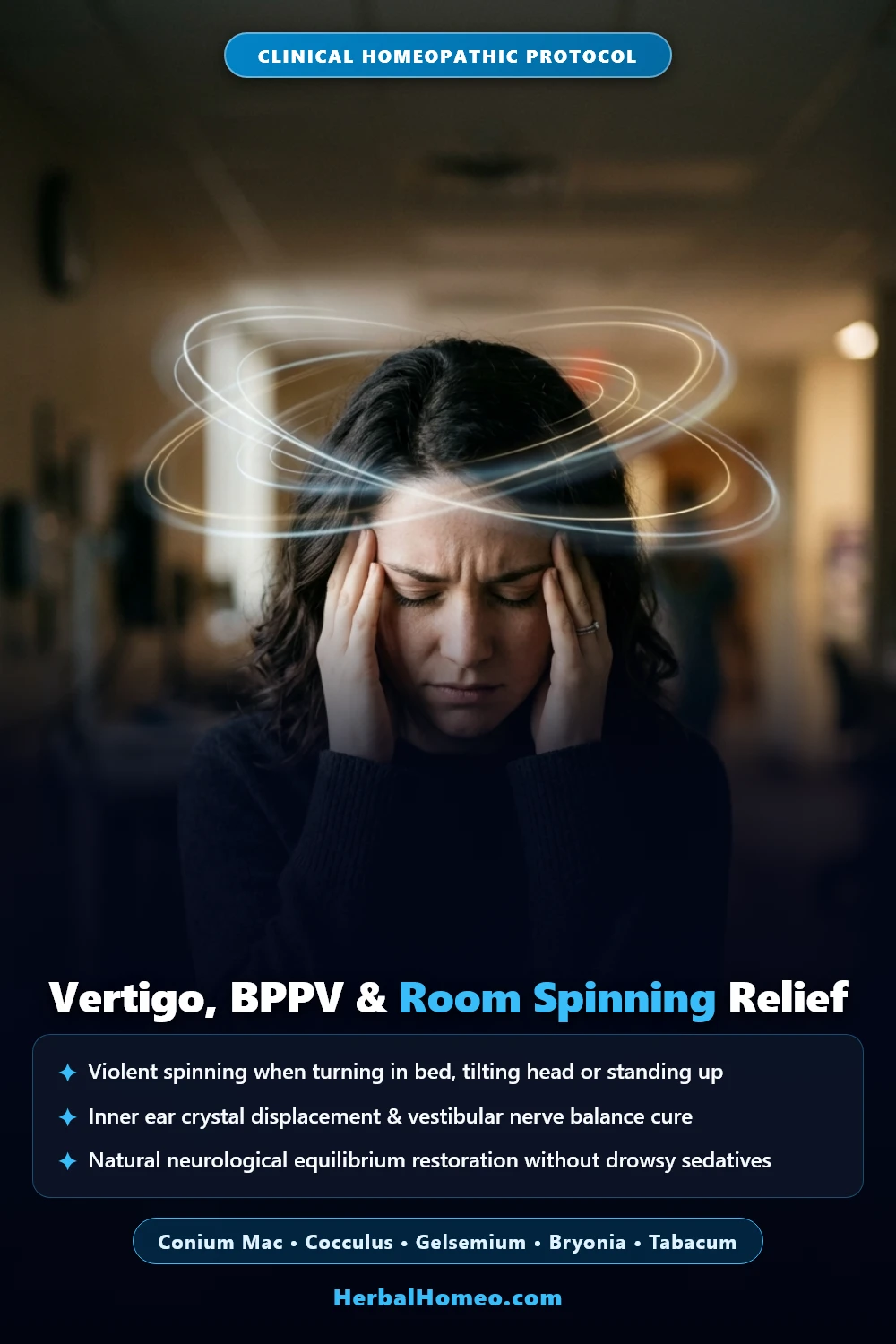
• True vertigo is an illusory perception of rotational movement, distinct from generalized presyncope or lightheadedness, stemming primarily from peripheral vestibular dysfunction in the inner ear.
• The most prevalent etiology is Benign Paroxysmal Positional Vertigo (BPPV), triggered by displaced calcium🌿 CalciumMateria Medica Clinical Profile: Click to explore Boericke keynotes, symptoms, modalities, and dosage guidelines. carbonate otoconia crystals into the semicircular canals, provoking severe spinning episodes upon positional head movements.
• Conventional vestibular suppressants (meclizine, betahistine, dimenhydrinate) act as central nervous system sedatives that merely dampen symptoms while impeding long-term physiological vestibular compensation.
• Evidence-based classical homeopathic medicines—specifically Conium🌿 ConiumMateria Medica Clinical Profile: Click to explore Boericke keynotes, symptoms, modalities, and dosage guidelines. Maculatum, Cocculus🌿 CocculusMateria Medica Clinical Profile: Click to explore Boericke keynotes, symptoms, modalities, and dosage guidelines. Indicus, Gelsemium🌿 GelsemiumMateria Medica Clinical Profile: Click to explore Boericke keynotes, symptoms, modalities, and dosage guidelines., Bryonia🌿 BryoniaMateria Medica Clinical Profile: Click to explore Boericke keynotes, symptoms, modalities, and dosage guidelines. Alba, and Phosphorus—target vestibular neuro-endothelial homeostasis, eliminating rotational attacks and restoring balance without sedation.
Pathophysiology: True Rotational Vertigo vs. Lightheadedness
Accurate clinical triage requires distinguishing true vertigo from non-vestibular dizziness:
- True Peripheral Vertigo: A specific neurological hallucination of motion where the visual field or environment violently rotates, tilts, or spins. It directly implicates the peripheral vestibular labyrinth (utricle, saccule, semicircular canals) or the eighth cranial nerve (vestibulocochlear nerve).
- Presyncope & Disequilibrium: A sensation of impending faintness, cerebral hypoxia, or generalized unsteadiness without rotational illusion, frequently caused by orthostatic hypotension🩺 Orthostatic HypotensionClinical Disease Treatment Profile: Read homeopathic remedies, dietary recommendations, and natural therapeutic options., cardiac dysrhythmias, severe anemiaLack of healthy red blood cells or hemoglobinA condition marked by a deficiency of red blood cells or of hemoglobin in the blood, resulting in pallor and weariness., or hypoglycemia🩺 HypoglycemiaClinical Disease Treatment Profile: Read homeopathic remedies, dietary recommendations, and natural therapeutic options..
The Major Clinical Etiologies of Vestibular Vertigo
1. Benign Paroxysmal Positional Vertigo (BPPV)
BPPV accounts for over 50% of all peripheral vertigo presentations. It results from canalithiasis: microscopic calcium carbonate crystals (otoconia) detach from the otolith membrane in the utricle and migrate into the posterior semicircular canal. When the patient tilts their head, turns in bed, or looks up, gravity pulls the dense crystals through the canal, displacing endolymph fluid and deflecting the cupula, generating an intense burst of false🌿 FalseMateria Medica Clinical Profile: Click to explore Boericke keynotes, symptoms, modalities, and dosage guidelines. rotational signaling to the vestibular nuclei.
2. Vestibular NeuritisInflammation of a nerveInflammation of one or more nerves, causing pain, tenderness, numbness, or tingling in the affected area. and Labyrinthitis
Arises secondary to post-viral inflammation of the vestibular ganglion (often post-HSV-1 or respiratory viral infection). Patients experience severe, unrelenting acute vertigo lasting days, profound vegetative symptoms (nausea, diaphoresis, vomiting), and spontaneous horizontal-torsional nystagmus. When accompanied by sensorineural hearing loss and tinnitus, it is classified as acute labyrinthitis.
3. Meniere’s Disease (Endolymphatic Hydrops)
Characterized by excessive accumulation and pressure of endolymphatic fluid within the cochlear duct and vestibular labyrinth. Presents with the classic clinical triad: fluctuating episodic vertigo lasting 20 minutes to several hours, low-frequency sensorineural hearing loss, and a deep roaring tinnitus with aural fullness.
4. Cervicogenic Vertigo (Cervical Spondylosis)
Pathological disc degeneration or osteophytic spurring in the cervical spine (Cervical Spondylosis) compresses the vertebral arteries and disrupts upper cervical proprioceptive afferents entering the vestibular nuclei, causing dizziness aggravated by neck extension or rapid cervical rotation.
Evidence-Based Classical Homeopathic Therapeutics for Vertigo
Classical homeopathy offers remarkable efficacy by prescribing on precise modal characteristics, neuro-vegetative reflexes, and positional triggers:
1. Conium Maculatum (30C / 200C) — The Gold Standard for Positional Vertigo & BPPV
Conium is the foremost remedy for classical canalithiasis and BPPV. The pathognomonic keynote is violent rotational vertigo triggered by turning over in bed, turning the head sideways, or moving the eyeballs. The patient feels as though the bed and surrounding room are spinning in a circle. Especially indicated in elderly individuals suffering from cerebral arterial sclerosis and degenerative vestibular changes.
2. Cocculus Indicus (30C) — Severe Nausea, Motion Sickness & Sleep Deprivation
Indicated when vertigo is accompanied by overwhelming vegetative gastrointestinal distress: profound nausea, vomiting, salivation, and faintness. The attack is acutely triggered or aggravated by motion of vehicles, boats, trains (kinesia / motion sickness), passive watching of moving objects, or prolonged physical exhaustion from nursing a sick loved one / night-watching. The patient feels hollow in the head and abdomen.
3. Gelsemium Sempervirens (30C / 200C) — Occipital Heaviness, Ataxia & Drooping Eyelids
Acts profoundly on the cerebro-spinal nervous system. Vertigo originates from the occiput and spreads upward to the forehead. Accompanied by severe muscular weakness, tremors, blurred vision, diplopiaDouble visionThe simultaneous perception of two images of a single object that may be displaced horizontally, vertically, or diagonally., and heavy drooping eyelids (ptosis). The patient walks with a wide-based, drunken, uncoordinated gait. Vertigo provoked by anticipatory anxiety, public speaking, or emotional excitement.
4. Bryonia Alba (30C) — Extreme Aggravation from the Slightest Motion
In the Bryonia pathogenesis, the patient is intensely aggravated by the slightest movement. Vertigo strikes immediately upon opening the eyes in the morning or raising the head from the pillow. Sensation as if the brain is tumbling forward. Absolute stillness in a darkened room, lying flat with eyes firmly closed, affords the only relief. Accompanied by dry mucous membranes and intense thirst for large quantities of cold water🌿 WaterMateria Medica Clinical Profile: Click to explore Boericke keynotes, symptoms, modalities, and dosage guidelines..
5. Phosphorus (30C / 200C) — Orthostatic Cerebral Hypoperfusion & Senile Vertigo
Specific for orthostatic vertigo occurring immediately upon rising from a recumbent or seated posture. The patient experiences dark spots or whirling sparks before the eyes, accompanied by an intense sense of physical emptiness in the head and chest. Highly beneficial in the elderly with cerebral ischemia, metabolic debility, or post-febrileFeverish or marked by feverRelating to or characterized by an elevated body temperature or fever symptoms. convalescence.
6. Tabacum (30C) & Chininum🌿 ChininumMateria Medica Clinical Profile: Click to explore Boericke keynotes, symptoms, modalities, and dosage guidelines. Sulphuricum🌿 SulphuricumMateria Medica Clinical Profile: Click to explore Boericke keynotes, symptoms, modalities, and dosage guidelines. (30C) — Meniere’s Hydrops with Tinnitus
Tabacum is unparalleled when vertigo presents with cold clammy sweats, deathly pale face, and severe cardiac depression, dramatically relieved by uncovering the abdomen and breathing cool fresh air. Chininum Sulphuricum is the premier therapeutic for endolymphatic hydrops presenting with high-pitched ringing, deafness, and paroxysmal rotational vertigo.
Clinical Remedy Comparison Matrix
| Remedy | Primary Trigger & Sensation | Aggravating Factors | Relieving Factors | Target PotencyStrength level of a remedyThe dilution and succussion scale of a remedy (e.g., 6C, 30C, 200C, 1M), indicating its energetic concentration. |
|---|---|---|---|---|
| Conium Maculatum | Positional turning in bed, room spinning in circles | Turning head left/right, moving eyes, lying down | Stillness, closing eyes, keeping head straight | 30C or 200C |
| Cocculus Indicus | Vertigo with intense nausea, hollow head, motion sickness | Riding in cars, boats, loss of sleep, looking at motion | Warm room, lying quietly, sleep | 30C |
| Gelsemium | Occipital origin, visual blur, drunken unsteadiness | Sudden standing, emotional anticipation, head down | Profuse urination, semi-reclined rest | 30C or 200C |
| Bryonia Alba | Morning vertigo on opening eyes, brain turning | Any physical motion, stooping, speaking | Absolute stillness, lying on painful side | 30C |
| Phosphorus | Orthostatic drop, whirling dark spots, senile vertigo | Rising abruptly from seat, empty stomach | Cool drinks, eating a light meal, recumbency | 30C or 200C |
Vestibular Rehabilitation Therapy & The Epley Maneuver
While homeopathic simillimum remedies resolve neuro-vascular inflammation and enhance vestibular compensation, canalith repositioning maneuvers physically realign displaced otoconia:
- Epley Maneuver Protocol: Designed for posterior canal BPPV. The patient is guided through four sequential 90-degree rotational positions held for 30–60 seconds each, utilizing gravity to roll the otoconia out of the semicircular canal back into the utricle where they are resorbed.
- Brandt-Daroff Exercises: Habituation exercises performed at the bedside (rapidly tilting from sitting to lateral lying posture on each side for 30 seconds), facilitating central sensory adaptation.
- Hydration & Electrolyte Regulation: Chronic sub-clinical dehydration thickens endolymph viscosity; maintaining 2.5 liters of clean water intake stabilizes inner ear hydraulic dynamics.
Medical Emergency Disclaimer: This clinical monograph is intended for educational purposes. Vertigo accompanied by focal neurological deficits (dysarthria, hemiparesis, sudden unilateral facial droop, ataxia, or the “worst headache of your life”) requires emergency medical triage to rule out posterior circulation stroke🩺 StrokeClinical Disease Treatment Profile: Read homeopathic remedies, dietary recommendations, and natural therapeutic options. (PICA/AICA infarction) or cerebellar hemorrhageProfuse bleeding from a ruptured blood vesselAn escape of blood from a ruptured blood vessel, especially when profuse.. Consult a licensed physician for individual diagnosis.
How does homeopathy approach treating vertigo, BPPV, and other forms of dizziness?
What kind of results can one expect from homeopathic treatment for inner ear balance disorders?
Is homeopathic treatment for vertigo and dizziness safe and compatible with other medications or therapies?
What kind of results can one expect from homeopathic treatment for inner ear balance disorders?
Is homeopathic treatment for vertigo and dizziness safe and compatible with other medications or therapies?
Yes, homeopathic remedies are highly diluted, non-toxic, and generally safe for all ages, with no known side effects or interactions with conventional medications.
What kind of results can one expect from homeopathic treatment for inner ear balance disorders?
This article is for educational purposes only and not a substitute for professional medical advice, diagnosis, or treatment. Always seek the advice of your physician or other qualified health provider with any questions you may have regarding a medical condition.

Dr. Luqman Naseer
This article is for informational purposes and has been reviewed for medical accuracy according to classical homeopathic principles. Editorial Policy.
![Ashwagandha Benefits, Dosage, Side Effects & Homeopathic Uses [2026 Guide]](https://herbalhomeo.com/wp-content/uploads/image-1785218635.jpg)