Hypothyroidism: Homeopathic Care & Natural Relief
Hypothyroidism and Hashimoto’s thyroiditis represent some of the most widespread endocrine challenges encountered in clinical practice today. The thyroid gland, an endocrine organ shaped like a butterfly situated at the base of the anterior neck, acts as the metabolic pacemaker of the human body. When thyroid hormone synthesis declines—or when autoimmune mechanisms systematically impair thyroid tissue as observed in Hashimoto’s thyroiditis—virtually every physiological cascade slows down. Conventional management frequently relies exclusively on synthetic levothyroxine replacement. While hormonal substitution remains critical for stabilizing serum🌿 SerumMateria Medica Clinical Profile: Click to explore Boericke keynotes, symptoms, modalities, and dosage guidelines. hormone levels, an evidence-informed homeopathic approach addresses the underlying systemic dysregulation, immune imbalance, and metabolic vulnerability that characterize individual presentations.
Understanding the Thyroid Axis and Autoimmune Progression
The hypothalamic-pituitary-thyroid (HPT) axis orchestrates metabolic homeostasis through an intricate feedback mechanism. Thyrotropin-releasing hormone (TRH) secreted by the hypothalamus prompts the anterior pituitary to synthesize thyroid-stimulating hormone (TSH). In response, the thyroid gland produces tetraiodothyronine (T4) and triiodothyronine (T3). In peripheral tissues, T4 undergoes enzymatic deiodination into the biologically active T3 form.🌿 Form.Materia Medica Clinical Profile: Click to explore Boericke keynotes, symptoms, modalities, and dosage guidelines. When autoimmune dysfunction occurs, circulating antibodies—notably thyroid peroxidase antibodies (anti-TPO) and thyroglobulin antibodies (anti-TG)—instigate chronic lymphocytic infiltration within the thyroid architecture. Over time, progressive cellular destruction compromises cellular synthesis, producing overt clinical hypothyroidism.
From a clinical standpoint, patients rarely present with identical symptomatology. While elevated serum TSH accompanied by low free T4 and free T3 forms the diagnostic bedrock, clinical manifestations vary markedly. One patient may suffer predominantly from profound neurocognitive lethargy, weight gain, and cold intolerance, whereas another displays chronic constipationInfrequent or difficult bowel movementsA condition where stool is dry, hard, and difficult or painful to pass., integumentary dryness, diffuse alopeciaHair loss or baldnessPartial or complete loss of hair from areas where it normally grows, especially the scalp., and emotional apathy. Homeopathic medicine recognizes these distinct physiological expressions as vital indicators of constitutional susceptibility, guiding precise individualized therapeutic selection.
The Homeopathic Approach to Endocrine Balance
Homeopathic clinical science evaluates health through the lens of dynamic equilibrium. Rather than merely viewing the thyroid as an isolated gland with localized deficiency, homeopathic pathology considers thyroid hypofunction as a systemic disturbance involving the psycho-neuro-endocrine-immune (PNEI) network. Chronic psychological distress, prolonged environmental toxicity, nutritional deficiencies, and genetic diatheses converge to compromise self-regulatory capacity.
The objective of individualized homeopathic prescription in hypothyroid states is to stimulate internal homeostasis, modulate dysfunctional immune reactivity in autoimmune presentations, and alleviate debilitating constitutional symptoms. By matching the totality of physical, emotional, and modal symptoms to a thoroughly verified Materia MedicaEncyclopedia of homeopathic remediesA comprehensive body of collected knowledge describing the origin, preparation, and detailed symptom profiles of healing substances. picture, practitioners support vitality without overwhelming delicate biochemical mechanisms.
Primary Homeopathic Remedies in Hypothyroidism
The following five remedies demonstrate marked clinical relevance in managing hypothyroid and autoimmune thyroid symptoms. Each remedy is selected based upon idiosyncratic symptom patterns, constitutional characteristics, and clinical modalitiesFactors that make symptoms better or worseEnvironmental influences (like temperature, weather, rest, motion, or time of day) that modify symptoms..
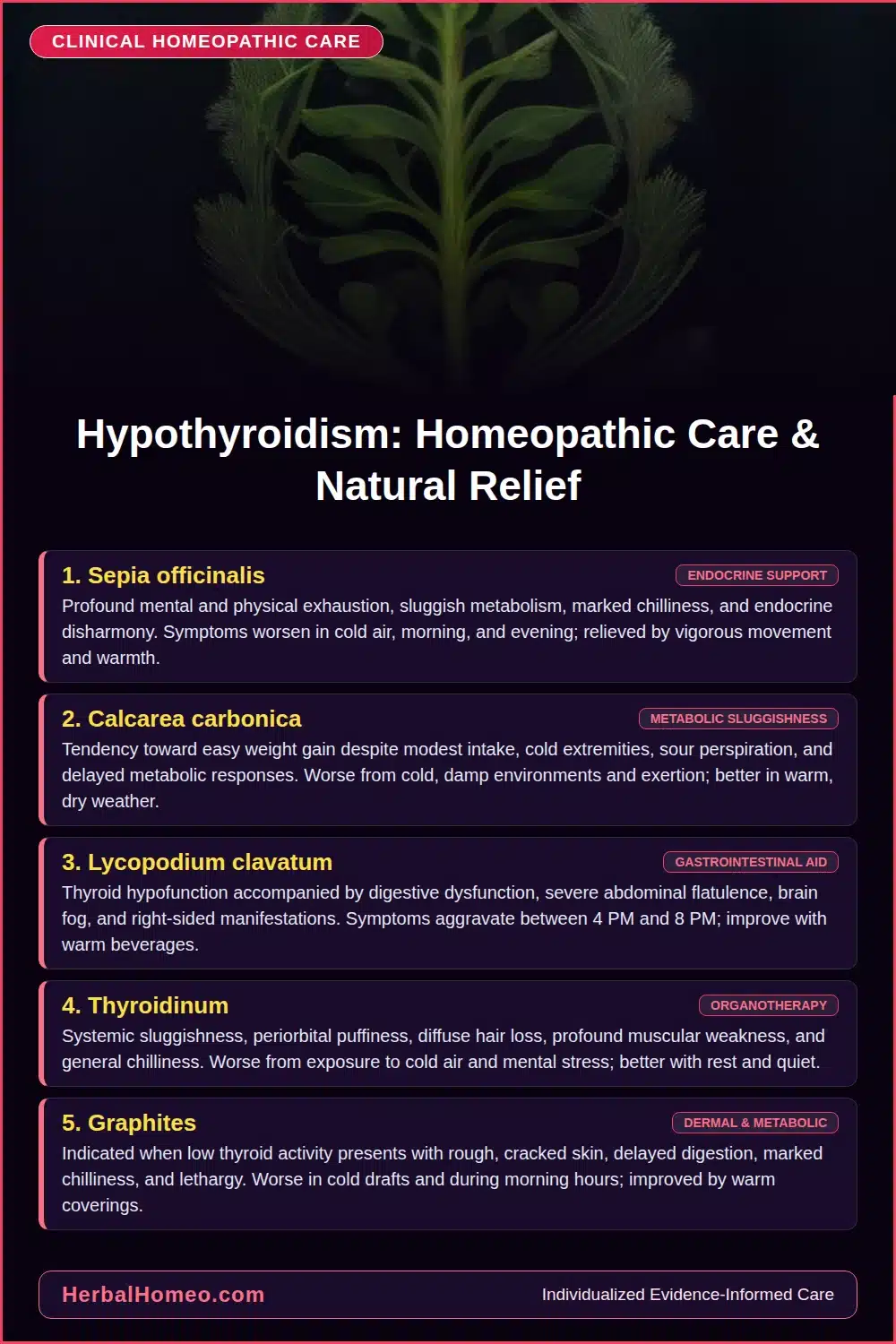
1. Sepia officinalis (Cuttlefish Ink)
Clinical Focus: Endocrine exhaust, hormonal transition states, and chronic metabolic stagnation.
Key Clinical Indications: Sepia represents a preeminent medicine for individuals suffering from severe fatigue, cold intolerance, and venous or lymphatic stasis. Patients typically report a feeling of absolute physical and emotional exhaustion, often accompanied by mental indifference or irritability toward loved ones. Metabolic sluggishness is pronounced, manifesting as delayed digestion, pelvic heaviness, and water🌿 WaterMateria Medica Clinical Profile: Click to explore Boericke keynotes, symptoms, modalities, and dosage guidelines. retention. The skin may appear sallow with localized chloasma across the bridge of the nose. Individuals feel chronically cold, desiring internal heat yet experiencing significant vasomotor instability.
Modalities: AggravationWorsening of symptomsAn increase in severity or intensity of symptoms, often caused by environmental factors or after taking a remedy. from cold air, dampness, early morning, and laundry work; marked improvement from vigorous muscular exertion, rapid walking, and warm environments.
2. Calcarea🌿 CalcareaMateria Medica Clinical Profile: Click to explore Boericke keynotes, symptoms, modalities, and dosage guidelines. carbonica (Calcium Carbonate)
Clinical Focus: Metabolic deceleration, tissue flaccidity, and impaired cellular assimilation.
Key Clinical Indications: Calcarea carbonica corresponds to individuals with a profoundly slowed metabolic pace who gain weight effortlessly despite minimal dietary intake. The patient typically possesses fair, pale skin, flaccid musculature, and cold extremities. A keynote symptom is localized perspiration, particularly cold, sour sweat upon the scalp and back of the neck during sleep. Cognitive processes feel delayed, accompanied by anxiety regarding health, work capacity, or impending misfortune. Cold sensitivity is profound, with an inability to tolerate chilling drafts or seasonal shifts.
Modalities: Symptoms are exacerbated by cold damp air, physical ascending, mental exertion, and milk🌿 MilkMateria Medica Clinical Profile: Click to explore Boericke keynotes, symptoms, modalities, and dosage guidelines. consumption; ameliorationImprovement or relief of symptomsA change or modification that results in feeling better, or a decrease in symptom severity. occurs in dry, warm climatic conditions and while resting quietly.
3. Lycopodium🌿 LycopodiumMateria Medica Clinical Profile: Click to explore Boericke keynotes, symptoms, modalities, and dosage guidelines. clavatum (Club Moss)
Clinical Focus: Gastrointestinal hypomotility, metabolic lethargy, and hepatic-endocrine dysfunction.
Key Clinical Indications: Lycopodium is indispensable when hypothyroid symptoms coincide with severe gastrointestinal disturbances. Patients display marked abdominal distension, severe flatulenceGas accumulation in stomach or intestinesThe presence of excessive air or gas in the digestive tract, causing bloating and wind. after eating small quantities of food, and chronic biliary sluggishness. Intellectually sharp but physically exhausted, these individuals often experience intellectual fatigue, morning fog, and deep performance anxiety masked by superficial confidence. Premature greying of hair, dry cutaneous tissues, and persistent chilliness in the lower extremities are characteristic indicators.
Modalities: Notable aggravation during the late afternoon from 4:00 PM to 8:00 PM, and from cold foods or cold drafts; relief is experienced from warm drinks, motion in open air, and unfastening tight clothing.
4. Thyroidinum (Desiccated Thyroid Extract)
Clinical Focus: Organopathic regulation, metabolic depression, and tissue infiltration.
Key Clinical Indications: Prepared as a potentized sarcode, Thyroidinum exercises powerful regulatory effects over the metabolism of protein, carbohydrate, and fat. It is clinically considered in cases of persistent thyroid hypofunction accompanied by myxedematous puffiness of the periorbital spaces, hands, and feet. Symptoms include severe muscular weakness, persistent tachycardiaAbnormally rapid heart rateA condition that causes the heart to beat faster than normal while at rest (usually over 100 beats per minute). alternating with bradycardiaAbnormally slow heart rateA heart rate that is slower than normal, typically under 60 beats per minute at rest., brittle nails, and diffuse alopecia of the eyebrows and scalp. Mental clouding, memory lapses, and cold sensitivity are pervasive features throughout the clinical presentation.
Modalities: Aggravated by cold damp weather, physical overexertion, and psychological stress; relieved by moderate rest, recumbent posture, and protective warmth.
5. Graphites (Plumbago)
Clinical Focus: Integumentary dryness, delayed peristalsis, and profound metabolic torpor.
Key Clinical Indications: Graphites is uniquely suited to hypothyroid presentations where dermatological and digestive manifestations dominate. Patients suffer from harsh, leathery, cracked skin prone to eczematous eruptions weeping a sticky, honey-like fluid. Severe, persistent intestinal torpor results in obstinate constipation without normal peristaltic urge. The individual displays constitutional chilliness, slow mentation, marked hesitation in decision-making, and heavy swelling of the lower extremities. Menstrual delays or scanty flow are common endocrine indicators in women.
Modalities: Symptoms worsen in cold drafts, during morning hours, and from damp air; symptoms improve from warm wrapping, consuming hot beverages, and rest in dry environments.
Integrative Support: Nutrition, Lifestyle, and Immune Modulators
While homeopathic therapeutics work to restore cellular vitality and regulatory balance, an integrative lifestyle strategy is indispensable for sustained clinical improvement. The thyroid gland requires critical micronutrients for enzymatic functions, including selenium🌿 SeleniumMateria Medica Clinical Profile: Click to explore Boericke keynotes, symptoms, modalities, and dosage guidelines., zinc🌿 ZincMateria Medica Clinical Profile: Click to explore Boericke keynotes, symptoms, modalities, and dosage guidelines., iron🌿 IronMateria Medica Clinical Profile: Click to explore Boericke keynotes, symptoms, modalities, and dosage guidelines., and adequate protein substrates for tyrosine availability. In cases of Hashimoto’s thyroiditis, supporting the integrity of the gastrointestinal mucosal barrier is vital to calm systemic immune reactivity.
Key integrative lifestyle recommendations include:
- Targeted Anti-Inflammatory Nutrition: Adopt a whole-food diet free from processed sugars, trans-fats, and known reactive antigens such as gluten or excessive unfermented soy🌿 SoyMateria Medica Clinical Profile: Click to explore Boericke keynotes, symptoms, modalities, and dosage guidelines., which can interfere with hormone receptor binding and exacerbate gut permeability.
- Optimal Hydration: Consume ample pure, filtered water daily to facilitate the cellular clearance of metabolic waste products and maintain healthy lymphatic circulation.
- Stress Management: Chronic elevated cortisol suppresses pituitary TSH secretion and blocks peripheral T4-to-T3 conversion. Incorporate evidence-based modalities such as mindfulness meditation, diaphragmatic breathing, and nature immersion to stabilize the nervous system.
- Restorative Circadian Rhythms: Prioritize seven to eight hours of uninterrupted nocturnal sleep in a cool, dark room, allowing cellular repair and healthy neuroendocrine signaling.
- Sensible Physical Activity: Avoid extreme exhaustive training which further depletes adrenal-thyroid reserves; focus on restorative walking, swimming, or restorative yoga to stimulate tissue oxygenation.
Clinical Perspective and Monitoring
Managing chronic thyroid disorders necessitates systematic objective monitoring alongside clinical evaluation. Standard diagnostic parameters—including serum TSH, free T4, free T3, reverse T3, anti-TPO, and anti-TG antibodies—should be assessed at regular clinical intervals under the supervision of a primary physician. Homeopathic treatment operates synergistically alongside conventional medical care, seeking to optimize constitutional vitality, alleviate chronic symptoms, and reduce systemic inflammatory distress.
Any therapeutic strategy must respect individual metabolic reserve. As vitality improves through appropriate lifestyle interventions and homeopathic constitutional prescribing, practitioners monitor systemic responses closely, ensuring hormonal parameters remain within optimal physiological ranges.
This article is for education and does not replace diagnosis or treatment by your doctor. Do not stop prescribed medication without medical advice.
If you are experiencing persistent metabolic fatigue, cold sensitivity, or unyielding thyroid symptoms, professional guidance can help identify your unique constitutional remedy and establish an integrative pathway to vitality. Book a clinical consultation with our experienced practitioners today to receive personalized, evidence-informed homeopathic care.
This article is for educational purposes only and not a substitute for professional medical advice, diagnosis, or treatment. Always seek the advice of your physician or other qualified health provider with any questions you may have regarding a medical condition.

Dr. Luqman Naseer
This article is for informational purposes and has been reviewed for medical accuracy according to classical homeopathic principles. Editorial Policy.