PCOS (Polycystic Ovary Syndrome): Complete Natural Homeopathic Cure
What is Polycystic Ovary Syndrome🩺 Polycystic Ovary SyndromeClinical Disease Treatment Profile: Read homeopathic remedies, dietary recommendations, and natural therapeutic options. (PCOS)?
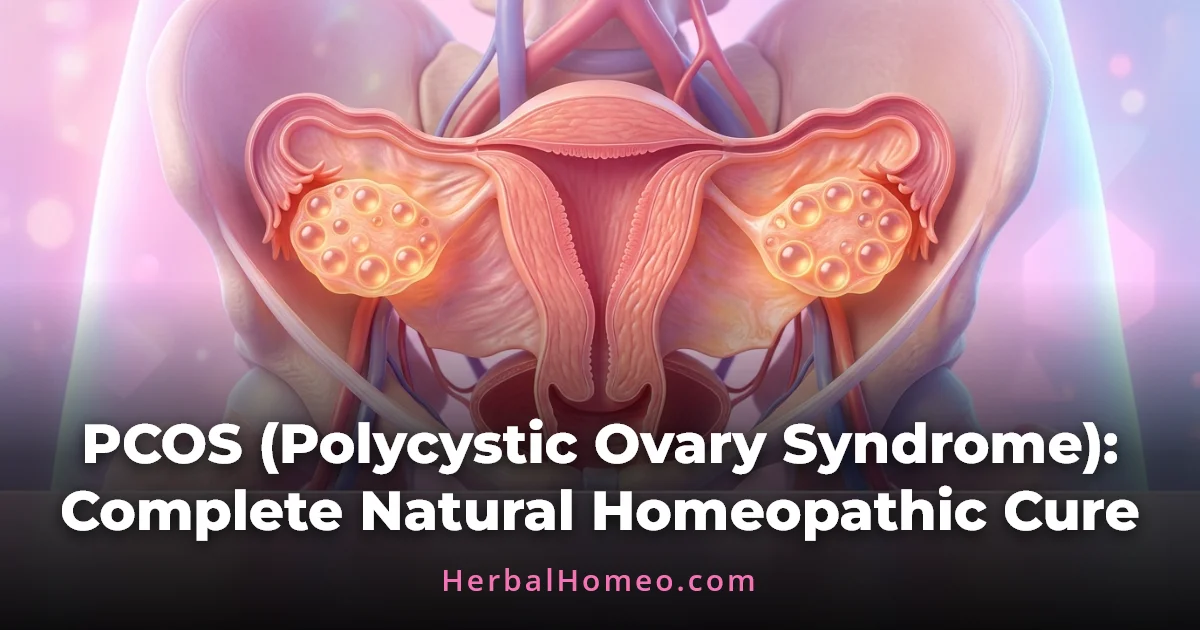
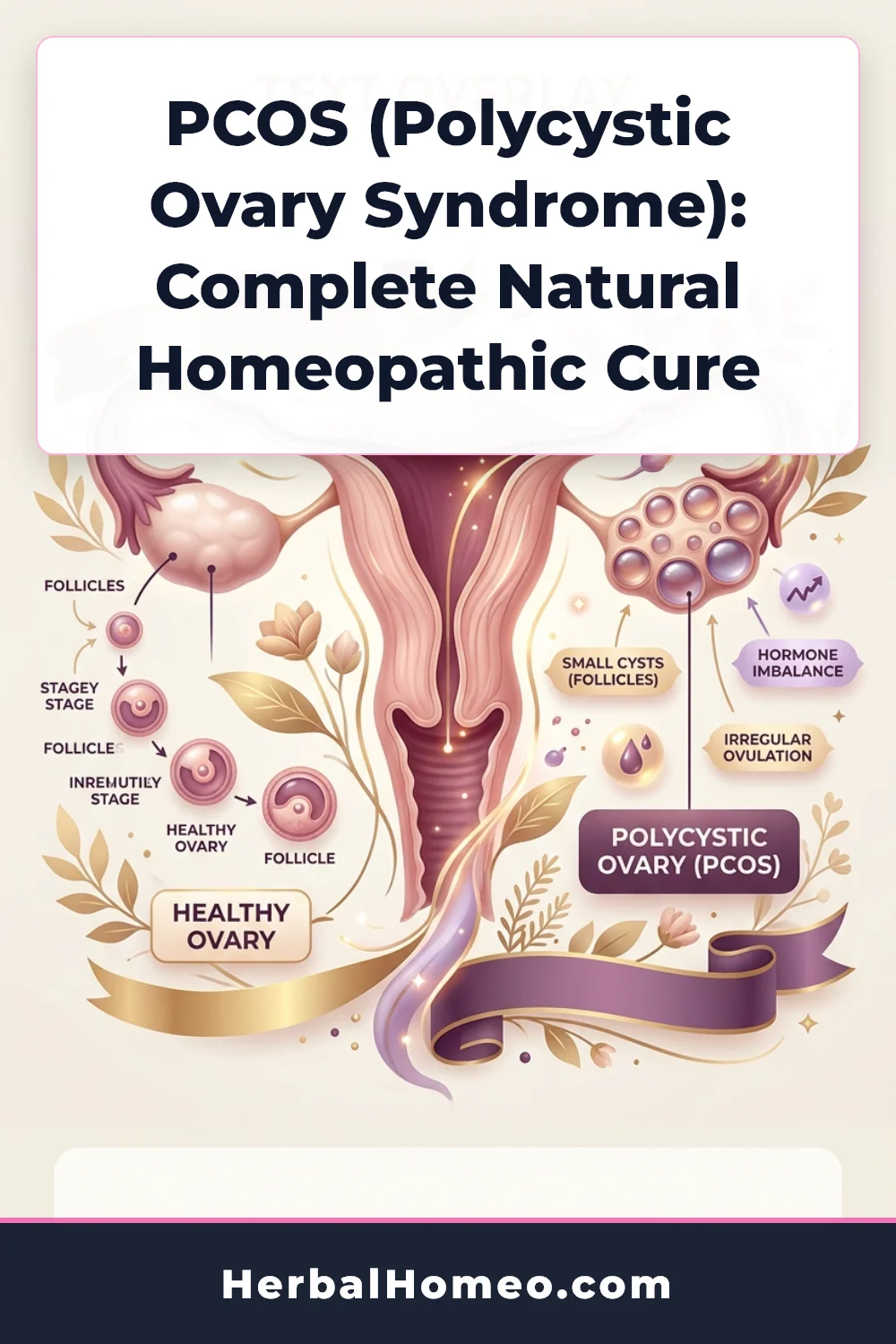
Polycystic Ovary Syndrome (PCOS) is a highly prevalent hormonal and metabolic disorder affecting millions of women in their reproductive years. It is characterized by a systemic hormonal imbalance, specifically an excess of androgens (male hormones) in the female body. This imbalance profoundly affects the ovaries, causing them to develop numerous small collections of fluid called follicles (often referred to as cysts), which ultimately fail to regularly release mature eggs. This leads to chronic irregular periods and is one of the leading causes of female infertility.
Unlike standard cysts which are singular and large, PCOS cysts are small, numerous, and form a “pearl necklace” pattern on the outer edge of the ovary. Beyond reproductive issues, PCOS affects the entire metabolic system, often leading to insulin🌿 InsulinMateria Medica Clinical Profile: Click to explore Boericke keynotes, symptoms, modalities, and dosage guidelines. resistance, severe weight gain, and long-term health risks if left unmanaged.
Recognizing the Symptoms of PCOS
The symptoms of PCOS can range from mild to severe, and they often become apparent in a woman’s late teens or early twenties. Because it is a syndrome, not every woman experiences all symptoms, but the most common indicators include:
- Irregular Menstrual Cycles: This is the most common characteristic. Women may experience fewer than eight periods a year, periods occurring every 35 days or more, or completely absent periods (amenorrhea🩺 AmenorrheaClinical Disease Treatment Profile: Read homeopathic remedies, dietary recommendations, and natural therapeutic options.). Some women experience abnormally heavy bleeding when their periods finally do occur.
- Excessive Hair Growth (Hirsutism): Increased androgen levels can cause thick, dark hair to grow on the face (chin, upper lip), chest, back, or abdomen, mimicking male-pattern hair growth.
- Severe Acne and Skin Changes: Hormonal acne, especially cystic acne along the jawline, is very common. Women may also notice ‘acanthosis nigricans’, which are patches of dark, velvety, thickened skin on the neck, armpits, or under the breasts.
- Weight Gain and Insulin Resistance: Up to 80% of women with PCOS are insulin resistant. This means the body’s cells don’t respond normally to insulin, causing the pancreas to pump out more. High insulin levels trigger the ovaries to produce more androgens, creating a vicious cycle of stubborn weight gain, especially around the abdomen.
- Thinning Hair on the Scalp: Women might experience male-pattern baldness, hair thinning, or excessive hair fall.
- Infertility or Subfertility: Because ovulation is irregular or entirely absent, getting pregnant can be highly challenging without medical intervention.
The Root Causes: Why Does PCOS Happen?
While the exact cause of PCOS remains a subject of intense medical research, doctors believe that a combination of genetic and environmental factors plays a significant role.
1. Insulin Resistance: This is considered the primary driver of PCOS in a vast majority of cases. When cells become resistant to the action of insulin, blood sugar levels rise. The pancreas secretes even more insulin to compensate. These high insulin levels stimulate the ovaries to produce excess testosterone, which disrupts follicle development and prevents normal ovulation.
2. Low-Grade Inflammation: Studies show that women with PCOS have a type of low-grade systemic inflammation that stimulates polycystic ovaries to produce androgens, leading to heart and blood vessel problems over time.
3. Heredity: If your mother or sister has PCOS, your chances of developing it are significantly higher. Specific genetic mutations are currently being linked to the syndrome.
4. Excess Androgen Production: The ovaries naturally produce small amounts of androgens. In PCOS, the ovaries produce unusually high levels, which completely halts ovulation and causes acne and hirsutism.
How Homeopathy Offers a Permanent, Natural Cure for PCOS
Conventional medicine often treats PCOS symptomatically—using birth control pills to force a regular cycle, Metformin for insulin resistance, or Spironolactone for hair growth. However, when these medications are stopped, the symptoms almost always return, because the root hormonal axis remains uncorrected.
Homeopathy works differently. It aims to restore the delicate balance of the endocrine system, regulating the pituitary-ovarian axis so the body can heal itself. Homeopathic medicines do not contain synthetic hormones; rather, they stimulate the body’s own regulatory mechanisms to naturally dissolve the cysts, regulate insulin, and restore normal ovulation.
Top 5 Most Effective Homeopathic Remedies for PCOS
Here is a detailed breakdown of the best homeopathic medicines used globally to treat Polycystic Ovary Syndrome. (Note: Homeopathy is highly individualized. It is always best to consult a qualified homeopath for the correct dosage and potencyStrength level of a remedyThe dilution and succussion scale of a remedy (e.g., 6C, 30C, 200C, 1M), indicating its energetic concentration. based on your exact constitution.)
1. Pulsatilla🌿 PulsatillaMateria Medica Clinical Profile: Click to explore Boericke keynotes, symptoms, modalities, and dosage guidelines. Nigricans (Pulsatilla) 30C or 200C
Pulsatilla is frequently the first remedy thought of for young girls and women suffering from PCOS. It is the premier remedy for establishing normal menstrual flow when periods are delayed, scanty, or entirely suppressed.
Key Indications:
- Periods are constantly changing—never appearing at the same time or with the same flow.
- The woman typically has a mild, gentle, emotional, and weeping disposition. She feels better when consoled.
- Physical symptoms are worse in a warm, stuffy room and much better in the open air.
- She may suffer from a complete lack of thirst, even in summer.
2. Sepia🌿 SepiaMateria Medica Clinical Profile: Click to explore Boericke keynotes, symptoms, modalities, and dosage guidelines. Officinalis (Sepia) 30C or 200C
Sepia is a powerful constitutional remedy for women dealing with the hormonal chaos of PCOS, particularly those struggling with infertility, severe mood swings, and a feeling of dragging down in the pelvic region (bearing-down sensation).
Key Indications:
- Periods are late and scanty.
- The woman may experience extreme irritability, indifference toward loved ones, and a desire to be left alone.
- Facial hair growth (hirsutism) on the upper lip or chin is prominent.
- She often feels chillyHypersensitive to cold temperaturesA constitutional state of feeling exceptionally cold, lacking vital heat, and needing warmth or heavy blankets. and is prone to hot flushes.
- There may be a history of painful intercourse or a complete loss of libido.
3. Calcarea Carbonica🌿 Calcarea CarbonicaMateria Medica Clinical Profile: Click to explore Boericke keynotes, symptoms, modalities, and dosage guidelines. (Calcarea🌿 CalcareaMateria Medica Clinical Profile: Click to explore Boericke keynotes, symptoms, modalities, and dosage guidelines. Carb) 30C or 200C
This is the leading remedy for PCOS in women who suffer from severe, stubborn weight gain and metabolic sluggishness. It targets the underlying insulin resistance and sluggish thyroid function that often accompanies PCOS.
Key Indications:
- The patient is typically overweight, fair-complexioned, and tends to accumulate fat around the abdomen.
- Periods are often too early, last too long, and are extremely profuse (heavy bleeding).
- She tends to sweat profusely, especially on the head and neck during sleep.
- Cravings for boiled eggs or indigestible things like chalk or dirt (pica).
- Extreme sensitivity to cold air.
4. Natrum Muriaticum🌿 Natrum MuriaticumMateria Medica Clinical Profile: Click to explore Boericke keynotes, symptoms, modalities, and dosage guidelines. (Natrum🌿 NatrumMateria Medica Clinical Profile: Click to explore Boericke keynotes, symptoms, modalities, and dosage guidelines. Mur) 30C or 200C
Natrum Mur is highly indicated for women whose PCOS is deeply linked to suppressed grief, chronic stress, or emotional trauma. It is also excellent for women who are not overweight (Lean PCOS).
Key Indications:
- Periods are delayed or suppressed, often due to emotional shock or grief.
- The woman may suffer from severe, throbbing headaches or migraines before or after her period.
- She tends to crave salt or salty foods intensely.
- Emotionally, she dwells on past unpleasant memories, prefers to weep alone, and feels worse if someone tries to console her.
- Vaginal dryness and painful intercourse may be present.
5. Thuja Occidentalis🌿 Thuja OccidentalisMateria Medica Clinical Profile: Click to explore Boericke keynotes, symptoms, modalities, and dosage guidelines. (Thuja🌿 ThujaMateria Medica Clinical Profile: Click to explore Boericke keynotes, symptoms, modalities, and dosage guidelines.) 30C or 200C
Thuja is a deep-acting remedy primarily known for its ability to dissolve abnormal growths, including cysts, warts, and tumors. It is one of the most specific remedies for dissolving polycystic ovaries.
Key Indications:
- Severe left-sided ovarian pain, especially during menstruation.
- Excessive facial and body hair growth (hirsutism) due to severe androgen excess.
- The patient may suffer from chronic pelvic pain or a history of recurrent urinary tract infections.
- Periods are scanty and retarded.
Crucial Lifestyle and Dietary Changes for PCOS
While homeopathic medicine works to correct the hormonal imbalance, lifestyle changes are absolutely non-negotiable for long-term recovery from PCOS.
- Adopt a Low-Glycemic Index (GI) Diet: Eliminate refined sugars, white🌿 WhiteMateria Medica Clinical Profile: Click to explore Boericke keynotes, symptoms, modalities, and dosage guidelines. bread, and processed carbohydrates. Focus on complex carbs like oats, quinoa, brown rice, and plenty of leafy greens. This directly combats insulin resistance.
- Daily Physical Activity: Exercise improves insulin sensitivity faster than almost any intervention. Aim for at least 30-45 minutes of moderate exercise (brisk walking, cycling, or weight lifting) 5 days a week. Strength training is particularly beneficial for lowering insulin levels.
- Manage Stress: Chronic stress elevates cortisol levels, which in turn increases insulin and androgen production. Incorporate yoga, deep breathing exercises, or meditation into your daily routine.
- Prioritize Sleep: Lack of sleep severely disrupts hormonal balance. Ensure you are getting 7-8 hours of high-quality, uninterrupted sleep every night in a completely dark room.
- Incorporate Anti-Inflammatory Foods: Add turmeric🌿 TurmericMateria Medica Clinical Profile: Click to explore Boericke keynotes, symptoms, modalities, and dosage guidelines., ginger🌿 GingerMateria Medica Clinical Profile: Click to explore Boericke keynotes, symptoms, modalities, and dosage guidelines., omega-3 rich fish, walnuts, and flaxseeds to your diet to lower the systemic inflammation associated with PCOS.
📌 Pin this Comprehensive Guide to Pinterest
Save these holistic, natural PCOS remedies to your women’s health board to help others find a permanent cure!
Pin ItFrequently Asked Questions (FAQs) About PCOS
Can PCOS be cured completely with homeopathy?
Yes, homeopathy offers a complete and permanent cure for PCOS by addressing the root hormonal imbalance rather than just suppressing the symptoms. With the right constitutional remedy, the cysts dissolve, and regular ovulation is restored.
Can I get pregnant naturally if I have PCOS?
Absolutely. PCOS is a leading cause of infertility, but it is highly treatable. Once homeopathic treatment regulates your periods and induces natural ovulation, achieving a natural pregnancy is highly possible.
Will homeopathic medicine remove facial hair caused by PCOS?
Homeopathy treats the underlying excess androgen (male hormone) production. As your hormones balance out, new abnormal hair growth will stop. Existing thick hair may require cosmetic removal initially, but it will not grow back as coarse once the internal imbalance is fixed.
How long does homeopathic treatment for PCOS take?
The duration of treatment varies depending on the severity of the cysts and how long you have had the condition. Generally, patients start seeing improvements in their menstrual cycle and weight within 2 to 3 months of starting the correct remedy.
Is a strict diet necessary alongside homeopathic medicine?
Yes, dietary changes are crucial. Because PCOS is heavily linked to insulin resistance, eating a low-sugar, low-carb diet alongside your homeopathic treatment will significantly speed up the healing process.
How does homeopathy specifically address the root causes of PCOS for a “complete natural cure”?
Is a “complete natural cure” for PCOS genuinely achievable with homeopathy, and what’s the expected timeline?
Are homeopathic remedies for PCOS safe, and can they be combined with lifestyle changes for optimal results?
Polycystic Ovary Syndrome (PCOS) is a highly prevalent hormonal and metabolic disorder affecting millions of women in their reproductive years.
While the exact cause of PCOS remains a subject of intense medical research, doctors believe that a combination of genetic and environmental factors plays a significant role.
Yes, homeopathy offers a complete and permanent cure for PCOS by addressing the root hormonal imbalance rather than just suppressing the symptoms.
Polycystic Ovary Syndrome (PCOS) is a highly prevalent hormonal and metabolic disorder affecting millions of women in their reproductive years.
Homeopathy treats the underlying excess androgen (male hormone) production.
This article is for educational purposes only and not a substitute for professional medical advice, diagnosis, or treatment. Always seek the advice of your physician or other qualified health provider with any questions you may have regarding a medical condition.

Dr. Luqman Naseer
This article is for informational purposes and has been reviewed for medical accuracy according to classical homeopathic principles. Editorial Policy.