Osteoporosis: Homeopathic Treatment & Natural Relief
Osteoporosis is often characterized as a silent skeletal disorder because bone loss occurs progressively without overt early warning signs until a minor fall or sudden physical strain results in a painful fracture. Characterized by low bone mineral density and the microarchitectural deterioration of bone tissue, osteoporosis compromises the structural integrity of the skeleton, particularly within the lumbar spine, femoral neck (hip), and distal radius (wrist).
While conventional management frequently focuses on synthetic anti-resorptive medications that can carry gastrointestinal or atypical fracture risks over long-term use, natural and constitutional approaches emphasize restoring cellular bone remodeling equilibrium. By optimizing mineral assimilation, enhancing osteoblast vitality, and stimulating endogenous cellular repair mechanisms, clinical homeopathy and targeted nutritional therapy provide comprehensive, gentle support for skeletal resilience.
Understanding Bone Biology: The Remodeling Imbalance
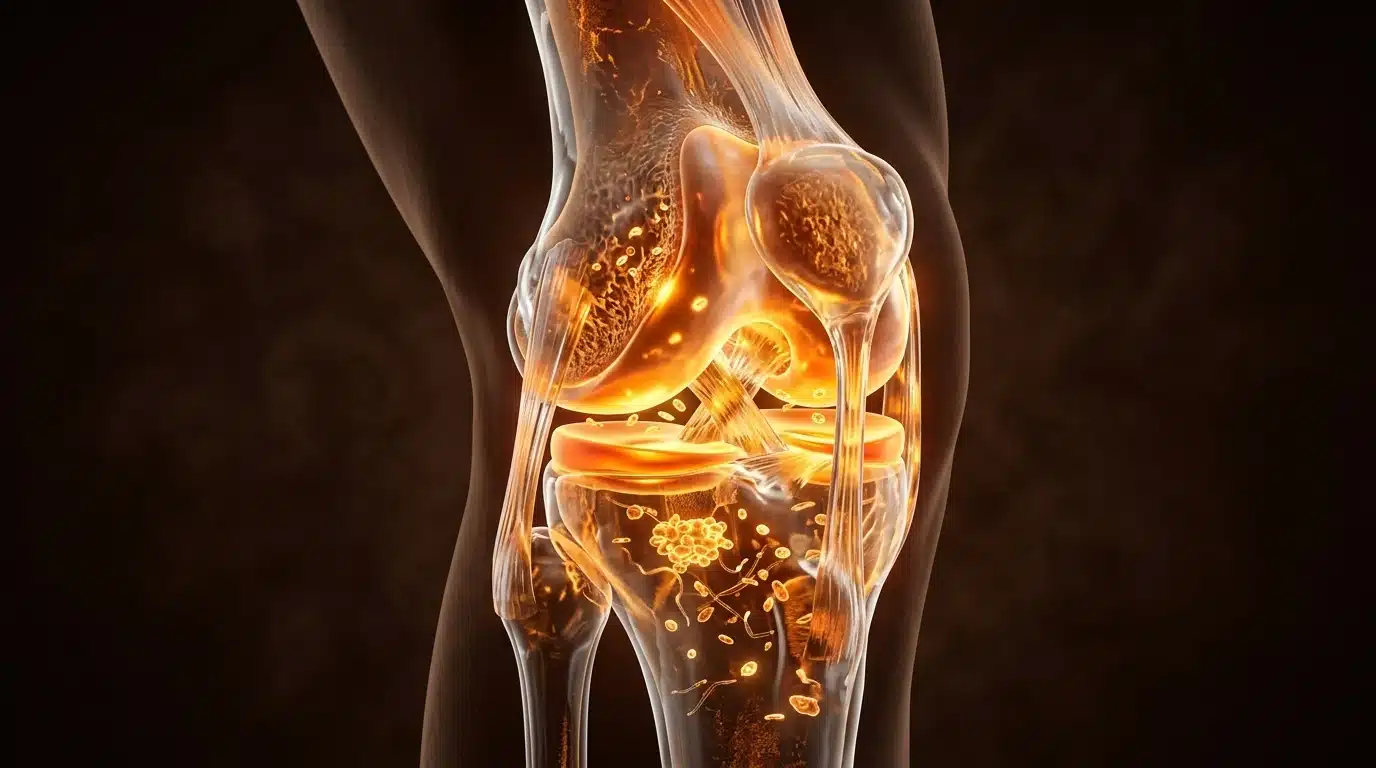
Bone is dynamic living tissue undergoing continuous metabolic renewal throughout life. Specialized cells called osteoclasts break down aged or micro-damaged bone (resorption), while osteoblasts synthesize new collagen scaffolding and deposit calcium hydroxyapatite crystals (formation). In early adulthood, bone formation outpaces resorption until peak bone mass is achieved around age thirty.
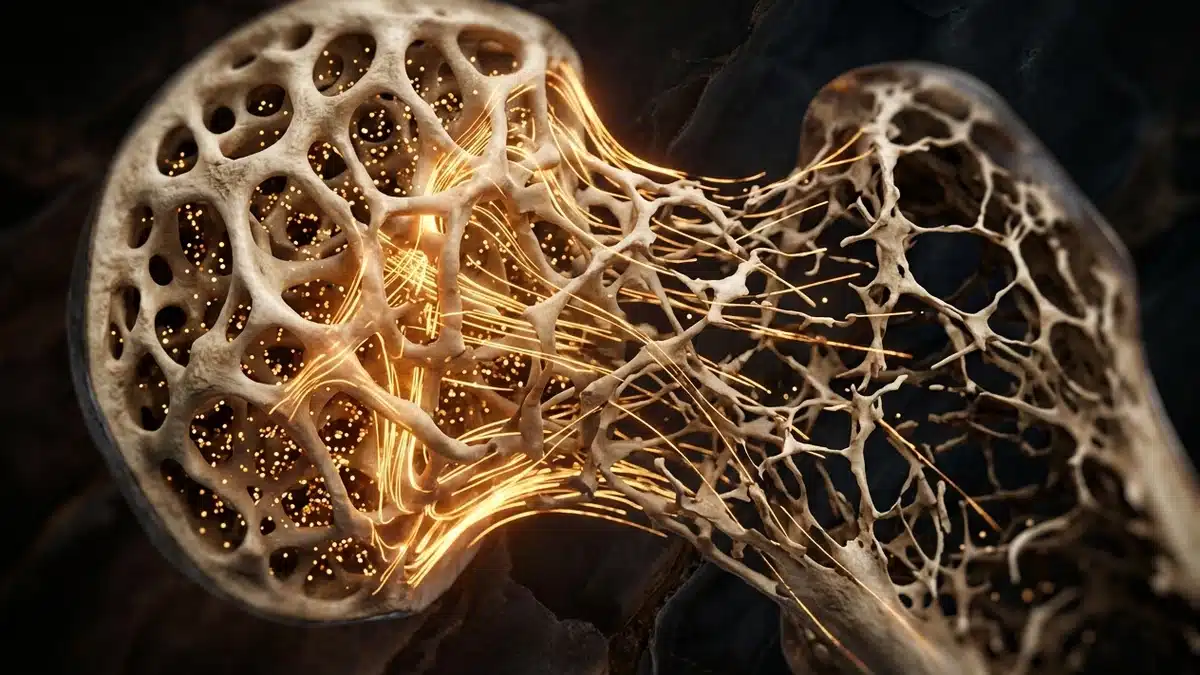
In osteoporosis, this delicate balance shifts unhealthily toward excessive resorption or blunted formation. Inside the bone, the honeycombed trabecular lattice becomes progressively thinner, disconnected, and porous. As connectivity between trabecular struts fails, the bone loses its shock-absorbing capacity, making ordinary weight-bearing activities hazardous.
Primary Causes and Contributing Risk Factors
Multiple physiological, hormonal, and nutritional drivers contribute to accelerated bone mineral loss:
- Postmenopausal Estrogen Decline: Estrogen exerts a direct protective effect on osteoclasts by promoting their apoptosis. With the sharp drop in systemic estrogen levels following menopause, osteoclastic activity surges, leading to rapid trabecular bone loss during the first decade post-menopause.
- Mineral Malabsorption & Gut Dysbiosis: Suboptimal stomach acid, chronic low-grade intestinal inflammation, or celiac disease🩺 Celiac DiseaseClinical Disease Treatment Profile: Read homeopathic remedies, dietary recommendations, and natural therapeutic options. significantly reduces the ionization and transcellular uptake of vital dietary minerals including calcium, magnesium🌿 MagnesiumMateria Medica Clinical Profile: Click to explore Boericke keynotes, symptoms, modalities, and dosage guidelines., and boron.
- Vitamin D3🌿 Vitamin D3Materia Medica Clinical Profile: Click to explore Boericke keynotes, symptoms, modalities, and dosage guidelines. and K2 Deficiency: Vitamin🌿 VitaminMateria Medica Clinical Profile: Click to explore Boericke keynotes, symptoms, modalities, and dosage guidelines. D3 facilitates the intestinal absorption of calcium, while Vitamin K2 (specifically menaquinone-7) activates osteocalcin, the crucial protein that binds circulating calcium ions directly into the hydroxyapatite bone matrix rather than leaving them to deposit in arterial walls.
- Physical Inactivity & Lack of Mechanical Loading: Osteocytes respond directly to mechanical strain according to Wolff’s Law. Prolonged sedentary lifestyles deprive skeletal tissue of the piezoelectric signals necessary to stimulate new osteoblast protein synthesis.
- Chronic Glucocorticoid Exposure: Long-term use of corticosteroid medications inhibits osteoblast differentiation and impairs calcium retention across renal tubules.
Top Homeopathic Remedies for Bone Density & Structural Support
In classical homeopathy, remedies do not merely supply raw material; they function as bio-energetic catalysts that stimulate cellular assimilation, regulate mineral metabolism, and relieve chronic periosteal and skeletal aching. A qualified homeopathic practitioner selects the matching remedy based on the patient’s constitutional state and individual symptom totality:
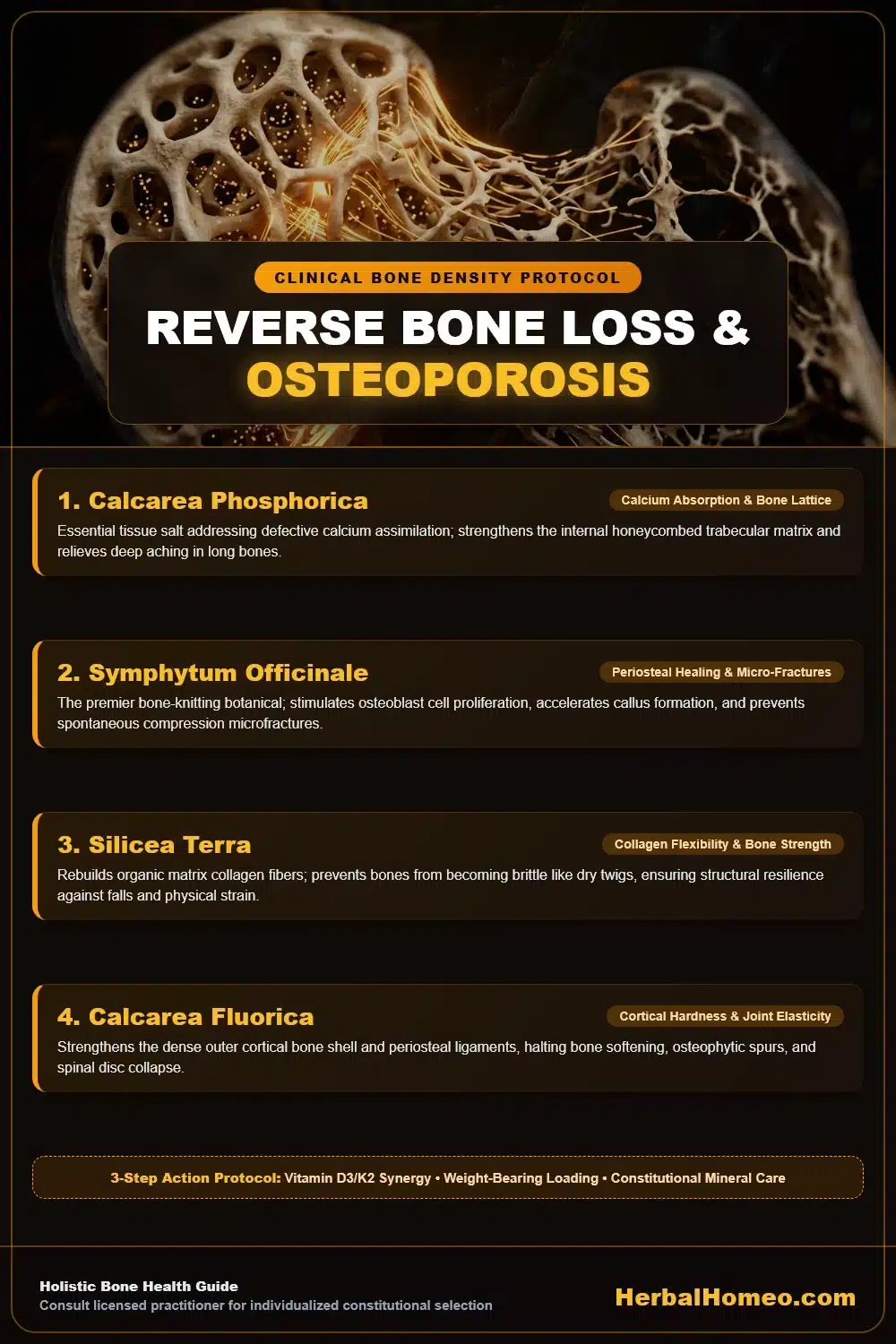
1. Calcarea🌿 CalcareaMateria Medica Clinical Profile: Click to explore Boericke keynotes, symptoms, modalities, and dosage guidelines. Phosphorica
Calcarea Phosphorica is the foremost homeopathic tissue remedy for impaired calcium metabolism and defective bone nutrition. It is indicated when bones feel weak, brittle, and slow to mend, accompanied by deep, aching sensations along the spinal column and long bones of the limbs. Patients requiring this remedy often experience heightened sensitivity to cold drafts, physical fatigue upon modest exertion, and a tendency toward spinal curvature or postural stoop.
2. Symphytum🌿 SymphytumMateria Medica Clinical Profile: Click to explore Boericke keynotes, symptoms, modalities, and dosage guidelines. Officinale
Historically celebrated as “Knitbone,” Symphytum holds a distinguished place in clinical practice for its affinity toward periosteal tissue and bone remodeling. Rich in natural allantoin, Symphytum acts directly on osteoblasts to stimulate cellular proliferation and accelerate callus deposition across micro-fractures. It is particularly valuable for persistent, deep-seated aching in skeletal structures that have endured mechanical stress or hairline cracks.
3. Silicea🌿 SiliceaMateria Medica Clinical Profile: Click to explore Boericke keynotes, symptoms, modalities, and dosage guidelines. Terra
Silicea is a foundational remedy for connective tissue vitality, collagen synthesis, and mineral assimilation. Without adequate organic matrix flexibility, bones become excessively rigid and snap under minimal torsion, much like dried twigs. Silicea restores tensile strength to the protein scaffolding of bone tissue. It is especially suited for chillyHypersensitive to cold temperaturesA constitutional state of feeling exceptionally cold, lacking vital heat, and needing warmth or heavy blankets., delicate individuals with brittle nails, thinning hair, and prolonged convalescence following skeletal strain.
4. Calcarea Fluorica
Calcarea Fluorica addresses the elastic and dense structural elements of bone, including the outer cortical shell and adjacent tendinous insertions. When bone mineral density diminishes, the body may attempt compensatory stabilization by forming irregular osteophytes or bone spurs. Calcarea Fluorica helps normalize structural remodeling, easing joint stiffness, relieving spinal crepitus, and preventing progressive osteopenic softening.
5. Phosphorus
Phosphorus is indicated in patients experiencing rapid demineralization, intense burning sensations along the dorsal spine between the scapulae, and general physical exhaustion. It is constitutionally suited to tall, slender individuals who are sensitive to environmental shifts and show susceptibility to delayed skeletal repair.
Evidence-Based Lifestyle & Nutritional Strategies
Optimizing bone health requires a cohesive multidisciplinary approach combining clinical homeopathy with foundational lifestyle interventions:
- Targeted Weight-Bearing Exercise: Engaging in progressive resistance training, brisk walking, or low-impact jumping stimulates osteocyte mechanoreceptors, sending biochemical signals to preserve cortical thickness.
- Balanced Mineral Matrix: Rely on whole-food dietary sources of calcium (such as sesame seeds, dark leafy greens, sardines with soft bones, and fermented organic dairy) balanced with magnesium, zinc🌿 ZincMateria Medica Clinical Profile: Click to explore Boericke keynotes, symptoms, modalities, and dosage guidelines., and trace minerals rather than high-dose isolated calcium carbonate supplements.
- Optimizing Digestive Secretions: Ensuring sufficient hydrochloric acid production ensures that dietary minerals are properly freed from food matrices for optimal uptake across the small intestine.
- Fall Prevention Strategies: Maintaining core strength, proprioceptive balance exercises (such as Tai Chi), and removing home hazards substantially lowers practical fracture hazards.
Frequently Asked Questions
Can bone density be improved naturally after menopause?
While rapid bone turnover stabilizes over time, a comprehensive protocol incorporating targeted resistance exercises, vitamin D3/K2 synergy, mineral-rich nutrition, and constitutional homeopathic remedies can effectively slow bone loss, improve bone quality, and support structural resilience.
Why is taking calcium supplements alone insufficient for osteoporosis?
Isolated calcium intake without essential cofactors—namely Vitamin D3 for absorption, Vitamin K2 for directing calcium into bone, and Magnesium for enzymatic activation—can lead to calcium deposition in arterial walls and soft tissues rather than incorporation into skeletal bone.
How are homeopathic remedies selected for osteoporosis?
Homeopathic remedies are individualized based on a patient’s systemic symptom profile, constitutional temperament, bone pain modalitiesFactors that make symptoms better or worseEnvironmental influences (like temperature, weather, rest, motion, or time of day) that modify symptoms., and metabolic history rather than a generic disease label.
Professional Consultation & Personalized Care
Because bone metabolism is closely intertwined with endocrine balance, digestive efficiency, and genetic factors, effective clinical management demands a personalized strategy. Remedy selection, appropriate potencies, and dietary cofactors are determined by a licensed practitioner following a thorough clinical evaluation.
To consult with our clinical team regarding personalized skeletal health support, please visit our Consultation Portal.
This article is for education and does not replace diagnosis or treatment by your doctor. Do not stop prescribed medication without medical advice.
Why is taking calcium supplements alone insufficient for osteoporosis?
How are homeopathic remedies selected for osteoporosis?
Homeopathic remedies are individualized based on a patient’s systemic symptom profile, constitutional temperament, bone pain modalities, and metabolic history rather than a generic disease label.
Why is taking calcium supplements alone insufficient for osteoporosis?
This article is for educational purposes only and not a substitute for professional medical advice, diagnosis, or treatment. Always seek the advice of your physician or other qualified health provider with any questions you may have regarding a medical condition.

Dr. Luqman Naseer
This article is for informational purposes and has been reviewed for medical accuracy according to classical homeopathic principles. Editorial Policy.