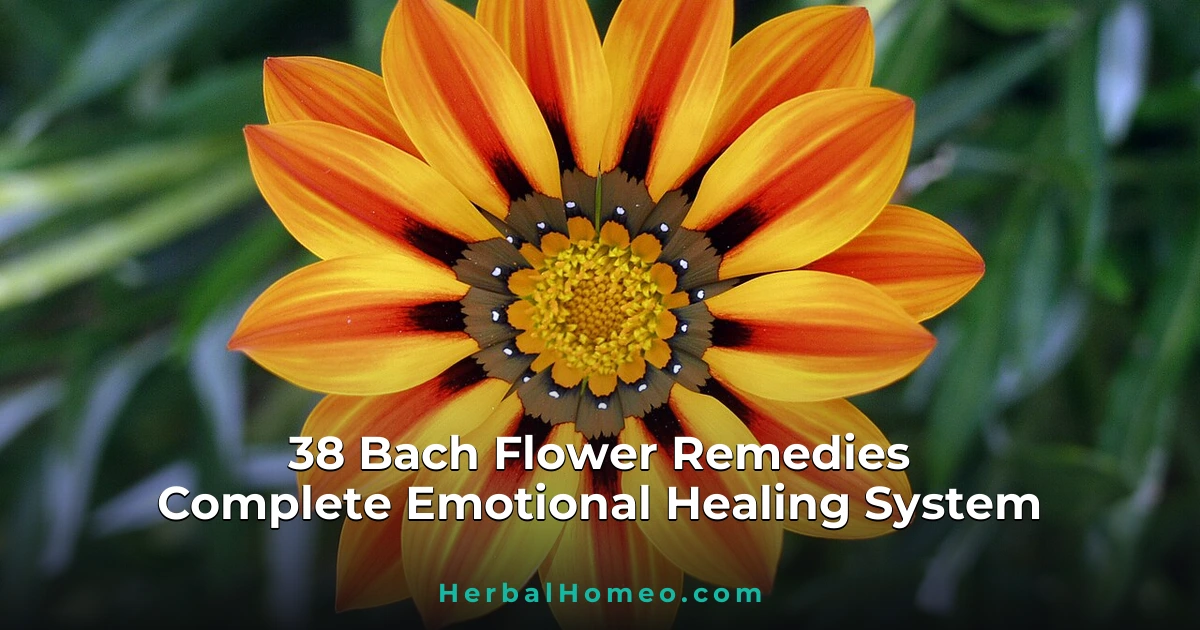
The 38 Bach Flower Remedies: Complete Clinical Overview & Guide
The 38 Bach Flower Remedies: Complete Overview
Developed in the early 20th century by Dr. Edward Bach, Bach Flower Remedies represent a gentle system of 38 plant and flower essences. Unlike physical medications, these remedies target emotional disharmony—such as fear, doubt, fatigue, and despair—restoring inner peace and supporting holistic physical recovery.
Group 1: Remedies for Fear & Anxiety
1. Agrimony
Indication: Hiding inner turmoil and mental distress behind a cheerful, joking exterior. Avoids conflict and turns to substances for escape.
2. Aspen
Indication: Vague, unexplained fears and anxieties of unknown origin. Sudden sense of impending dread, nightmares, or eerie sensations.
3. Cherry🌿 CherryMateria Medica Clinical Profile: Click to explore Boericke keynotes, symptoms, modalities, and dosage guidelines. Plum
Indication: Fear of losing mental control, sudden explosive outbursts, extreme psychological tension, fear of acting irrationally.
4. Mimulus
Indication: Fear of known things (illness, poverty, dark, height, speaking in public). Shy, reserved, sensitive individuals.
5. Rock🌿 RockMateria Medica Clinical Profile: Click to explore Boericke keynotes, symptoms, modalities, and dosage guidelines. Rose
Indication: Acute terror, severe panic attacks, extreme fright from accidents or night terrors. Frozen with fear.
Group 2: Remedies for Uncertainty & Indecision
6. Cerato
Indication: Lack of trust in own judgment. Constantly seeking reassurance and advice from others despite knowing the right decision.
7. Gentian
Indication: Discouragement and despondency after a temporary setback. Easily disheartened by minor difficulties.
8. Gorse
Indication: Deep hopelessness, despair, and resignation. Feeling that nothing further can be done to improve health or circumstances.
9. Hornbeam
Indication: Mental weariness, “Monday morning” exhaustion, procrastination. Doubting ability to handle daily workload.
10. Scleranthus
Indication: Inability to choose between two options. Mood swings, emotional imbalance, concentration difficulties.
11. Wild🌿 WildMateria Medica Clinical Profile: Click to explore Boericke keynotes, symptoms, modalities, and dosage guidelines. Oat
Indication: Uncertainty regarding career path and life direction. Talent and ambition without clear calling.
Group 3: Remedies for Insufficient Interest in Present Circumstances
12. Chestnut🌿 ChestnutMateria Medica Clinical Profile: Click to explore Boericke keynotes, symptoms, modalities, and dosage guidelines. Bud
Indication: Failure to learn from past mistakes. Repeating identical negative patterns in relationships or work.
13. Clematis
Indication: Daydreaming, absent-mindedness, ungroundedness. Living in fantasy rather than taking active present steps.
14. Honeysuckle
Indication: Living in memories, nostalgia, regret over past events, inability to let go of previous times.
15. Mustard
Indication: Sudden dark cloud of depression or gloom descending for no apparent reason, obscuring joy.
16. Olive
Indication: Complete physical and mental exhaustion after long illness, intense study, or prolonged hardship.
17. White🌿 WhiteMateria Medica Clinical Profile: Click to explore Boericke keynotes, symptoms, modalities, and dosage guidelines. Chestnut
Indication: Persistent unwanted thoughts, mental chatter, racing mind, insomniaPersistent inability to fall or stay asleepA sleep disorder marked by difficulty falling asleep, waking up too early, or unrefreshing sleep. from repeated worries.
18. Wild Rose
Indication: Apathy, passive resignation, lack of ambition or vitality. Making no effort to change unpleasant conditions.
Group 4: Remedies for Loneliness
19. Heather
Indication: Self-preoccupation, compulsively talking about personal problems to anyone available, fear of being alone.
20. Impatiens
Indication: Impatience, quickness of thought and action, frustration with others who work at a slower pace.
21. Water🌿 WaterMateria Medica Clinical Profile: Click to explore Boericke keynotes, symptoms, modalities, and dosage guidelines. Violet
Indication: Proud reserve, emotional detachment, aloofness. Preferring solitude, appearing distant or inaccessible.
Group 5: Remedies for Over-Sensitivity to Influences & Ideas
22. Centaury
Indication: Weak-willed, easily exploited, inability to say no. Neglecting personal needs to serve others excessively.
23. Holly
Indication: Jealousy, envy, suspicion, hatred, feelings of hostility or revenge toward others.
24. Walnut
Indication: Vulnerability during major life transitions (teething, pubertyAdolescent sexual maturity phaseThe stage of physical growth and hormonal changes when a child's body matures into an adult body capable of reproduction., moving, career change). Shield from negative energy.
25. Red Chestnut
Indication: Excessive anxiety and over-concern for the welfare of family and loved ones, anticipating disasters.
Group 6: Remedies for Despondency or Despair
26. Crab🌿 CrabMateria Medica Clinical Profile: Click to explore Boericke keynotes, symptoms, modalities, and dosage guidelines. Apple
Indication: The cleansing remedy. Feeling unclean, self-disgust, obsession with hygiene, minor blemishes, or detail.
27. Elm
Indication: Overwhelmed by sudden burden of responsibility in capable individuals who usually manage well.
28. Larch
Indication: Lack of self-confidence, expectation of failure, feeling inferior despite equal ability.
29. Oak
Indication: Persistent struggle past exhaustion, refusal to rest, stubborn endurance ignoring body limits.
30. Pine
Indication: Guilt, self-reproach, blaming self for mistakes of others, never satisfied with achievements.
31. Star🌿 StarMateria Medica Clinical Profile: Click to explore Boericke keynotes, symptoms, modalities, and dosage guidelines. of Bethlehem
Indication: Shock, trauma, grief, sudden disturbing news (past or present emotional trauma).
32. Sweet🌿 SweetMateria Medica Clinical Profile: Click to explore Boericke keynotes, symptoms, modalities, and dosage guidelines. Chestnut
Indication: Extreme mental anguish, dark night of the soul, reached absolute limit of endurance.
33. Willow
Indication: Resentment, bitterness, self-pity, “why me?” victim mentality toward life circumstances.
Group 7: Remedies for Over-Care for the Welfare of Others
34. Beech
Indication: Intolerance, critical judgment of others, perfectionist expectations, annoyance at small shortcomings.
35. Chicory
Indication: Possessive love, over-protective, demanding attention, conditional affection, manipulating loved ones.
36. Rock Water
Indication: Rigid self-discipline, harsh self-denial, strict perfectionism, setting hard examples.
37. Vervain
Indication: Over-enthusiasm, fanatical zeal, strong sense of justice, trying to convert others, strain.
38. Vine
Indication: Dominating, authoritarian, bossy, ruthless leadership, demanding obedience.
Special Blend: Rescue Remedy (Five Flower Formula)
A classic combination formulated by Dr. Bach for emergency emotional trauma, acute shock, exam panic, or sudden stress. Contains equal parts of Star of Bethlehem (shock), Rock Rose (terror), Impatiens (agitation), Cherry Plum (loss of control), and Clematis (faintness).
Dosage: 4 drops directly under tongue or in water during acute crises.
Frequently Asked Questions
What are the 38 Bach Flower Remedies?
They are 38 natural wildflower essences discovered by Dr. Edward Bach between 1928 and 1935, designed to harmonize emotional states and mental stress.
How do I select the right Bach remedy?
Focus on your current emotional state. Select 1 to 7 remedies that match your feelings (e.g., Mimulus for known fears, Olive for exhaustion, Larch for confidence).
Are Bach Flower Remedies safe for children and pets?
Yes. They are non-toxic, gentle, non-addictive, and have no side effects. They can be safely given to infants, pregnant women, and animals.
Can Bach Flower Remedies be taken with conventional medicines or homeopathy?
Absolutely. They operate on a vibrational emotional level and do not interfere with pharmaceutical medications, homeopathic remedies, or dietary supplements.
What exactly are the 38 Bach Flower Remedies, and how do they function within a homeopathic framework?
How does one determine which of the 38 remedies is appropriate for a specific emotional state?
What are the general guidelines for taking Bach Flower Remedies, and how long does treatment last?
Table of ContentsThe 38 Bach Flower Remedies: Complete OverviewGroup 1: Remedies for Fear & Anxiety1.
Are Bach Flower Remedies safe for children and pets?
Can Bach Flower Remedies be taken with conventional medicines or homeopathy?
What exactly are the 38 Bach Flower Remedies, and how do they function within a homeopathic framework?
How does one determine which of the 38 remedies is appropriate for a specific emotional state?
This article is for educational purposes only and not a substitute for professional medical advice, diagnosis, or treatment. Always seek the advice of your physician or other qualified health provider with any questions you may have regarding a medical condition.

Dr. Luqman Naseer
This article is for informational purposes and has been reviewed for medical accuracy according to classical homeopathic principles. Editorial Policy.